
First Frost in Aiken: Preparing Your Horse Property for the Fall Transition
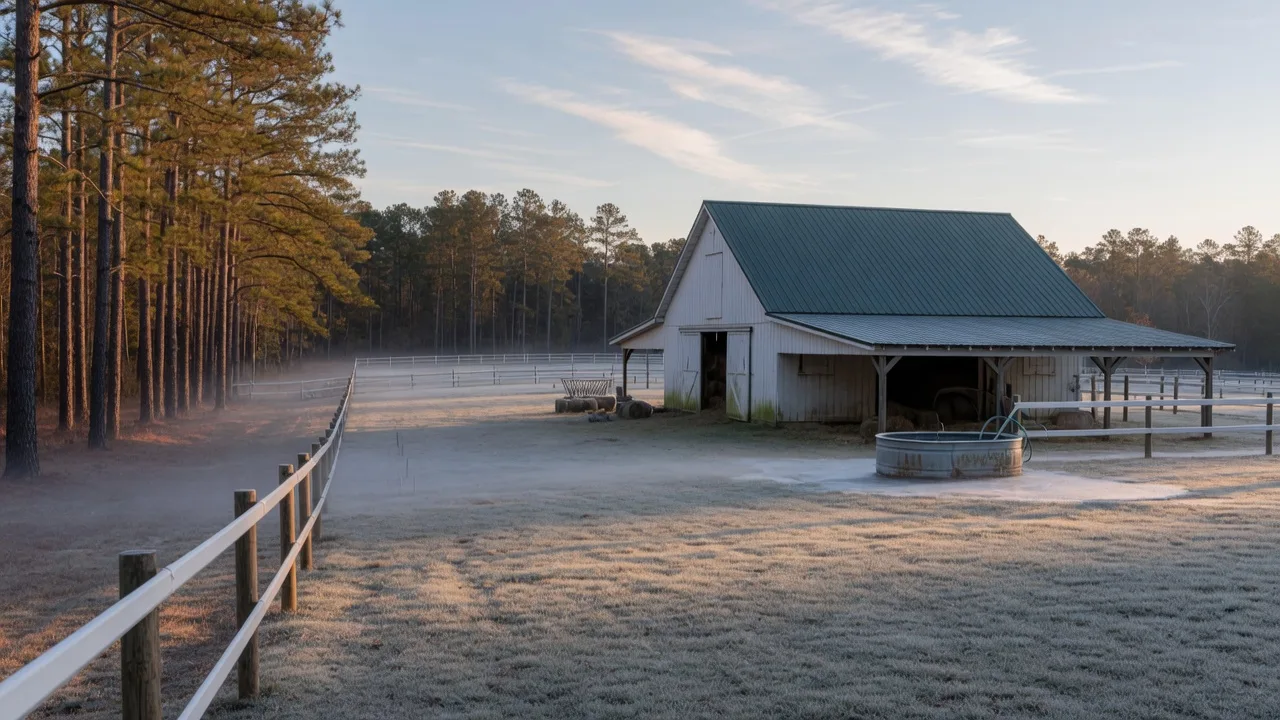
Aiken's first hard frost usually lands in early to mid-November, with the average first fall frost coming around November 7 on the local climate records. That date looks far away on a warm September afternoon, but the short window of pleasant riding weather between now and then is exactly when a well-run horse property gets its systems ready. This guide walks through the seasonal transition that matters most on an Aiken horse farm: water you can ice-proof, a barn that manages cold and damp, footing that stays rideable, and a few pasture adjustments before the grass goes dormant. If you are shopping for a horse property, the same checklist tells you which farms will sail through a cold snap and which ones will hand you problems at 6 a.m.
Know the Real Frost Calendar for Aiken
Southerners love to joke that Aiken does not have real winters, and the USDA hardiness ratings back that up: the city sits in zone 8b, and the county spans zones 8a and 8b. What that means in practice is a long, gentle autumn punctuated by a small number of genuinely cold mornings rather than weeks of deep freeze. According to the climate records for the Aiken area, the window for the first fall frost runs roughly from the first to the tenth of November, with the average date settling near November 7. That gives horse farms a generous growing season, but it also means the cold snaps that do come arrive at properties that were never asked to handle one.
The single most important planning number is not the average, it is the earliest. Some years the first frost arrives in late October while everyone is still riding in short sleeves at midday. If frost-proofing waits until November, those late-October nights are the ones that crack a spigot or freeze a water line. Treat mid-to-late October as the deadline for water work, and anything after that is a bonus.
Water First: Hoses, Troughs, and the Lines That Feed Them
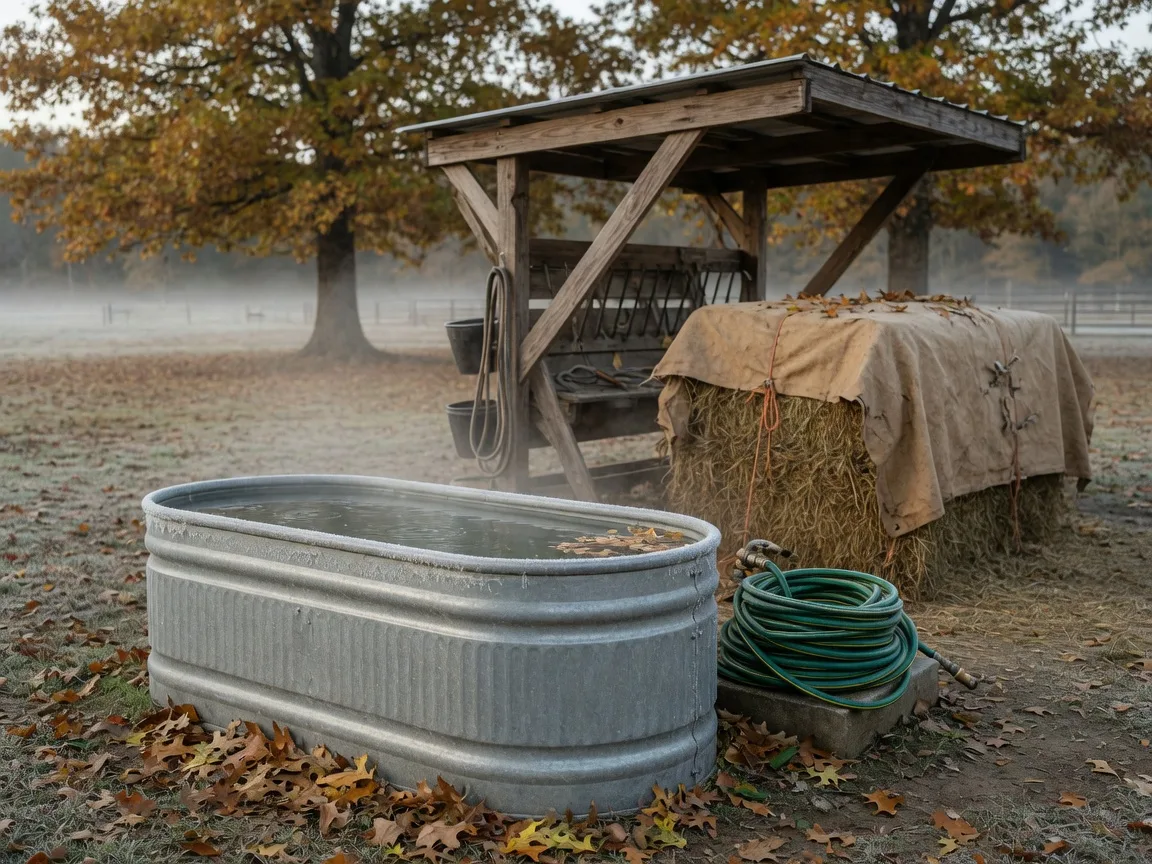
On a horse property, water is the system that actually alarms owners in November. Nothing ruins a morning like a frozen pipe under a well house or a de-icer that failed the night before, and horses need water in cold weather just as much as in summer, sometimes more, because dry forage and a chilly start require steady intake. The good news is that most Aiken farms reach the cold season with only three manageable risks: outdoor hoses, above-ground spigots, and trough water.
Disconnect, drain, and store outdoor hoses before the first hard freeze. A hose left full of water on a frost is a burst fitting and a mud puddle; the same hose, drained and coiled in the barn, is ready to ride in the spring. Where a frost-proof hydrant or a freeze-tolerant spigot is not available, cover the spigot when the temperature heads below freezing, and know where the shut-off valve is before you need it. Many Aiken farms run water to the paddocks through buried lines, and those almost never freeze at the depths they are installed, but unprotected above-ground fittings and short exposed stubs are the weak points that cost a plumber visit in January.
At the trough, the standard tool is a floating tank warmer made for livestock, sized to the trough and rated for outdoor use. A heated bucket is fine for a single stall inside a barn, but a paddock trough shared by several horses needs a floating heater that keeps the whole surface open. Plug every heater and warmer into a GFCI-protected circuit, test the ground-fault protection before the cold season, and do not string two heaters plus a barn fridge off one overloaded run. When I am at a listing in October and November, I look for exactly these details: how the troughs are powered, whether the outlets are protected, and whether there is a clean place to plug in a heater without an extension-cord daisy chain.
For buyers, frost-proof water infrastructure is one of the highest-value features on the inspection list. A well house that is heated or frost-tolerant, a hydrant at the paddock, and a trough circuit on its own breaker are the quiet signs of a property that was lived in year-round. Our guide to wells, water, and septic on Aiken horse properties has the full checklist, and our due diligence walkthrough shows how to verify these systems before making an offer.
The Barn: Moisture, Doors, and Safe Heat
Frost in a horse barn is rarely a plumbing story; it is a moisture story. As the nights cool, the swing between a warm day and a cold night pushes barns toward condensation, and a damp feeding area is exactly the environment no one wants. Aiken's late-autumn days can be genuinely warm while the nights dip to frost, which creates a lot of trapped moisture in a closed barn. Before the cold weeks, give the stalls a good clean airflow, check that doors and window vents actually open and shut, and repair any leaky downspout or gutter section that will funnel water onto paddock dirt and turn walking paths into mud.
Heat in a barn is a tool to use sparingly and safely. Heat lamps are one of the most common causes of barn fires in the colder half of the year, especially when they hang loose over dry bedding or swing on a folded cord above a stall. If a farm uses heat lamps for foaling or a wash bay, mount them on fixed hardware at a safe height, keep them clear of hay and dust, and inspect them every night the barn is buttoned up. A clip-on fixture or a bungee lamp is a fire risk, not a convenience. For the great majority of Aiken horses, good shelter and dry bedding matter more than any heat source, because these farms are built for zone 8b and the horses that live here are acclimated to it. Plenty of farms add nothing more than a well-ventilated shed and a windbreak. The barn safety and fire prevention guide walks through the full checklist from electrical to evacuation.
Pasture, Feed, and the Quiet Before Dormancy
The grass in an Aiken pasture usually grows into October and even early November before the first heavy frost ends the season. That makes the autumn months the last free grazing period of the year, and the right time to let the fields carry a little more of the load before they go dormant. Keep enough pasture reserve to avoid overgrazing the sandy soil into bare spots that erode in the winter rains. Rotate the paddocks a little earlier than you might in spring, and watch the tail end of the autumn flush for weeds while they are still easy to manage.
On the nutrition side, late fall is when many Aiken barns make their big hay commitment for the season, locking in quality bales before the field is truly stretched. The nutrition and feeding guide for the Sandhills digs into coastal Bermuda, alfalfa mixes, and the seasonal adjustments that keep horses riding crisp; it also covers the sand-colic prevention that matters on sandy paddocks when grass gets thin. The one pasture topic that always surfaces in November is the oak acreage: acorns drop with the first frost and pile up along the fence. The toxic plants and pasture safety guide covers oak acorns and the other autumn dangers worth sweeping off the ground before turnout.
Arena and Footing: Rideable Through the Cold
October and November are some of the best riding months in Aiken, so the arena will get real work exactly when the base and footing need an adjustment. Frost loosens the surface each night and the cold keeps it firmer than a baking July morning, and that changes how you maintain it: less watering, more harrowing, and careful attention to the surface that floats and softens after the first hard freeze. Before an evening lesson, test the depth and rake the arena flat. A dry, dusty ring in September becomes a slick hard pan on a frosty November night if the mixture is wrong.
If you are building or improving footing, the arena construction and footing guide explains what blends actually work in the Sandhills, and the discipline-matching guide helps you size the arena to the work your horse will actually do through the colder months. The farms that stay in regular use all winter are rarely the ones with the biggest indoor; they are the ones that keep a consistent, well-drained footing that weather does not control.
The September Frost-Proofing Calendar
- Disconnect, drain, and coil every outdoor hose before the frost window opens
- Locate the shut-off valves for exterior spigots now, not on a freezing morning
- Test every GFCI outlet that powers trough heaters, barn fans, and tank warmers
- Repair gutters and downspouts so autumn rains drain away from paddocks and walkways
- Open up the barn so late-autumn condensation has somewhere to go
- Inspect and secure every heat lamp, clear of hay, dust, and bedding
- Make the big hay commitment while the best lots are still available
- Remove acorns and fallen leaves from paddocks and fence lines before the first freeze
- Touch the arena: harrow the surface and adjust watering as the days shorten
- Confirm the winter schedule with your farrier, vet, and barn manager early
What This Checklist Says About a Property
For a buyer, the frost checklist is really a management checklist. A horse farm that gets through a cold snap on purpose, with a dry shed, ice-ready troughs, protected outlets, and a barn that breathes, was run by someone who lived there and thought ahead. That same preparation shows in the fencing, the pastures, and the mechanics of the outbuildings. View properties in September, October, and November with those eyes and the season starts to tell you which farms run themselves and which ones are always one repair behind. The hydrant by the paddock, the wire running to the last trough, the way the barn handles its own moisture: these belong on the horse property features checklist and the barn evaluation guide before you make an offer.
Sellers have the same reason to work the checklist. A farm that comes to a fall showing with hoses out of the way, trough heaters ready, and the barn door that closes on a cold night photographs better and reads as low-maintenance to the buyer who does not want a first-winter project. The autumn prep is a staging decision as much as a horsekeeping decision, and a few hours of it is worth more in the buyer's eye than any last-minute price strategy.
The Bottom Line: Do It Before the First Frost
Aiken's cold season is short and gentle, but it is real, and it rewards owners who think about it in September. Before the average first frost date around November 7, disconnect the hoses, secure the heaters, fix the downspouts, top off the hay commitment, and take a careful loop around the property with autumn eyes. That is the work between a farm that is ready for the cold and one that is caught out by it, and it is exactly the kind of detail-driven preparation that makes Aiken horse country run so well all year long.
Let me help you find a horse property that is ready for the first frost.
With more than 20 years across the CSRA, I know which barns are built for a cold January dawn and which ones will cost you the first winter. As the First AI-Certified Realtor in the area, I combine local frost-and-footing expertise with practical guidance on buying, selling, and living with horses in Aiken, North Augusta, and Augusta.
Schedule a Consultation