
Horse Property Due Diligence in Aiken: What to Inspect, Verify, and Research Before You Buy
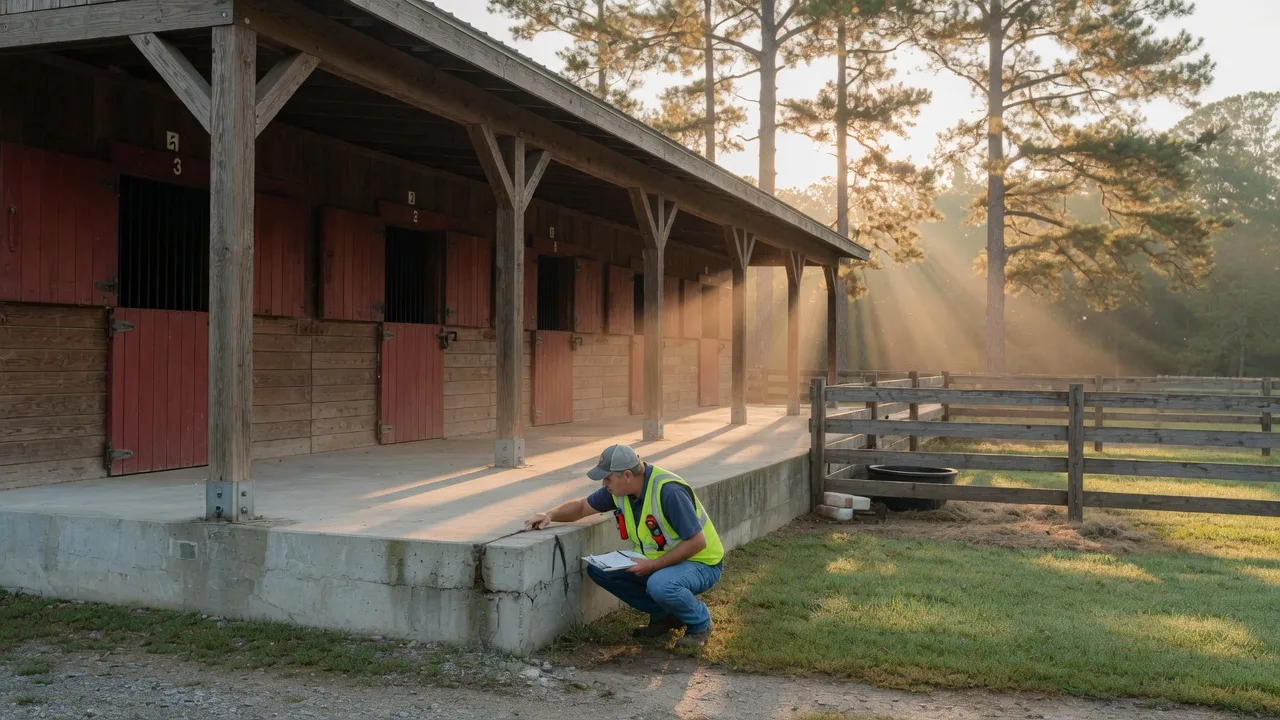
I have walked through a lot of barns with buyers over the years. And I can tell you, the first thing most people do is walk straight to the stalls, run a hand over the wood, and imagine their horses in that space. That is the right instinct. Your horses are why you are looking. But over two decades in this market, I have learned that a successful horse property purchase depends on what you check before you let your heart decide. The due diligence period on an equestrian property is where good decisions get made. Here is what I recommend every buyer verify before closing.
Well water: yield, quality, and capacity
Most Aiken horse properties rely on well water, and the demands of an equestrian property go well beyond what a typical household needs. You are not just supplying drinking water for your family. You need enough volume and flow for horses, irrigation for pastures and arenas, and possibly for barn wash racks and automatic waterers. A well that produces fine for a three-bedroom house may struggle when you add four horses, a garden, and arena watering to the equation.
Ask for a well yield test and pump sizing verification. The South Carolina Department of Environmental Services and the Clemson Extension provide guidance on well water testing standards for livestock properties. A local well service can assess whether the existing pump and pressure tank are adequate for equestrian use. Water quality testing is also important. Horses are sensitive to water quality, and high mineral content or bacterial contamination can cause health issues over time. Have the water tested for coliform bacteria, nitrates, pH, and total dissolved solids before you commit.
Well water checklist for horse properties
- Request a well yield test (gallons per minute) to confirm adequate flow for household plus livestock
- Verify pump age, horsepower, and tank size can handle peak demand
- Test water quality for coliform, nitrates, pH, and total dissolved solids
- Check for any history of well failure or low production during dry months
- Ask if automatic waterers in barn and pastures are tied to the well or on a separate system
Septic systems: capacity and condition
A standard septic inspection is part of most home purchase agreements, but on an equestrian property there are extra considerations. Septic systems in Aiken should be inspected every one to three years and pumped every three to five years, with pumping costs ranging from roughly $300 to $600 depending on tank size and accessibility. A full septic inspection will assess the tank, drain field, and distribution box for signs of failure or age.
If the property has a guest house, apartment above the barn, or a separate caretaker quarters, confirm that the septic system is sized for the total number of bedrooms. Some older properties have systems that were installed for a smaller home and have been grandfathered in. An undersized system can cause significant problems down the road. Local providers in the Aiken area include Prosser's Septic Tank Service and Anderson Plumbing & Septic, among others.
Barn inspections: structure, safety, and systems
A standard home inspection typically covers the main dwelling but may not extend to outbuildings. You need a separate barn inspection, ideally done by an inspector who understands equestrian structures. The barn is the most expensive improvement on most horse properties, and structural issues can be costly to remediate.
Key areas to evaluate include the roof for leaks, the foundation for settling or termite damage, the condition of stall walls and flooring, and the electrical systems. Barn electrical work is particularly important. Wiring in barns must be properly installed and protected from moisture, dust, and livestock. Exposed wiring, improper junctions, and outdated panels are safety hazards in a structure with hay, bedding, and wood. Many older barns were not built to modern electrical code, and upgrading can be a significant expense.
Aiken home inspectors like InspectHomeSC and others evaluate barn structures for structural integrity, electrical safety, and any plumbing or HVAC systems serving the barn. If the property has a washing or grooming area, check that the drainage and hot water system meet your needs.
Pasture and soil: what grows matters
Aiken's sandy Sandhills soil is excellent for drainage and arena footing, but it presents challenges for pasture management. The Clemson Extension provides soil testing services for South Carolina residents, and I recommend every buyer test their intended pastures before closing. A basic soil test will tell you the pH, nutrient levels, and organic matter content, which will guide your decisions about lime, fertilizer, and grass species.
Many Aiken horse properties have been managed for horses for years, and the pasture quality reflects that management history. But a property that has been used for other agricultural purposes or has sat vacant may need significant pasture renovation. Knowing what you are working with before you close helps you budget for seeding, soil amendments, and weed control in your first season.
Beyond soil quality, evaluate the pasture layout. Are paddocks sized appropriately for the number of horses you plan to keep? Is there rotational grazing capability with multiple fenced areas? Are there low spots that stay wet, or areas that have been overgrazed? A walk of the property with an equestrian perspective can reveal things that no inspection report will capture.
Zoning: confirm your intended use
This is the item I see buyers overlook most often. Aiken County and the City of Aiken have separate zoning ordinances, and the rules differ significantly between them. The Aiken Horse District is a designated zoning area designed to accommodate equestrian residential use, but not every property in Aiken is zoned the same way.
Key zoning designations to understand:
Agricultural (AG)
The most flexible zoning for equestrian use. Typically allows barns, arenas, and some commercial horse activities such as boarding or training. Minimum lot sizes are larger.
RSH (Residential Single-Family/Horse)
City of Aiken zoning that provides for low-density residential neighborhoods on lots of at least one acre. Allows horses and stables but prohibits multifamily and commercial uses.
RSS (Residential Single-Family/Stable)
Similar to RSH but on larger lots of at least three acres. Designed for open spaces suitable for horse pleasure activities.
RH5 and RH5B (Aiken County)
Residential-Horse districts on lots of at least five acres. RH5 promotes low-density residential with equine uses. RH5B also permits equine-related commercial activities.
Subdivision Covenants
Even if the county or city zoning allows horses, subdivision HOA covenants may restrict the number of horses, barn placement, arena construction, or commercial use. Always review the CCRs before making an offer.
I recommend that every buyer verify the zoning designation with the relevant planning department before closing. A simple phone call can confirm whether your intended use (keeping horses, building a barn, adding an arena, boarding outside horses, giving lessons) is permitted. If the property is in a subdivision with an HOA, request the full set of covenants, conditions, and restrictions. These documents are legally binding and will govern what you can and cannot do with your property.
Trail access and easements
Trail access is one of the most valuable features an Aiken horse property can offer. Properties with direct access to Hitchcock Woods or other trail systems command a premium for good reason. But "trail access" can mean different things on different properties. It is important to verify exactly what access rights come with the property.
Ask these questions during due diligence:
- Is the trail access deeded, or is it an informal arrangement with a neighbor or adjacent landowner?
- If there is an easement, is it recorded in the property deed or title? Are there any maintenance obligations for the easement?
- Does the community have a dedicated trail system with recorded easements for all residents?
- Is trail access year-round, or are there seasonal closures or restrictions?
- Who maintains the trails? The city, a homeowners association, or a private entity?
A property that is adjacent to Hitchcock Woods but does not have a recorded access easement may not provide the riding access you expect. I always recommend that buyers with trail access priorities take a ride from the barn to the trail system during the due diligence period. A 20-minute ride tells you more than any listing description.
Fencing: condition and horse-safety
Fencing is another expense that can catch buyers by surprise. A property may have miles of perimeter fencing that looks adequate from a distance but is not horse-safe. Walk the entire fence line. Look for sagging wires, broken boards, protruding nails, loose posts, and areas where vegetation has compromised the fence line. For more detail on fencing types used in Aiken, see our complete horse fencing guide.
Pay attention to the gate placement and condition as well. Gates that are difficult to open, sagging, or poorly positioned can be a daily frustration. Consider whether the fencing supports the pasture rotation and turnout plan you have in mind. Replacing even a few hundred feet of inadequate fencing can cost several thousand dollars, so it is worth evaluating carefully during due diligence.
Arena footing and drainage
If the property includes an arena, ride in it during due diligence. The footing may look good dry but become hazardous after rain. Aiken's sandy soil drains well naturally, but arena footing is a engineered surface. A well-constructed arena in the Sandhills will have proper base materials, drainage, and the right sand-to-additive ratio for your discipline. Our arena construction guide goes into more depth on what to look for.
If there is no arena and you plan to build one, factor that into your budget and verify that the property has a suitable location. Building an arena requires a relatively flat area with good drainage, access for construction equipment, and appropriate setbacks from property lines.
The best inspections happen before the offer, not after.
I advise my buyers to budget for a thorough due diligence process on any horse property. A few hundred dollars in inspections can save thousands in surprises. And I always walk the property myself with my clients, looking at it through the lens of someone who knows what horses really need.
Putting it all together
Horse property due diligence in Aiken is not complicated, but it is comprehensive. You are evaluating a home, a barn, acreage, water systems, fencing, zoning, and trail access all at once. Each piece matters, and none of them should be left to chance.
When I work with buyers, I help them prioritize these items based on their specific plans. A competitive eventer has different infrastructure needs than a trail rider or a retired couple keeping two horses for pleasure riding. Understanding what matters most to you helps focus the inspection process where it counts.
The goal is not to find a perfect property. Few exist. The goal is to find a property where you understand exactly what you are buying, what needs attention, and what you are willing to take on. With the right inspections and the right questions asked during due diligence, you can make that decision with confidence.
Let me help you find the right horse property in Aiken.
Whether you are a first-time horse property buyer or an experienced equestrian relocating to Aiken, I can guide you through the due diligence process and help you find a property that fits your needs and your horses' needs.
Schedule a Consultation