
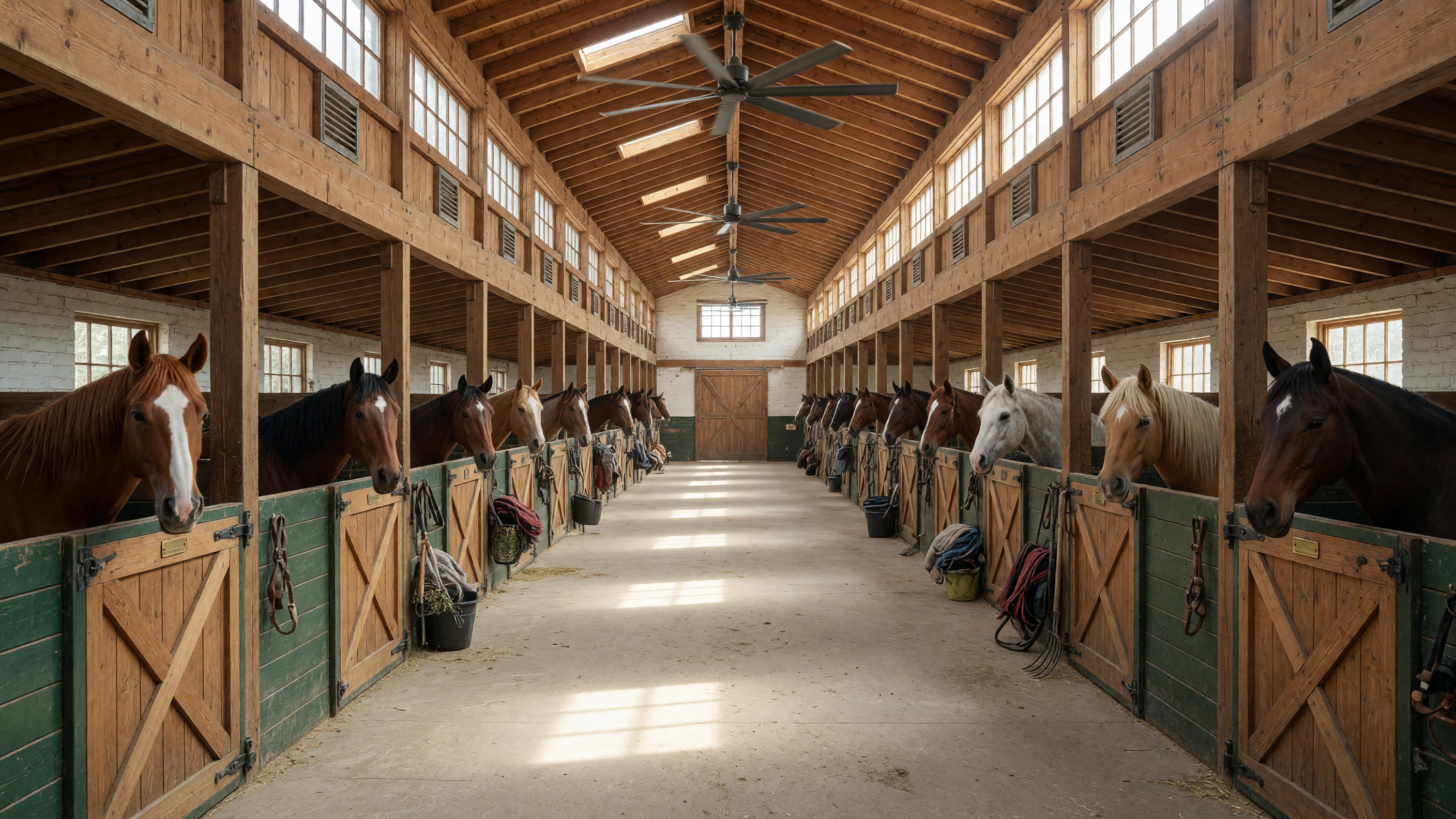
How many stalls do you need
for an Aiken Horse Property?
Right-sizing your barn.
The right number and size of stalls depend on your horses, turnout plan, riding discipline, daily routine and future goals. This guide explains common stall dimensions, barn-planning considerations and questions to ask when comparing Aiken-area horse properties.
Common stall dimensions to compare.
Smaller stalls may be suitable for certain ponies or smaller equines. Suitability depends on the individual animal, turnout and intended use.
A 12-by-12-foot stall is commonly used for many average-sized horses, but the individual horse, amount of confinement, ventilation and complete stall design should still be considered.
Larger stalls may be appropriate for larger horses, mares with foals, veterinary-directed recovery or specialized needs.
Stall Size Is Only One Part of the Evaluation
Dimensions matter, but buyers should also evaluate ventilation, flooring, drainage, doors, latches, wall condition, electrical safety, water access and daily turnout.
Examples buyers may encounter.
Private-Use Barn
A barn designed for personal horse keeping. Features vary by property and may include stalls, a tack room, feed storage, a wash area and pasture access. Buyers should evaluate the barn’s condition, layout, ventilation and daily usability.
Multi-Horse Private Facility
A property with barn capacity for several privately owned horses may include multiple stalls, additional turnout, expanded storage and room for farrier or veterinary visits. Buyers should verify water, electrical and septic capacity for the intended use.
Boarding or Training Facility
A property may be configured for boarding, training, lessons or a combination of services. Buyers should evaluate staffing needs, insurance, emergency procedures, parking, manure management and whether the intended use is permitted.
Large Professional Facility
A larger-scale operation may include extensive barn infrastructure, multiple riding areas, staff spaces and specialized improvements. Features vary by property. Buyers should verify zoning, commercial-use approvals, acreage and operational requirements.
Horse keeping, boarding, lessons, training and other commercial uses depend on zoning, deed restrictions and association rules. Buyers should obtain property-specific confirmation from the appropriate authority.
Think beyond today's herd.
Horse property needs evolve. A barn that fits your current horses may feel cramped in two years. Before purchasing a property, consider these forward-looking questions that affect your barn sizing needs.
- How many horses do you currently own?
- Do you expect the herd to grow?
- Could any horse require separate confinement?
- Would an extra flexible stall be useful?
- Will you offer boarding, lessons or training?
- Is the intended use permitted?
- Do you need separate tack, feed, hay and equipment storage?
- Is water and electrical capacity adequate?
- Can the barn be expanded safely and legally?
- How much daily turnout will the horses receive?
Stall sizing FAQs.
Is a 12×12 stall suitable for every horse?
A 12-by-12-foot stall is commonly used for many average-sized horses, but suitability depends on the individual horse, how much time the horse spends confined, ventilation, stall design and management practices. Some horses may need more space, while others may do well with less.
Do I need one stall for every horse?
Not necessarily. Some horses live primarily on pasture and may only need temporary stall access for feeding, grooming, veterinary care or severe weather. The right number of stalls depends on your management plan, climate and how each horse is kept.
Should I plan for an extra stall?
An extra stall can be useful for temporary separation, a guest horse, changing herd needs or veterinary-directed recovery. Whether it is practical depends on the barn's layout, your management plan, budget and property-use rules. Proper quarantine may require separate facilities and professional guidance.
Can I add more stalls later?
Adding stalls may require zoning approval, building permits, adequate water and electrical capacity, and sufficient acreage. Buyers should verify permitted uses and expansion options before purchasing.
Find an Aiken Horse Property
With the Barn Capacity You Need
Tell Linda about your horses, preferred stall count, turnout needs, riding discipline, acreage, arena requirements and future plans. She can prepare a personalized search based on your priorities.
Reviewed by Linda Limehouse, REALTOR®
Licensed in South Carolina and Georgia
More than 20 years of CSRA real estate experience
Last reviewed: July 2026