
Hay Storage and Hay Procurement for Aiken Horse Properties: Keeping Quality Forage Year-Round
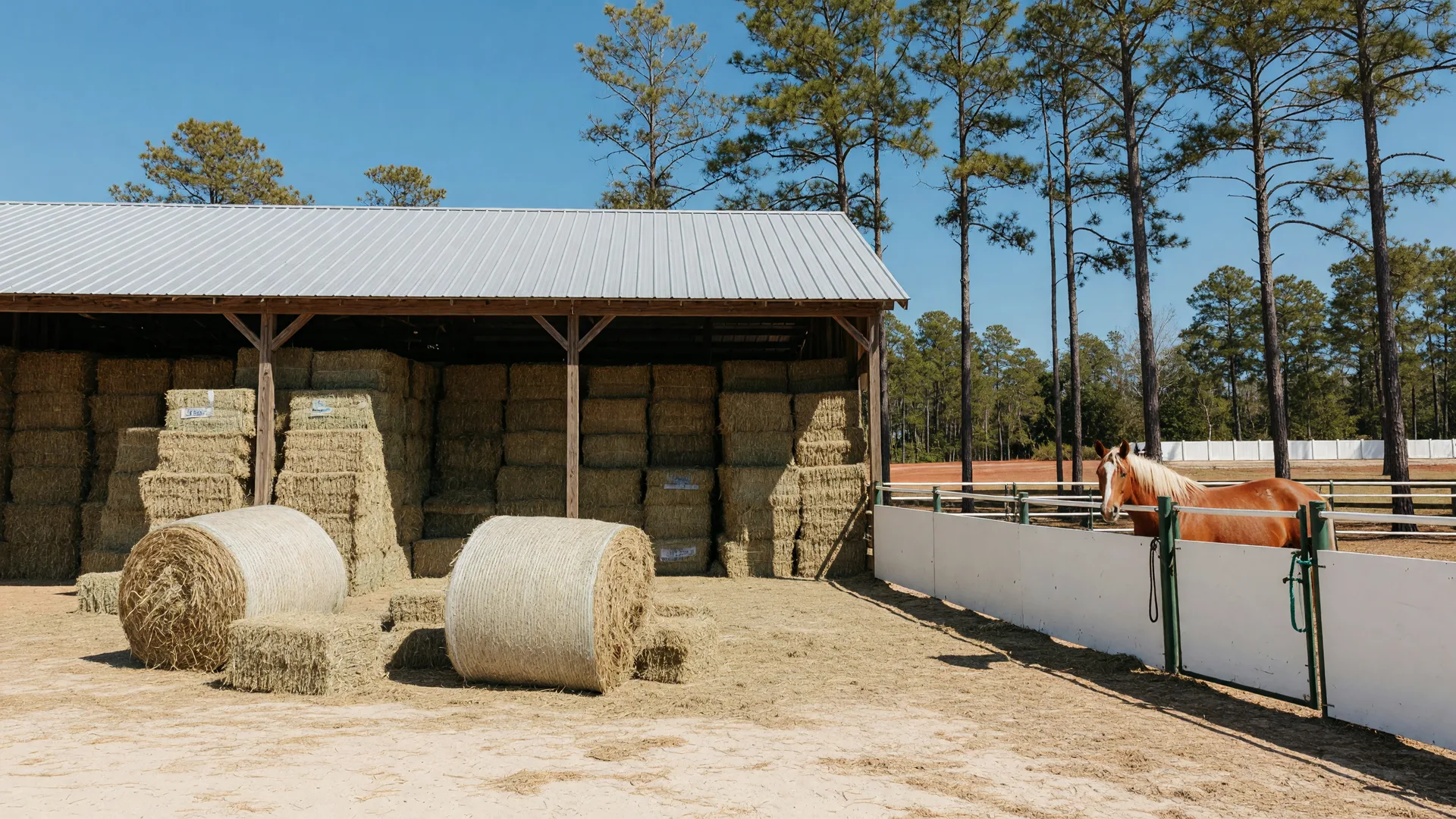
On an Aiken horse property, hay is both the largest recurring feed expense and the easiest thing to ruin by accident. The answer to keeping it good is a simple one: buy from a source you trust, keep it dry, keep it off the ground, and let it breathe. Everything else is detail. In my 20+ years around Aiken's horse farms, I have watched well-bought hay go to waste in a leaky shed, and I have seen a modest covered hay barn quietly save an owner a small fortune in a single humid summer. This guide covers how to buy hay well in the CSRA and how to store it so the quality you paid for is the quality your horses actually eat.
Aiken's climate makes this worth your attention. The region's warm, humid weather is wonderful for riding and easy on legs, but it is hard on stored forage. Moisture is the enemy of hay: it feeds mold and dust, saps color and nutrition, and can even make bales heat dangerously. A farm with a good hay program treats storage as part of the property, not an afterthought, which is why I always look closely at the hay barn when I tour a property with buyers.
How much forage your herd really needs
The starting point for any hay plan is knowing how much your herd consumes, because that number sets how much you buy and how much storage you need. A useful rule of thumb used across the horse world is that a horse eats a meaningful percentage of its body weight in forage each day, but the exact figure depends on the horse, its workload, and the quality of the hay and pasture. Rather than relying on a single number, work out your own estimate with your veterinarian or equine nutritionist based on your specific herd. My guide to equine nutrition in the Sandhills explains how hay quality and local pasture fit into the daily ration.
What matters for the property is the season. In Aiken, pasture is largely dormant in the winter months, so stored hay carries the herd from roughly late fall through early spring. The practical question is simple: how many bales do you need to get through a full winter, plus a margin of safety? Multiply that by the size of your herd, and you have the amount of covered storage the farm should provide. Most owners I work with find they want room for at least a month or two of forage on hand, and more if they buy seasonally in bulk.
Square bales versus round bales: what changes on an Aiken property
The bale format you choose shapes both your storage and your daily routine. Small square bales are the standard for private barns. They are easy to handle by hand, easy to feed in portions, simple to inspect, and they store efficiently when stacked off the ground. They do require more labor per ton and more covered storage space, but for a hobby farm they are almost always the right fit.
Round bales shine for larger herds and horses that can eat from a bale with minimal waste, and they store well outside in some climates. In Aiken's humidity, though, an uncovered round bale will soak up moisture around its base and lose a surprising amount of forage to spoilage. If you use round bales, plan on covered storage or a sacrificial pad and realistic expectations about waste. When I show properties, a farm that keeps its round bales dry and off the ground tells me the owner thinks about hay the way a professional does.
Where the hay comes from: local fields, feed stores, and trucked-in loads
The CSRA grows good horse hay. Coastal Bermuda is the backbone of the local market, harvested from fields across Aiken County and neighboring South Carolina and Georgia counties, and many local producers also bring in or grow timothy and grass-and-alfalfa mixes. Buying from a local field or a reputable local supplier has real advantages: the hay is cut for this climate, you can see and feel a sample before you commit, and delivery is short. Feed and tack stores in the Aiken area also carry hay in season, which is handy for small loads, though buying by the bale from a store almost always costs more per bale than buying by the ton from a field.
Some owners, especially those with performance horses on specific rations, bring in hay from farther afield, such as timothy or alfalfa trucked up from other regions. That is a fine strategy when the quality justifies the freight, but it makes storage planning even more important, because a trucked-in load represents a larger commitment of money and space. Whatever your source, the local equestrian services directory is a good place to find suppliers who know the area.
The dry, ventilated, off-the-ground rule for storage
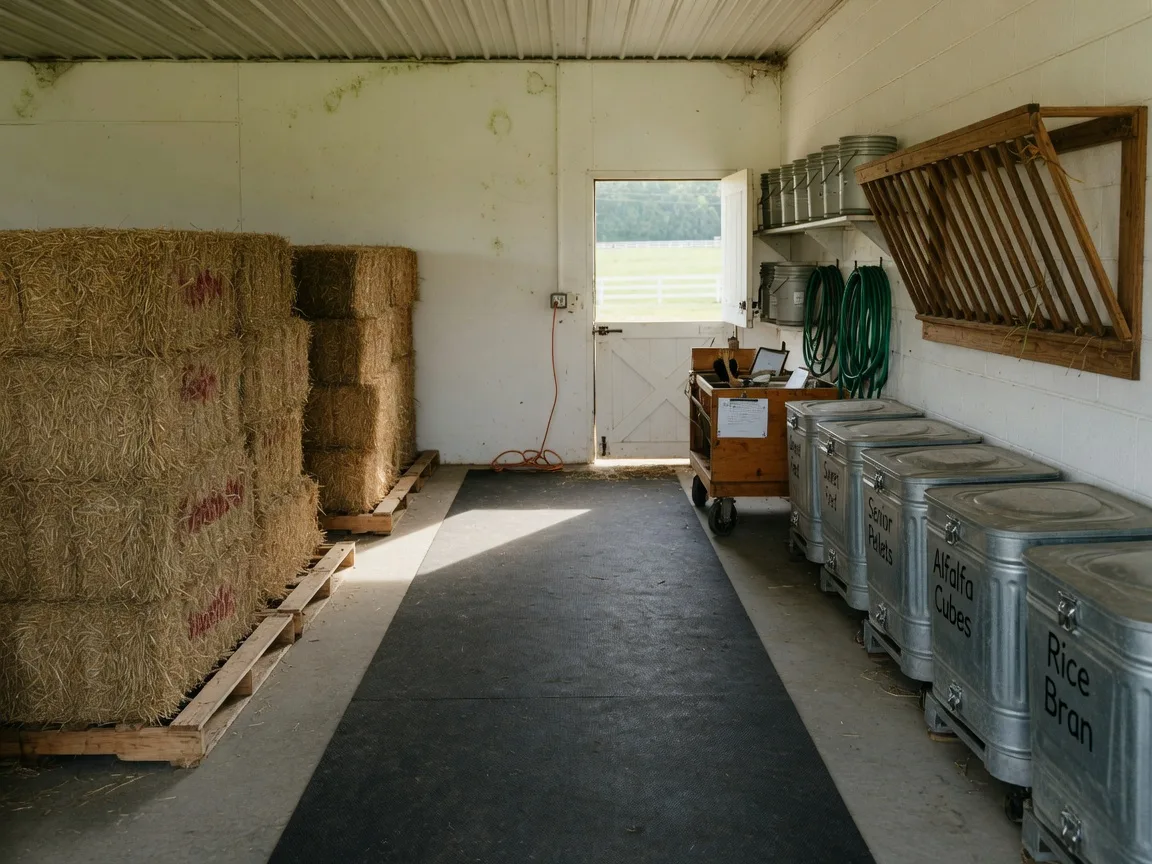
Three words govern good hay storage in any climate, and they matter double in Aiken: dry, ventilated, off the ground. Hay must be kept out of rain and ground moisture, so a three-sided shed with a good roof is the classic answer, and the open sides let air move through the stack. Keep bales up off the floor on pallets or a gravel pad, because moisture wicks up from the ground even through a roof. Keep a small gap between the bales and the walls, and leave airflow between the rows so the middle of the stack can breathe.
Orientation matters more than people expect. Stack the bales on their flat sides with the strings running across the top, which sheds moisture and keeps the stack stable. Leave a little space at the top of the stack and under the roof so air can circulate above the hay. A hay barn that is too airtight will sweat in the Carolina humidity; one that lets the breeze through keeps its bales sweeter, longer.
Aiken's humidity: the moisture enemy and how to fight it
Humidity is the reason a hay program in Aiken looks different from one in the arid West. High moisture in the air and on the ground encourages mold, dust, and the fermentation that makes hay heat and spoil. The first defense is buying hay that is properly cured and dry, because no storage can save hay that went into the barn too wet. If you press a bale and it feels damp, or if the inside of the stack sweats, that hay is at risk.
The second defense is airflow and rotation. Feed the oldest hay first and work toward the newest, so nothing sits long enough to degrade. Turn the stack occasionally if a bale feels warm, and inspect the whole supply a few times through the winter. Dusty, moldy, or overly heated hay is not just a waste of money, it can be dangerous to your horses' respiratory health, so when in doubt, set a questionable bale aside and ask your vet before feeding it. Your horses' health comes before any savings.
Buying ahead: why good winter hay is secured in the growing season
The best time to line up winter hay is before winter. Local hay farmers know their yield by late summer, and buying a season's worth then locks in quality and often a better price than the winter spot market. It also means you are not scrambling in December, when supplies tighten, prices climb, and the pickings are thinner. The Aiken Winter Colony season brings extra horses to town from fall through spring, so local demand for hay rises just as the supply from the current cutting season is at its most plentiful.
My guide to preparing for the Winter Colony season covers this planning in the context of the whole farm. If you are buying a property now, ask how the current owner manages hay: who they buy from, how much they store, and how the barn handles the season. Their answers will tell you a great deal about how the farm is run and what you can expect in your first year.
Inspecting a load before you buy
Good buyers never take a hay load on faith. Ask the producer for the cutting date and the field conditions, and ask whether a forage analysis is available, because the best local growers test their hay routinely and can tell you its protein, energy, and mineral content. Look for bales that are green and sweet-smelling, not yellowed, dusty, or musty. Avoid bales with visible mold, discolored patches, or a sour smell, and check a few bales from the middle of the load, not just the pretty ones on top. If the producer hesitates to answer straightforward questions, that hesitation is information.
The more hay you buy at once, the more this inspection matters, because a bad bulk load is a whole season of bad feed. Building a relationship with a reliable local producer, and having a hay program that includes both a good source and good storage, is one of the quietest and highest-value improvements an Aiken horse property owner can make.
What buyers should look for in hay storage when touring
When you tour a horse property, make the hay storage part of your checklist. Look for a covered, three-sided structure with a sound roof, a floor that keeps bales off the dirt, and visible airflow through the stack. Notice whether the current hay looks green and clean or old and dusty, and whether the barn is sized for the number of horses the property supports. A farm with generous, well-kept hay storage is almost always a farm that manages the rest of its budget thoughtfully, and that pattern is exactly what you want to inherit.
If the property lacks good hay storage, treat that as a line item in your plans rather than a dealbreaker. Adding a hay barn or converting an existing shed is a manageable project on most farms, and my guide to building and siting a barn explains the zoning and design questions that apply. The features that matter most when evaluating a farm will help you weigh all of this together.
Hay is infrastructure
The difference between a farm that runs smoothly and one that fights you all winter is often a dry hay shed and a trusted supplier. It is unglamorous, and it matters enormously. When I help buyers tour properties, the hay barn tells me as much about the farm as the arena does, and I always flag it.
Let's talk about your acreage, facilities, and how the farm will run day to day.
From hay storage and water to barns and pasture, I evaluate every property with your horses in mind. Tell me what you are looking for and I will help you find the farm that fits, hay barn included.
Linda Limehouse · Meybohm Real Estate
Cell: 803-278-1800
Office: 803-278-4437
Web: firstaiagent.com
SC License 67440 · GA License 323267