
Getting Your Aiken Horse Property Ready for the Winter Colony Season: A Late Summer Preparation Guide
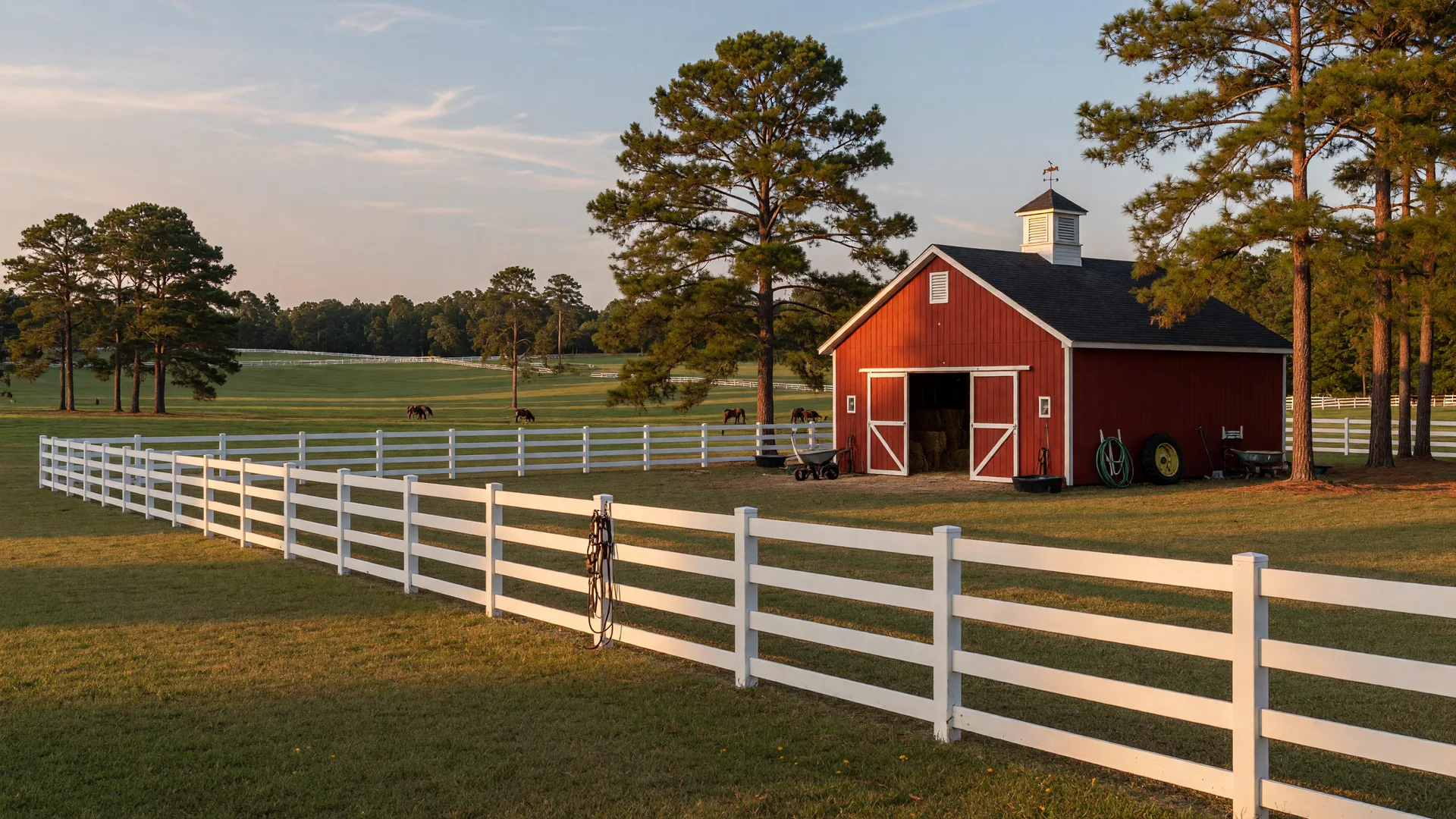
Aiken's Winter Colony season is one of the most exciting times of year in South Carolina horse country. From October through April, the town fills with serious equestrians from across the country who come to enjoy mild weather, world-class training facilities, and a community built around horses. For property owners, this influx brings opportunities, energy, and the need for preparation.
Late August is the ideal time to start getting your property ready. The intense heat of July and early August has begun to ease, and there is time before the first seasonal boarders, trainers, and winter residents arrive. After more than 20 years in the CSRA equestrian market, I have learned that the property owners who prepare in late summer are the ones who enjoy a smooth, profitable, and stress-free Winter Colony season. Here is my late-season checklist for Aiken horse property owners.
Start with a full property walkthrough
Before you make a single repair, walk every corner of your property with a notebook. The goal is to see the place through the eyes of a seasonal visitor or a prospective buyer. Walk the barn, every stall, the tack room, the feed room, each paddock and pasture, the arena, the fencing, the driveway, and the trailer parking area. Take photos of anything that needs attention. A fresh set of eyes at the end of summer reveals problems you have stopped noticing through daily familiarity.
Pay special attention to the things a Winter Colony visitor will notice first: the condition of the barn entrance, the cleanliness of the aisles, the quality of the footing in the arena, and the state of the fencing along the driveway. First impressions matter deeply in Aiken's equestrian community, and word travels fast about which properties are well kept and which are not.
Barn deep clean and repair window
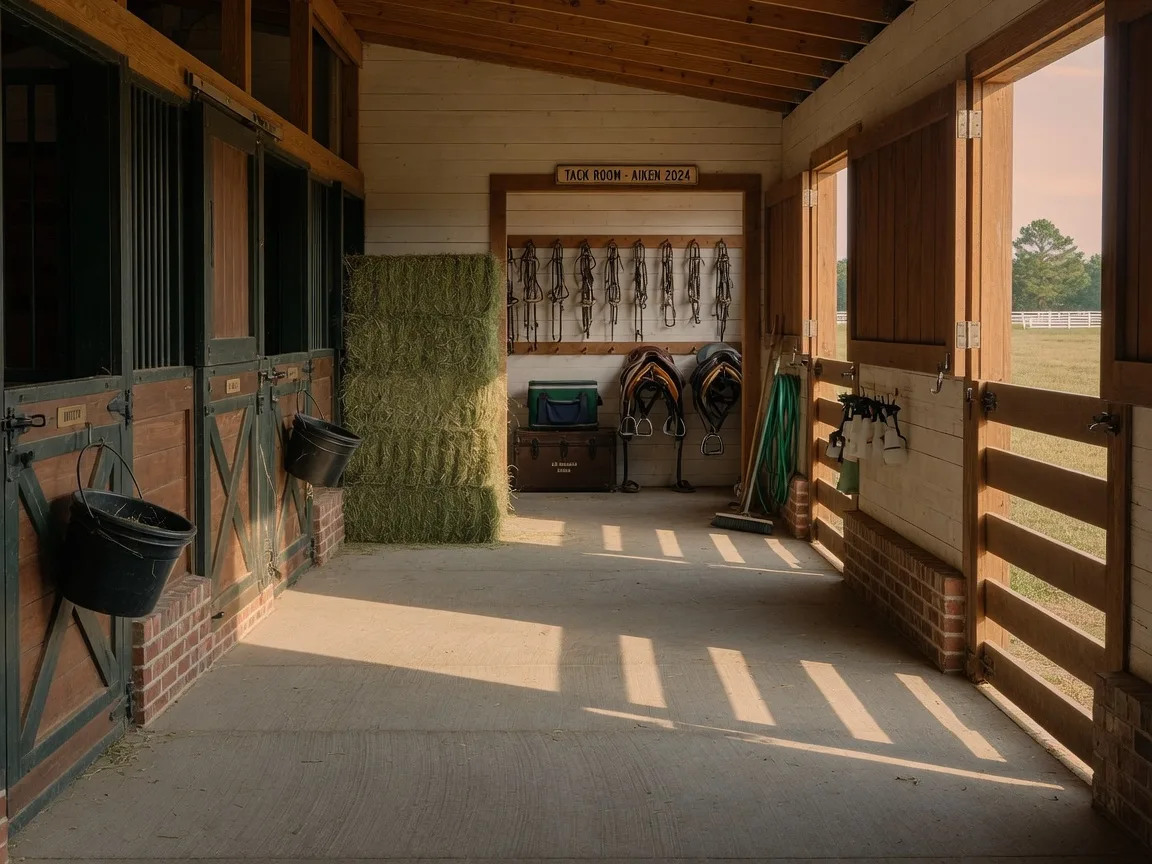
August and September offer a narrow window between the summer heat and the Winter Colony arrival when barn maintenance is practical. Strip every stall down to the floor. Remove all bedding, sweep and wash stall walls, and inspect the condition of mats, walls, doors, and latches. Replace any cracked or curling stall mats now, before seasonal horses arrive. A horse that injures itself on a damaged stall mat in the first week of a winter boarding arrangement creates a bad reputation that follows the property.
Clean cobwebs from rafters, light fixtures, and vents. Pressure-wash the aisle if your barn drainage allows it. Check that all stall doors slide freely and latches engage securely. A stall door that sticks in August will be impossible to open in December when humidity levels rise and the wood swells. Lubricate hinges and rollers. Check that cross-ties, wash rack drains, and hot water heaters are all functioning. The small repairs you make in late summer prevent emergencies during the busy season.
Hay procurement and storage
There is no worse feeling in December than realizing you are running low on hay with a full barn of seasonal horses. Late summer is when local hay farmers know their yield, and it is the best time to lock in your winter supply. Aiken's hay season produces quality coastal Bermuda and Timothy-alfalfa mixes, but availability depends on summer rainfall patterns.
Calculate your hay needs for the full October-through-April season, then add 15 percent for buffer. A horse eats roughly 2 to 2.5 percent of its body weight in forage per day, which means a 1,100-pound horse needs about 20 to 22 pounds of hay daily. For a barn with 10 horses stalled through the winter, that works out to roughly 18 to 20 tons of hay for the season. Order early, inspect each load for mold and dust, and store it in a dry, well-ventilated area off the ground. Good hay storage is an investment that pays for itself in reduced waste and healthier horses.
Water system verification
Late summer is when Aiken wells are typically at their lowest flow rate. Have your well tested now, before the cooler weather returns and water demand increases with a full barn. Test both the flow rate (gallons per minute) and the water quality, including bacteria and mineral content. Aiken's Sandhills water is generally excellent, but individual wells vary depending on depth, age, and seasonal recharge rates.
Flush all automatic waterers and check that float valves are clean and operating smoothly. If you use heated buckets in winter, test them now while the weather is warm enough that a failure is not an emergency. Replace any waterer components that show signs of wear. In a busy winter barn, a single broken automatic waterer can disrupt the whole daily routine.
Pasture rest and rotation planning
After a summer of grazing, your pastures need rest. August and September are the months to implement a rotation plan that gives each pasture at least 30 to 45 days of recovery before the winter grazing season begins. If you have multiple paddocks, move horses to the paddock that will see the least winter use and let your primary winter pastures rest and regrow.
This is also the time to address summer weed pressure. Identify any toxic weeds that may have emerged during the summer months: buttercup, nightshade, and ragwort are common in the Sandhills. Spot-treat or manually remove them before they go to seed. A property with clean, rested pastures entering the winter months is a property that will attract repeat seasonal boarders.
Arena footing assessment
Fall and winter are the busiest riding months in Aiken. The Winter Colony season brings serious riders who expect quality footing. Late summer is the time to assess your arena surface and make adjustments before the regular riders arrive.
Drag and harrow the entire arena. Check the depth of the footing material across the whole surface, not just in the center. Aiken's sand-based arenas often lose depth along the rail and in high-traffic areas like the lettered markers. Add footing material where needed and aim for a consistent depth of three to four inches across the full arena. Check that your arena's drainage system is clear of debris and functioning. If you have an outdoor arena, late summer is the last practical window for major footing work before fall rains arrive.
Fence and gate maintenance
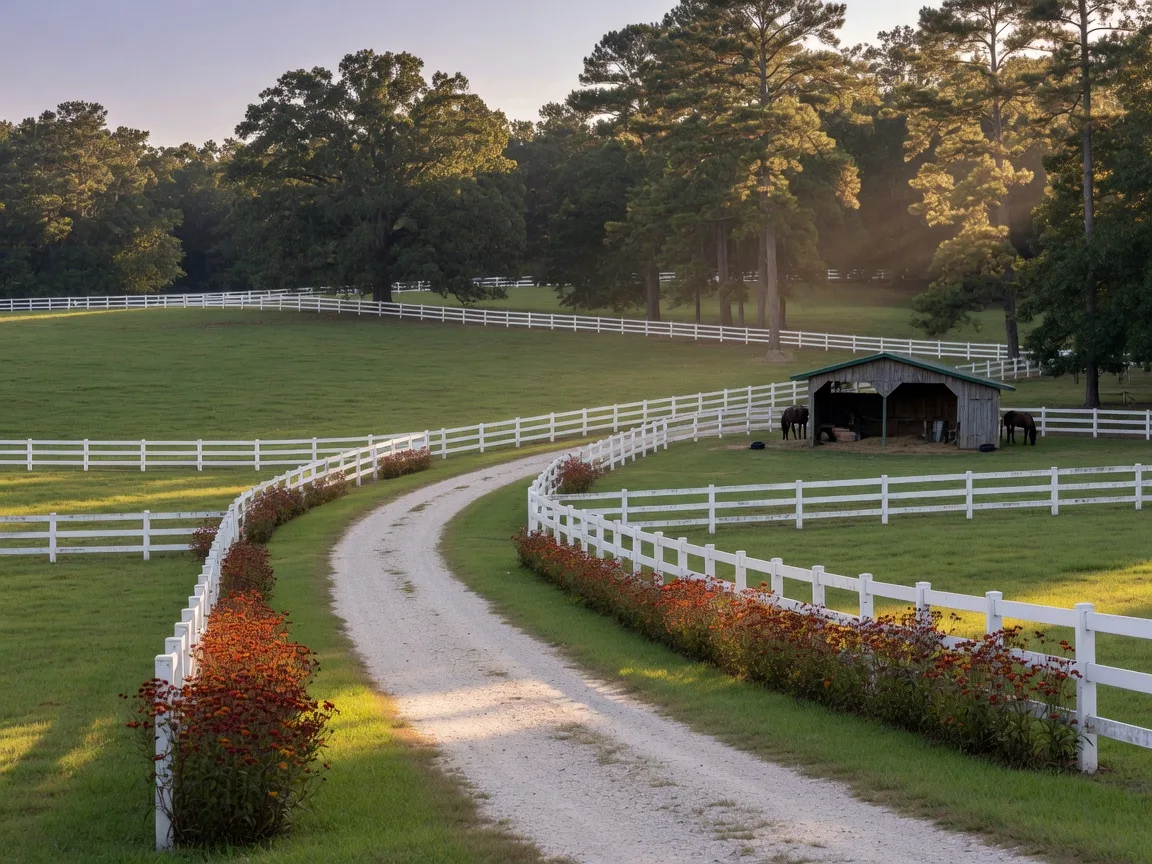
Walk every fence line and check each gate. Late summer vegetation can hide broken boards, sagging wire, and loose posts that become dangerous when horses are turned out in unfamiliar paddocks. Seasonal boarders and their horses do not know your fence lines the way you do. A horse that finds a gap or breaks through a weak section may not stop at the road.
Tighten all gate hinges and check that gate latches close securely. Replace any latch that is stiff or unreliable. Check that all pasture gates open wide enough for a truck and trailer to pass through. If you plan to host visitors who will be bringing their own horses, make sure the trailer turnaround area is clear, well-drained, and free of low-hanging branches.
Farrier, vet, and service provider scheduling
The Winter Colony season stretches Aiken's equestrian service providers to capacity. Farriers who usually schedule two weeks out may be booked four to six weeks in advance by October. Equine veterinarians, massage therapists, and chiropractors are all in higher demand. If you plan to have seasonal horses on your property, schedule your regular farrier and vet visits for the season now. Establish relationships with backup providers in case your regular practitioner is unavailable.
Aiken has an excellent network of farriers, tack shops, and equine services that serve the Winter Colony community. The equine veterinary services in Aiken are world-class, but their schedules fill up fast. Call ahead and book your routine appointments before the seasonal rush begins.
Guest accommodations and amenities
If your property includes a guest apartment, cottage, or additional living space for seasonal staff or boarders, late summer is the time to inspect and prepare it. Check heating and air conditioning systems, test smoke and carbon monoxide detectors, clean carpets and upholstery, and stock basic supplies. A comfortable, well-maintained guest space is a significant advantage when attracting quality seasonal tenants.
For properties that do not have separate guest quarters, consider what amenities you can offer to make the seasonal experience better. A clean, well-stocked tack room with individual locker space. A wash rack with hot and cold water. A secure feed room where boarders can store their own supplements. These details matter more to serious equestrians than the size of the pastures.
Fire safety and emergency preparedness
Fall and winter bring increased electrical usage, space heaters, and more horse hours inside the barn. Check every fire extinguisher on the property, verify that the pressure gauge reads in the green zone, and ensure that extinguishers are mounted in accessible locations in the barn, tack room, feed room, and any guest quarters. Review your emergency evacuation plan. If you have seasonal boarders, include them in the plan and post clear directions near the barn entrance.
Test your barn's smoke detectors and replace batteries. If the barn does not have interconnected smoke alarms, consider installing them before the winter season. Barn fire prevention is a year-round responsibility, but the stakes are highest when the barn is full of horses that are not your own.
A prepared property attracts quality seasonal clients.
Whether you are a property owner getting ready for winter boarders or a buyer looking for a horse property that can generate seasonal income, I can help. With more than 20 years of experience in Aiken equestrian real estate, I understand what makes a property work for the Winter Colony community.
The Aiken winter season opportunity
The Winter Colony tradition is what makes Aiken unique among American equestrian communities. It is a nearly 150-year-old cycle that brings wealth, expertise, and energy to the local horse economy every year from October to April. Property owners who prepare thoughtfully for this season not only protect their investment, they position themselves as valued members of a community that spans generations.
For those considering buying a horse property in Aiken, the Winter Colony season is an important factor to consider. Properties that can accommodate seasonal boarders or trainers have income-generating potential that standard residential properties lack. The Horse District zoning supports this type of equestrian commerce, and the demand for quality winter boarding space remains strong year after year.
If you are thinking about buying a horse property in Aiken with the Winter Colony in mind, I can help you identify properties with the right infrastructure: well-designed barns with enough stalls, good pasture rotation potential, reliable water systems, and the kind of arena footing that serious riders expect. Contact me to start the conversation about finding the right Aiken horse property for your needs.