
Buying Horse Property in Aiken? Read This First.
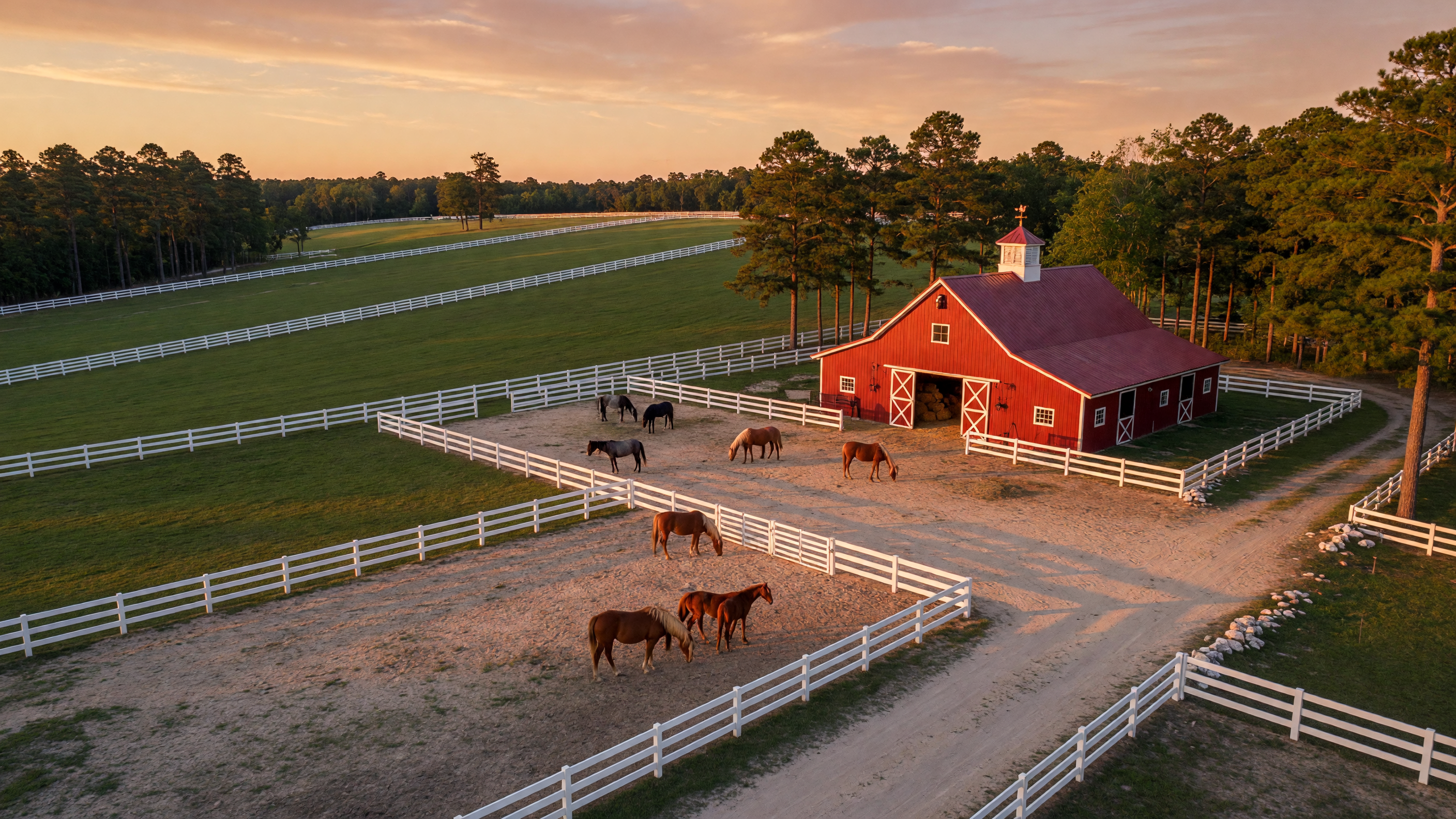
Aiken, South Carolina is one of the most celebrated equestrian communities in the Southeast — and for good reason. With 2,100 acres of Hitchcock Woods, a steeplechase tradition dating to the 1880s, and world-class boarding and training facilities, it's a place where horses aren't just accommodated — they're celebrated. But buying a horse property here is different from buying a regular home, and the differences matter.
After more than 20 years of helping buyers navigate Aiken's equestrian real estate market, I've seen the same mistakes trip up well-intentioned buyers again and again. Here's what you need to know before you make an offer. For a detailed breakdown of what to evaluate, see our Buyer's Guide and download our free Horse Property Buyer's Checklist.
01 — The barn tells you everything
A beautiful home on 20 acres means nothing if the barn is falling apart. The barn is the most expensive structure on any horse property, and its condition directly affects your daily life and your horses' health. Before you fall in love with the house, evaluate the barn: What's the construction material? How are the stalls sized? Is the ventilation adequate? Are there wash bays, a tack room, and feed storage? See our guide on evaluating a barn and explore the types of barns and facilities in Aiken. A well-built barn can last 50 years; a poorly maintained one can cost $50,000+ to remediate.
02 — Water is everything
Horses consume 10–15 gallons of water per day. A barn with 10 stalls needs reliable water supply — and most horse properties in Aiken run on well water. Before you buy, verify the well's flow rate (gallons per minute), have the water tested for quality and contaminants, and check whether automatic waterers are installed in pastures. A property with a weak well can become a daily headache.
03 — Footing matters more than you think
If the property has an arena, the footing is critical. Poor footing leads to injuries and makes the arena useless. Aiken's sandy soil is naturally well-draining — a major advantage — but arena footing requires a proper base layer (typically compacted stone with geotextile fabric) and regular maintenance. Ask about the footing material, depth, and how often it's dragged. A professional footing evaluation is worth the cost.
04 — Zoning can make or break your plans
Aiken County zoning regulations govern how many horses you can keep per acre, whether you can operate a commercial boarding facility, and what structures are permitted. If you plan to board other people's horses, train professionally, or host events, you need to understand the zoning before you buy. What's permitted on one property may not be permitted on the next.
05 — Fencing is a major expense
Board fencing in good condition is the gold standard in Aiken — and it's expensive to install or replace. A quarter-mile of five-rail board fencing can cost $15,000–$25,000. If the existing fencing is in poor condition, factor the replacement cost into your offer. Conversely, well-maintained board fencing adds significant value to a property.
06 — Trail access is a premium feature
Properties with direct access to Hitchcock Woods or other trail systems command a premium — and for good reason. The ability to ride from your barn into 2,100 acres of maintained trails without loading a trailer is one of Aiken's most valuable lifestyle features. Check our neighborhood guide for areas with trail access. If trail access matters to you, prioritize it in your search.
Let me help you find the right horse property.
I know every equestrian corridor in Aiken. Contact me for a personalized property search based on your discipline, budget, and lifestyle.
Contact Linda