
Barn Safety and Fire Prevention for Aiken Horse Properties: A Complete Guide for Equestrian Property Owners
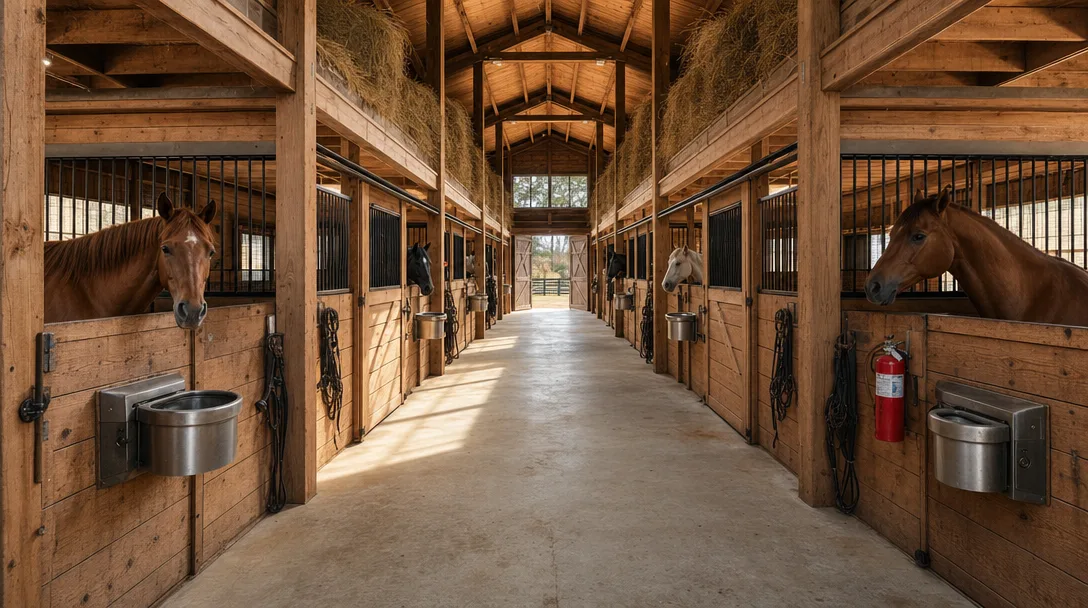
For horse property owners in Aiken, the barn is the heart of the operation. It is where we store hay and bedding, where our horses spend their nights and bad-weather days, and where we keep the tools and equipment that keep the property running. It is also, by its nature, one of the most fire-vulnerable structures on any property. Barn fires are devastating, but they are also largely preventable. Whether you are shopping for a horse property in Aiken, building a new barn, or upgrading an existing one, understanding fire safety is one of the most important investments you can make.
Why barns are at risk
A barn contains nearly every ingredient a fire needs to start and spread quickly. Hay and bedding are highly combustible. Dust and cobwebs accumulate in rafters and around electrical fixtures. Electrical wiring runs through wooden structures that may have been built decades before modern codes existed. Add in extension cords, space heaters, fans, lighting, and the occasional piece of machinery, and the risk profile is clear.
According to the National Fire Protection Association (NFPA), barn fires are most commonly caused by electrical malfunctions, followed by equipment operation, smoking, and arson. In Aiken, where many horse properties date back to the Winter Colony era or were built to earlier standards, proactive fire safety upgrades are especially important.
The hard truth
The NFPA reports that barn fires are most common between November and April, when horses are stalled more frequently and heating equipment is in use. The majority occur overnight, when detection is delayed and response times are longer. Prevention is the only reliable defense.
Electrical safety: the most common cause
Faulty electrical systems are the leading cause of barn fires in the United States. In older barns, wiring may be undersized, improperly grounded, or chewed by rodents. Even in newer construction, dust infiltration into junction boxes and outlets can create arc faults that ignite adjacent wood or bedding.
What to check: All electrical work should be performed by a licensed electrician familiar with agricultural or equestrian facilities. Wiring should be housed in metal conduit or armored cable, not plastic sheathing that rodents can penetrate. Outlets and switches should be sealed against dust, preferably with weatherproof covers. Install ground-fault circuit interrupters (GFCIs) on all outlets within reach of moisture. Panel boards should be located in a clean, dry, accessible area away from hay storage.
For Aiken horse property buyers, a pre-purchase barn inspection by a qualified electrician is a worthwhile investment. The barn may look beautiful, but the wiring behind the walls tells the real story. Replacing outdated electrical systems can cost thousands, and the work is far easier to negotiate before closing than after.
Hay and bedding storage
Hay is the single largest fuel source in any barn. A single bale can sustain a fire long enough to destroy an entire structure. NFPA 150, the standard for fire and life safety in animal housing facilities, requires that hay and bedding be stored separately from stabling areas in a fire-rated enclosure.
On Aiken horse properties, the best practice is to store hay in a dedicated building or a separate section of the barn with a fire-rated wall of at least one hour. If that is not possible, keep the hay storage area as far from the stables as the property layout allows. Never store hay in the same aisle as stalls, and never stack it directly against electrical panels, water heaters, or light fixtures.
Hay that is too moist when baled can generate internal heat through microbial activity and spontaneously combust. This risk is highest in the weeks immediately after baling. Monitor stored hay for warmth, musty odor, or visible steam, and allow freshly baled hay to cure for at least two to three weeks before stacking it tightly.
Fire detection and suppression
Early detection is the difference between a manageable incident and a total loss. Every horse barn should be equipped with smoke and heat detectors connected to a monitored alarm system. In Aiken, where many horse properties are in rural or semi-rural areas, a monitored system that alerts the owner and the local fire department can cut response time dramatically.
Detection recommendations: Install smoke detectors on the ceiling of every aisle, in each tack room, and above hay storage areas. Heat detectors are preferable in dusty areas where smoke detectors may false-alarm. Link all detectors so that one activation sounds alarms throughout the barn. Test them monthly and replace batteries twice a year.
Suppression equipment: Every barn should have ABC-rated fire extinguishers mounted at each exit, near the hay storage area, and in the tack room. ABC extinguishers handle ordinary combustibles, flammable liquids, and electrical fires. Check pressure gauges monthly and have extinguishers serviced annually. In new construction or major renovations, consider a sprinkler system or a dry-pipe fire suppression system, which is better suited to freezing conditions than wet-pipe alternatives.
Barn construction and materials
If you are building a new barn or planning major renovations on an Aiken horse property, material choices matter. South Carolina adopts the International Fire Code (IFC) 2021 with state amendments, and new agricultural buildings over 200 square feet typically require building permits. NFPA 150 provides the primary national guidance for equestrian facilities.
Fire-resistant construction: Non-combustible materials such as concrete block, masonry, or steel framing provide the highest level of fire protection. If wood construction is preferred or required by the barn's architectural style, use fire-retardant treated lumber and apply two coats of fire-retardant latex paint on interior surfaces. Metal or tile roofing is strongly preferred over wood shakes, which ignite easily from embers. Drywall or fire-rated gypsum board on stall walls and ceilings adds a critical barrier between compartments.
Stall doors that open to the exterior are a design feature worth prioritizing. In an emergency, the ability to release horses directly to the outside from each stall — rather than driving them down a narrow aisle — can mean the difference between evacuation and entrapment. Center aisle barns with cross-ventilation and multiple exit points are inherently safer than single-aisle designs.
Housekeeping and maintenance
The cleanest barn is the safest barn, and this is an area where daily habits matter more than any single investment. Cobwebs and dust accumulate quickly in barn rafters and around light fixtures. In the presence of an electrical arc or a nearby heat source, even a small accumulation of dust can ignite and spread fire upward into the loft or roof structure.
Daily and weekly tasks: Remove cobwebs from ceilings, rafters, and light fixtures weekly. Keep aisles clear of hay, straw, and manure. Sweep dust from light fixtures and electrical panels. Store flammable materials such as paints, solvents, and fuel in a separate locked cabinet away from horse areas. Ensure that gasoline-powered equipment, including tractors, mowers, and pressure washers, is stored in a separate building or a well-ventilated equipment shed, not inside the barn.
Smoking should never be permitted inside or within 50 feet of any barn. Post no-smoking signs at every entrance and enforce the policy with everyone who visits the property.
Emergency evacuation planning
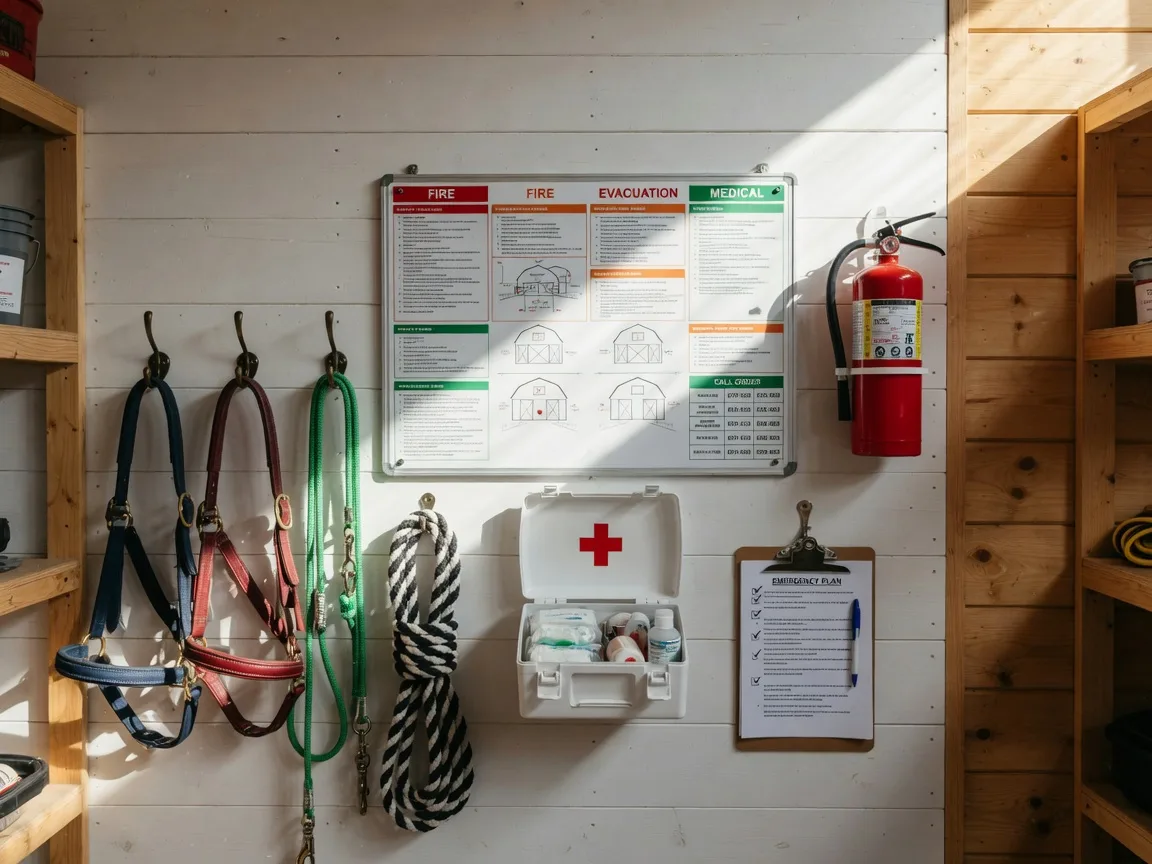
A fire safety plan is only as good as the practice behind it. Every Aiken horse property should have a written, posted emergency evacuation plan that every person on the property knows. The plan should include:
- Primary and secondary evacuation routes from each stall, mapped and clearly marked
- An assembly area downwind and at a safe distance from the barn where horses are gathered and accounted for
- Emergency contact numbers posted at every phone and on the barn bulletin board, including 911, the local fire department, and a list of neighbors with trailers who can assist
- Individual halters and lead ropes hanging at each stall, ready for immediate use
- A practice schedule: run a barn evacuation drill at least twice a year — once in daylight and once after dark
Horses are creatures of habit. A horse that has never been led out of its stall in the dark may panic during a real emergency. Regular practice builds muscle memory for both the horse and the handler. If you share a barn with boarders, include them in the drills and ensure everyone knows their role.
What to look for when buying a horse property
When you are evaluating a horse property in Aiken, fire safety should be on your inspection checklist alongside well water quality, septic condition, fencing, and barn structural integrity. Here are the specific questions to ask:
Buyer's barn safety checklist
- Is the barn's electrical system up to current code? When was it last inspected?
- Are there fire extinguishers in the barn? What is their service date?
- Is hay stored separately from the stabling area, or is it in the same structure?
- Do stall doors open to the exterior for emergency evacuation, or are horses aisle-accessed only?
- Are there smoke or heat detectors installed and operational?
- Is there an accessible water supply near the barn for firefighting purposes?
- Does the property have a written emergency plan, and has it been practiced?
If a property scores poorly on several of these items, do not necessarily walk away, but do factor the cost of upgrades into your offer. A new electrical panel, rewiring, detector installation, and fire extinguisher placement are all achievable improvements. A barn built entirely of combustible materials with no fire separation between hay and horse areas is a larger conversation that may require professional consultation.
Insurance considerations
Fire safety upgrades can also affect your insurance premiums. Many farm and equine insurance carriers offer discounts for properties with monitored fire alarms, sprinkler systems, fire-rated construction, and documented safety practices. When you are shopping for horse property insurance in South Carolina, ask your agent specifically about barn fire safety credits. Some carriers also require a barn inspection before writing a policy, and addressing deficiencies proactively puts you in a stronger negotiating position.
Documented trail access to Hitchcock Woods or other equestrian amenities may affect property value, but it does not affect fire risk. Rural Aiken properties without municipal water service should have a dedicated pond, well, or dry hydrant accessible to the local fire department. Confirm during your due diligence period that emergency vehicles can access your barn approach and turn around safely.
The bottom line
Barn fire safety is not a one-time project. It is an ongoing commitment that starts with the design and construction of the barn and continues through every season of ownership. In Aiken's horse country, where properties often combine historic charm with modern equestrian use, the balance between preservation and safety requires thoughtful attention.
The good news is that most barn fires are preventable. Simple, affordable steps — cleaning cobwebs monthly, checking extinguisher gauges, installing basic detectors, storing hay separately — can reduce risk by orders of magnitude. When you factor in the value of the horses, the equipment, and the structure itself, there is no excuse for leaving those steps undone.
Let me help you find a safe, well-built equestrian property.
I have been helping buyers and sellers navigate Aiken's horse property market for more than 20 years. Whether you are looking for a turnkey facility with modern safety features or a historic property with potential for upgrades, I can guide you to the right opportunity.
Schedule a Consultation