
The Horse Property Features That Matter Most in Aiken, SC: A Buyer's Guide to Barns, Land, and Infrastructure
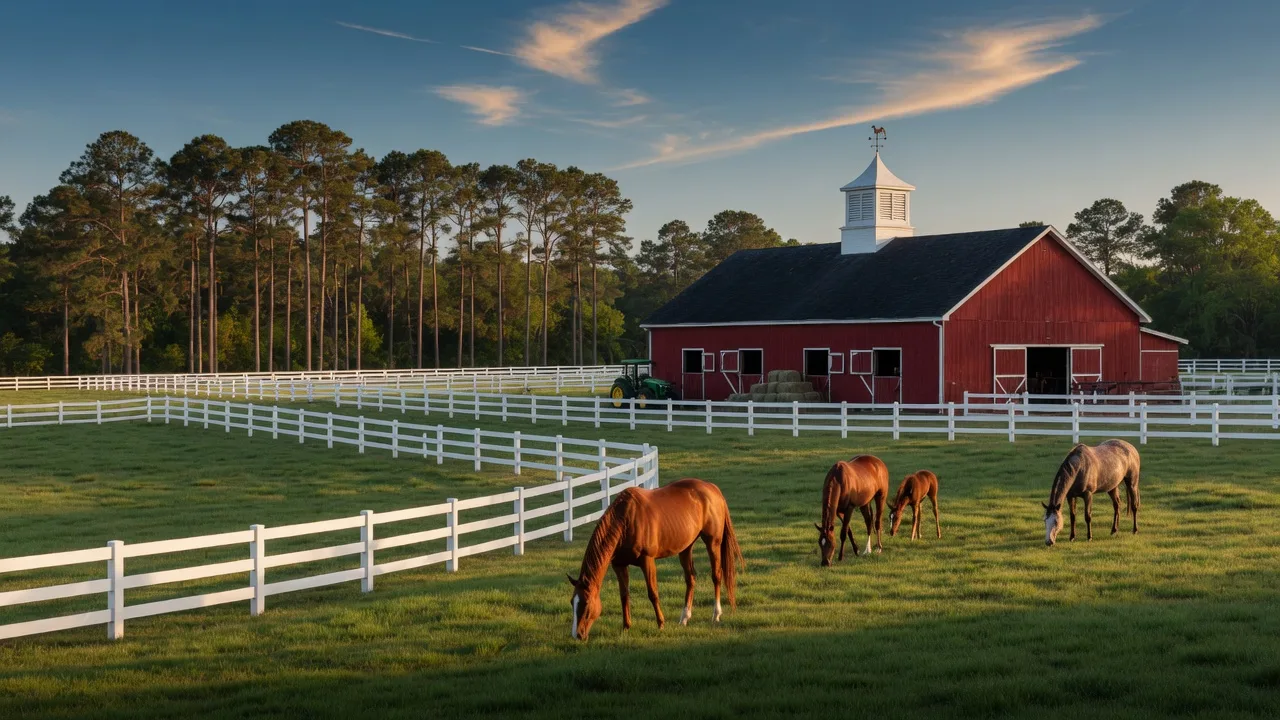
When you start touring horse properties in Aiken, the first thing you notice is how different each one is. Some have century-old barns built by Winter Colony families. Others have brand-new metal structures with automatic waterers and LED lighting. Some sit on twenty acres of coastal Bermuda pasture. Others are tucked onto five acres with direct trail access into Hitchcock Woods. The variety is one of the great strengths of the Aiken market, but it also means you need to evaluate each property on its own terms. Here is a practical guide to the horse property features that matter most, from barn construction to pasture quality to water infrastructure.
After more than 20 years helping buyers assess equestrian properties in the CSRA, I have developed a consistent approach to evaluating horse farms. The checklist is not the same for every buyer, every discipline, or every budget. But the fundamentals — barn condition, water supply, fencing quality, pasture health, and zoning — apply to every property. If you have not already downloaded our free Horse Property Buyer's Checklist, it is a good place to start your search. What follows is the deeper story behind each line item on that list.
Barn construction and structural integrity
The barn is the most expensive structure on any horse property, and it is the one most likely to have hidden issues. Start with the foundation. A barn that sits on a proper poured concrete or block foundation will outlast one that rests on treated timbers or skids. Look for signs of settling, cracked concrete, or gaps where the sill plate meets the foundation. These can indicate drainage problems that get worse over time.
Next, examine the framing. In Aiken's older barns you will often find heavy timber construction — heart pine beams and mortise-and-tenon joinery that has held up for decades or even a century. These barns can be spectacular, but they also require ongoing maintenance. Check for rot at the base of posts, especially in areas where water pools. Look at the roof structure. A sagging ridge line or visible daylight through the roof deck means the barn needs more than cosmetic repairs. For a full breakdown on evaluating barns, see our guide to evaluating a barn on a horse property.
Newer barns in Aiken typically use metal framing or engineered wood trusses. These can be excellent, but they also have their own inspection points. Make sure the metal roof has proper insulation underneath to reduce condensation in summer. Check that kick walls are high enough to prevent horses from reaching over the stall fronts. And verify that the barn's electrical system is up to code — many older barns in Aiken were wired decades ago and may not handle the load of modern fans, lights, and automatic waterers.
Stall configuration and ventilation
Stall size matters more than many buyers realize. The standard horse stall measures 12 by 12 feet, which works for most pleasure horses and warmbloods. But larger horses, particularly Thoroughbreds and draft crosses, benefit from 12-by-14 or 14-by-14 stalls. If the barn has stalls smaller than 12 by 12, factor in whether they can be expanded or whether they will work for your horses.
Ventilation is just as important. Aiken's summers are hot and humid, and a barn without adequate airflow becomes a respiratory health risk for horses. Look for barns with open front or rear windows, ridge vents, cupolas with operable louvers, or mechanical ventilation. The best barns in Aiken use natural airflow through thoughtful design — high ceilings, open common areas, and windows positioned to catch prevailing breezes. If the barn relies entirely on fans, consider how those fans hold up during power outages or the hottest afternoons in July and August.
Also evaluate the aisle width. A center aisle of at least 10 to 12 feet allows two horses to pass safely. Narrower aisles create dangerous bottlenecks, especially when turning horses in and out. Look at the flooring in the aisles and stalls. Rubber mats over a compacted stone dust base are the gold standard. Bare concrete can lead to hoof and leg issues. Deep bedding over dirt is workable but requires more labor and material.
Water supply and well infrastructure
Water is the single most critical operational feature on any horse property. A horse drinks 10 to 15 gallons per day, and a barn with a dozen horses needs a water system that can deliver 150 or more gallons daily without interruption. Most Aiken horse properties run on well water, and the well's capacity determines what the property can support.
When evaluating a property, ask for the well log, which records the well depth, static water level, and flow rate in gallons per minute. A flow rate of 5 gallons per minute or higher is generally adequate for a small horse property with 2 to 3 horses. For larger operations, 10 gallons per minute or more is preferable. Also ask about water testing — has the well been tested for bacteria, nitrates, and mineral content? Aiken's sandy soil filters water well, but testing is the only way to be certain. Our guide on water, wells, and septic on Aiken horse properties covers this topic in detail.
Do not overlook the automatic waterers. In-barn automatic waterers are convenient, but they require clean, pressurized water and regular maintenance. Check whether they are plumbed with shutoff valves so individual stalls can be isolated for cleaning. In the pastures, look for frost-free hydrants or automatic water troughs. Aiken's winters are generally mild, but a hard freeze can shut down exposed water lines. The best setups have buried water lines with frost-free risers at each trough location.
Can the water supply support your horses year-round?
That question drives everything else. A weak well or inadequate pasture hydrants can be expensive to fix after closing. Let us prioritize properties whose infrastructure matches your needs.
Contact LindaFencing: condition, type, and layout
Fencing is one of the most visible features on any horse property, and it is also one of the most expensive to replace. Aiken's signature look is white board fencing — typically pressure-treated pine or poplar with three to five rails. In good condition, board fencing is safe, attractive, and effective. In poor condition, it is a hazard. Walk the entire fence line on any property you are serious about. Check for loose rails, protruding nails, rot at the post bases, and sagging sections that could allow a horse to push through.
Beyond board fencing, look for no-climb wire mesh fencing with a top rail. This is an excellent alternative for smaller paddocks or properties where horses tend to test boundaries. Electric fencing, either tape or wire, is common for interior divisions and rotational grazing paddocks. For a full run-down on fencing types and costs, see our guide to horse fencing in Aiken, SC.
The fence layout is also important. Corner paddocks with safe, rounded corners are better than tight ninety-degree angles that trap horses. Gates should open into the paddock, not outward, and should be positioned so horses cannot escape when you open them. Check that all gates have secure latches that a horse cannot figure out. The time spent walking the fence line at a property you are considering is time well spent.
Pasture quality and land management
Aiken's Sandhills soil is naturally well-draining, which is a major advantage for horse properties. But sandy soil also has lower nutrient content than clay-based soils, and pastures need thoughtful management to stay productive. When you tour a property, look at the pasture cover. Is it predominantly coastal Bermuda grass, which thrives in Aiken's climate and is excellent for horses? Or is it mostly weeds, bare sand, and broomsedge?
Ask about the property's pasture management history. Has the land been soil-tested? When was it last limed or fertilized? How does the owner manage rotational grazing? A property with well-maintained pastures on a rotation system will have healthier grass and fewer parasite issues than one where horses are turned out on the same paddocks year after year. Our seasonal guide to pasture management in Aiken's Sandhills covers what you need to know about keeping your land productive through the seasons.
Pay attention to how the land drains. After a good rain, walk the property and observe where water pools. Sandy soil drains quickly, but low-lying areas can still hold water for days. Standing water leads to mud, hoof issues, and fly breeding grounds. If you see large wet areas, consider whether they can be graded or tiled to improve drainage. Our guide to stormwater management and drainage on Aiken horse properties offers a deeper look at this topic.
Arena and footing
If the property has an arena, evaluate it with the same rigor as the barn. The footing is the most important factor. Dig down a few inches and look at the base layer composition. A properly constructed arena has a compacted stone base, a geotextile fabric layer, and 3 to 4 inches of groomed footing material on top. The footing itself varies by discipline: washed sand for dressage, sand with a wax coating for jumpers, or a sand and rubber mix for multi-purpose use.
Check the arena drainage. Does water run off the surface, or does it pool on top? Aiken's sand helps drainage, but poor base construction can still lead to standing water. Also consider the arena's orientation. An arena aligned north-south is preferable so riders are not staring directly into the rising or setting sun. Look at the fencing around the arena, the condition of the footing depth, and whether the arena is maintained with a drag. A neglected arena with uneven footing, weed growth, and poor drainage can cost tens of thousands to rebuild.
If the property does not have an arena, factor in the cost and space requirements of building one. A basic 60-by-120-foot dressage arena with quality footing costs in the range of $15,000 to $30,000 to construct, depending on site preparation and materials. A larger 100-by-200-foot jumper field costs significantly more. Our guide on arena construction and footing in Aiken's Sandhills covers the options.
Trail access and location
One of the most valuable features an Aiken horse property can offer is direct access to trails. Properties adjacent to Hitchcock Woods, along the city's designated bridle paths, or near the Palmetto Trail system command a premium because they let you ride out your gate onto maintained trails. If trail access matters to you, prioritize it in your search. A property without trail access can still be a great home for your horses, but you will spend more time loading and trailering to ride.
Beyond trail access, consider the property's location relative to equestrian services. How close is the nearest farrier? How far is the nearest tack shop or feed store? Aiken has excellent local resources, including Aiken Tack Exchange on Hedge Road and Oak Manor Saddlery on Wagener Road. Feed stores like Aiken County Farm Supply on Park Avenue and Banks Mill Feeds on Banks Mill Road keep local horse owners supplied with hay, grain, and bedding. And farriers like Monetta Farrier Specialties on Park Avenue serve properties across the Aiken area. A property within a short drive of these services makes day-to-day horse management simpler and less expensive.
Zoning and permitted uses
Aiken County zoning regulations determine how many horses you can keep, what structures you can build, and whether you can operate a commercial boarding or training business. The Aiken Horse District, which includes much of the historic Winter Colony area, has specific zoning that protects equestrian uses. Outside the Horse District, agricultural zoning typically allows horses, but the details matter. If you plan to board other people's horses, give lessons, or train professionally, confirm that the zoning allows those uses before you make an offer.
For a detailed look at this topic, see our Horse District zoning guide. The short version is: know what you plan to do with the property, verify that the zoning supports it, and factor any needed variances or permits into your timeline and budget.
Beyond the checklist
The horse property features that matter most are the ones that affect your daily life with your horses. A beautiful home can be renovated. A weak well can be expensive and difficult to fix. Poor fencing can be a safety risk. An arena with bad footing can limit your riding. And a property without trail access can change how often you ride.
What I tell every buyer I work with is simple: prioritize the horse infrastructure. The house can wait. The barn, the water, the fencing, the pastures, and the location relative to services and trails are the features that will shape your experience every single day. If you get those right, everything else falls into place.
Let me help you find the right horse property in Aiken.
I can help you evaluate barns, wells, fencing, and pastures on every property we visit. Schedule a consultation and we will build a targeted search around your must-have features.
Schedule a Consultation