
Pasture Management for Horse Properties in Aiken's Sandhills: A Seasonal Guide
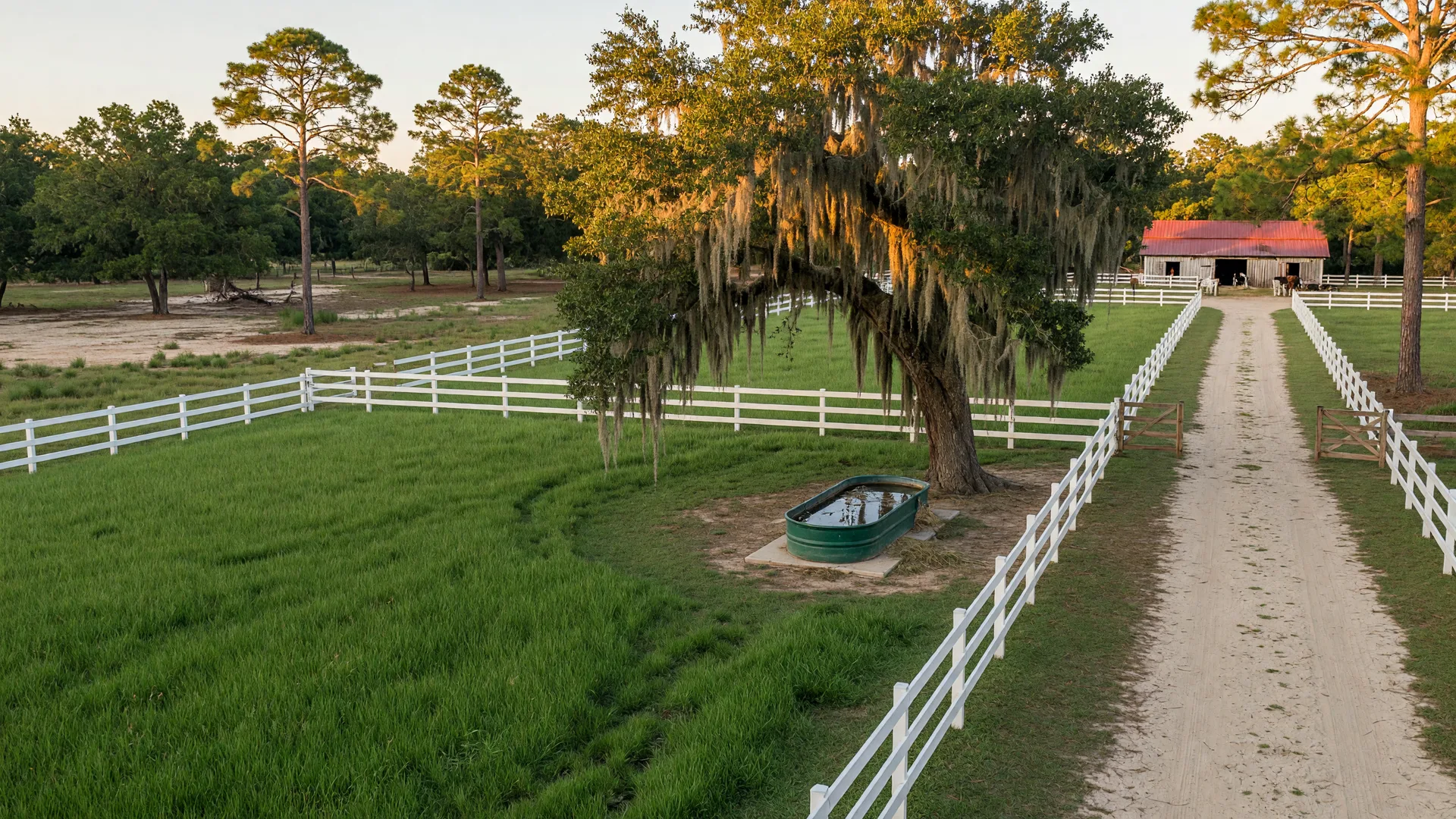
When buyers walk a horse property for the first time, they look at the barn, the fencing, the arena. They count stalls and measure paddocks. But the piece of land that will have the most impact on their daily life and their horses' health is the one they rarely inspect closely: the pasture. In Aiken's Sandhills region, where deeply weathered sandy soils dominate the landscape, pasture management is not the same as it is in the Piedmont or the Midlands. It requires a different approach, different grasses, and a different seasonal rhythm. After more than 20 years of working with horse property owners across the CSRA, I have seen the difference between a property with well-managed pasture and one where the land has been pushed past its limits. This guide covers what you need to know.
Understanding your Sandhills soil
The Sandhills region that runs through Aiken sits on ancient coastal plain deposits. The soil here is primarily sandy loam and loamy sand, which drains beautifully but holds very little organic matter or nutrients. That excellent drainage is one reason Aiken has such a long history as a horse community. In wet weather, your pastures will be usable when clay-based properties elsewhere are a mud pit. But the trade-off is that Sandhills soil needs more deliberate care to stay productive.
The single most important step you can take is soil testing. Clemson Extension offers soil testing through their Aiken County office, and I recommend testing every pasture at least every three years. The test will tell you your pH, nitrogen, phosphorus, and potassium levels. In the Sandhills, it is common to need 1 to 2 tons of lime per acre to correct pH. Without that correction, fertilizer is essentially wasted. The grass cannot absorb it. You can pick up soil sample kits at the Clemson Extension Office at 1555 Richland Avenue East in Aiken or download the forms from their website.
Pro tip from Linda
When you are evaluating a horse property to buy, ask the seller or listing agent if recent soil tests are available. A property with a documented soil management history is a property that has been cared for. If no tests exist, budget $500 to $1,000 for initial soil amendment in your first year.
The right grasses for Aiken's sand
Not every forage grass thrives on sandy soil. The grasses that do best in Aiken's climate and soil conditions fall into two categories.
Warm-season grasses are the backbone of summer grazing. Coastal Bermuda grass and Tifton 85 Bermuda grass are the top choices across the Sandhills. They are drought-tolerant, handle sandy soil well, and produce excellent forage when managed properly. Bahia grass, particularly the Pensacola variety, is another strong option. It thrives on nutrient-poor sandy soil where Bermuda might struggle, though it is slightly less palatable to horses. A well-established stand of Bermuda grass can reliably carry horses through the growing season from May through October.
Cool-season forages fill the winter gap. Annual ryegrass overseeded in October or November provides green forage through the cooler months when warm-season grasses go dormant. Many Aiken horse property owners also interseed white clover in transition zones to fix nitrogen naturally and improve the overall protein content of the pasture mix.
If you are looking at a property that is mostly native grasses and weeds, factor in the cost of pasture renovation. Spraying, tilling, seeding, and establishing a new stand takes 12 to 18 months before the pasture is ready for regular grazing. See our Buyer's Guide for Horse Properties for more on what to evaluate during your search.
Rotational grazing: the single best practice
If you do only one thing differently with your pasture management, make it rotational grazing. It is the most effective way to improve forage quality, reduce parasite load, and extend your grazing season on a Sandhills property.
The principle is simple: divide your pasture into smaller paddocks and rotate horses through them on a schedule. A good starting point is rotating every 5 to 7 days during the growing season, giving each paddock 25 to 35 days of rest before horses return. During rest periods, the grass regrows, root systems rebuild, and parasite larvae die off before being ingested again. The result is healthier forage and healthier horses.
On smaller properties with limited acreage, rotational grazing still works with fewer paddocks and a sacrifice lot. A sacrifice lot is a smaller, heavily used dry lot where horses stay when pastures need recovery. Every Aiken horse property, regardless of size, benefits from at least one sacrifice area. It protects your pasture from being overgrazed into dirt.
Spring and summer pasture care
Spring is when the work starts. Soil tests should come back before March so you can apply lime and fertilizer at the right time. Warm-season grasses break dormancy when soil temperatures reach 60 to 65 degrees Fahrenheit, which in Aiken typically happens in early April. Begin rotational grazing once the grass is 6 to 8 inches tall, and never let horses graze below 3 to 4 inches. Grazing too short in sandy soil pulls up roots and invites weeds.
Mow pastures to 4 inches three to four times during the growing season or after each rotation. Mowing after rotating horses out keeps weed pressure down and prevents grass from going to seed. Drag pastures with a harrow to break up manure piles and spread nutrients evenly. Do this only when the weather is hot and dry, not before a rain, to avoid spreading parasite eggs into wet areas where they survive longer.
Summer is the season to watch water and shade. Aiken's summer temperatures regularly hit the mid-90s with high humidity. Sandy soil dries out fast, so irrigate if you have the infrastructure. Every pasture needs at least one shaded area with clean, fresh water. A 1,000-pound horse in summer heat needs 15 to 20 gallons of water per day. Check troughs daily. Algae buildup in automatic waterers is a recurring problem in the South Carolina heat. Clean them weekly.
For more on managing your property through the hottest months, see my guide on preparing your horse property for Aiken's summer heat.
Fall and winter pasture strategies
Around October, warm-season grasses begin to go dormant. This is the time to overseed with annual ryegrass if you want winter grazing. You can also apply another round of lime based on your soil test results. Fall applications have the winter months to work into the soil before spring growth.
Winter is when a sacrifice lot earns its keep. Turn horses out onto dormant pasture only on dry days, and use the sacrifice area when the ground is wet. Grazing frozen or saturated dormant grass damages the crown of the plant and sets back next year's growth. Feed hay in the sacrifice lot and move feeding areas every few days. This simple practice spreads manure and urine nutrients across the lot instead of concentrating them in one spot. Over the winter, the sacrifice lot will lose grass, but your main pastures will emerge in spring healthy and ready to grow.
Hay feeding during winter is a major expense on any Sandhills horse property. A horse eats roughly 2 percent of its body weight in forage per day, which means a 1,000-pound horse goes through about 20 pounds of hay daily. For a four-month winter, that is roughly 2,400 pounds of hay per horse. Good-quality coastal Bermuda hay from local growers runs $6 to $10 per bale depending on the season. Buy ahead when you can, and store hay under cover to prevent molding.
Fencing and pasture layout
Pasture management starts with good fencing. For rotational grazing, interior paddock fencing can be portable electric tape or polywire on step-in posts. These systems are affordable, easy to move, and work well for horses when properly electrified. Perimeter fencing is a different investment. Aiken's gold standard is five-rail white board fencing, which runs $15,000 to $25,000 per quarter-mile installed. It is beautiful, safe, and expensive to maintain. For larger properties, many owners use a combination of board fencing along roads and paddock fencing in interior pastures.
Think about pasture layout when you design your paddocks. Run paddocks in strips that give horses access to shade and water in every section. Place gates at corners so you can move horses without walking them through the center of a paddock. Consider a lane system that lets you move horses between paddocks, the barn, and the arena without crossing a public road.
For a full breakdown of your options, read my Horse Fencing Guide for Aiken SC.
Weed management and toxic plants
Sandy soil properties in the Sandhills are prone to certain weeds, and some are toxic to horses. The most common problem plants in the Aiken area include buttercups, which cause mouth blistering, and nightshade species. Ragweed, while not acutely toxic, competes aggressively with pasture grasses and reduces forage quality. Walk your pastures regularly during the growing season and identify any unfamiliar plants. Clemson Extension's Aiken office and the local SC Farm Bureau can help with identification and treatment recommendations.
Spot-treatment with herbicides is effective, but use caution around water sources and never spray when horses are in the paddock. If a pasture has significant weed pressure, mow before weeds go to seed and consider a full-season rotation that builds grass density. The strongest defense against weeds is a thick, healthy stand of pasture grass.
The value of good pasture management
On an equestrian property, land is an asset. Well-managed pasture does more than feed your horses. It prevents erosion, filters runoff, reduces mud, and increases property value. When I show horse properties to buyers, the condition of the pasture tells me more about how the property has been treated than almost anything else. A property with healthy Bermuda grass pastures, a working rotational grazing system, and a clean sacrifice lot is a property that has been loved.
If you are looking for a horse property in Aiken and want guidance on evaluating the land, the barn, and everything in between, I can help. Reach out to schedule a consultation, or browse current Aiken horse properties for sale to get a sense of what is on the market.
About the author
Linda Limehouse is the First AI-Certified Realtor in the CSRA with more than 20 years of experience serving Aiken, North Augusta, and Augusta. She specializes in luxury homes, horse properties, and relocation, and is licensed in South Carolina (SC 67440) and Georgia (GA 323267). Linda is a Realtor with Meybohm Real Estate in North Augusta, SC. Read more about Linda's approach.