
Preparing Your Horse Property for Aiken's Summer Heat
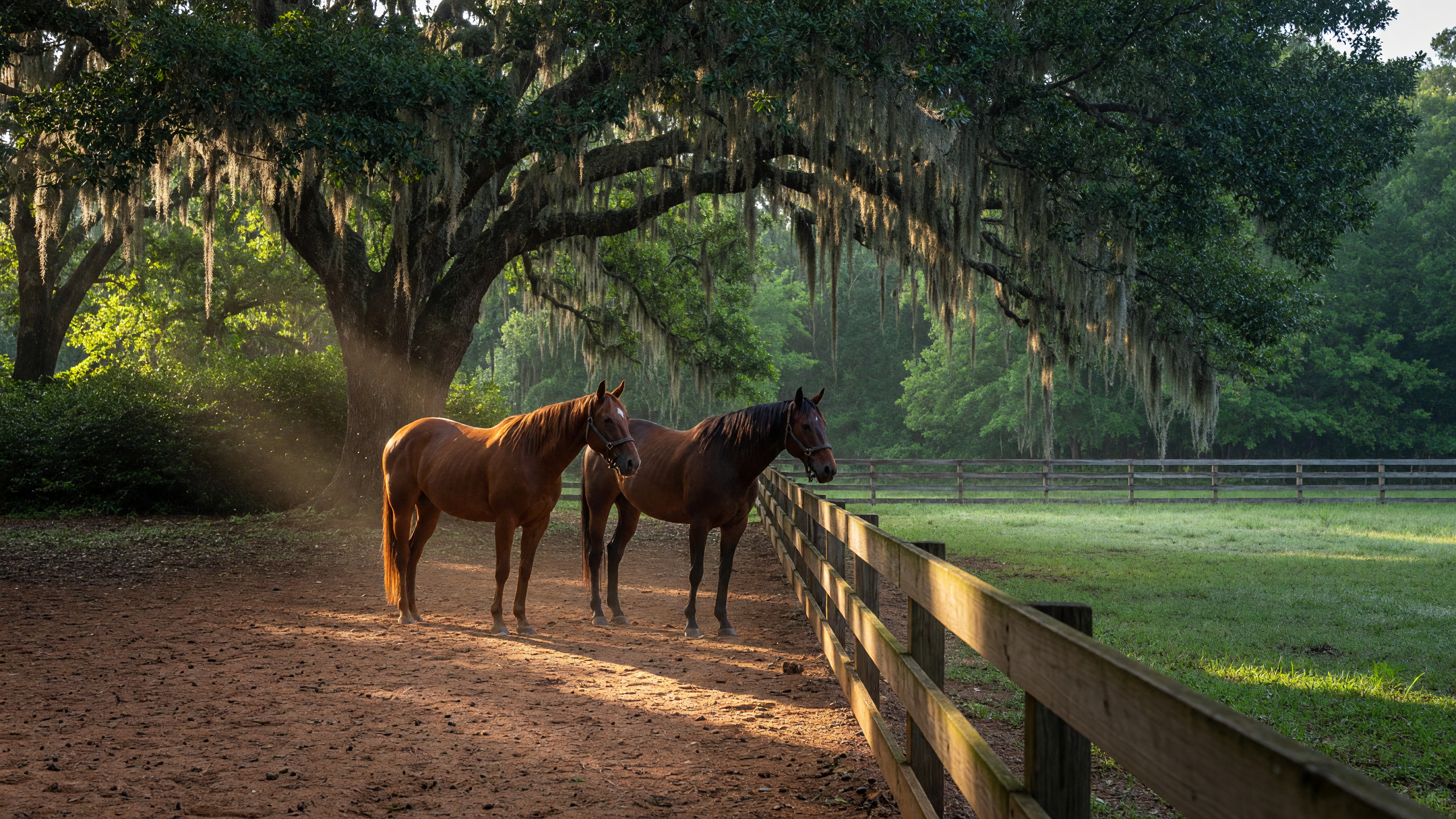
Aiken's winters draw the headlines — the polo matches, the fox hunts, the social season that brings horse people from across the country to this small South Carolina town. But summer in Aiken is when horse property ownership becomes a hands-on commitment. Temperatures regularly climb into the mid-90s with humidity that makes it feel even warmer. For horses and the properties they live on, the season demands preparation, vigilance, and a strategy that goes well beyond turning on a few fans. Whether you own a five-acre hobby farm or a full-scale boarding operation along the Wagener Road corridor, here's what you need to know.
Water is everything
Dehydration is the single most common summer health risk for horses in Aiken's climate. A 1,000-pound horse at rest needs a minimum of 10–12 gallons of water per day; in summer heat with any level of exercise, that number jumps to 15–20 gallons or more. Every water system on your property needs to be evaluated before the heat arrives.
Walk every pasture and check each water source — automatic waterers, troughs, and stock tanks. Clean them thoroughly. Algae builds fast in South Carolina summers, and a clogged float valve on a 95-degree afternoon can turn a pasture into a crisis before you notice. Consider adding a second water source to larger pastures so horses aren't competing for access to a single trough. For properties along the sandy soils common in the Horse District and Three Runs Plantation, well water quality should also be tested annually — mineral content and bacterial counts can shift with seasonal water table changes.
Summer Water Checklist
- Clean every trough, tank, and automatic waterer
- Test well water quality annually
- Verify float valves and supply lines are functioning
- Add shade structures or second water sources in large pastures
- Freeze water buckets for stalled horses as an extra cooling measure
Barn ventilation
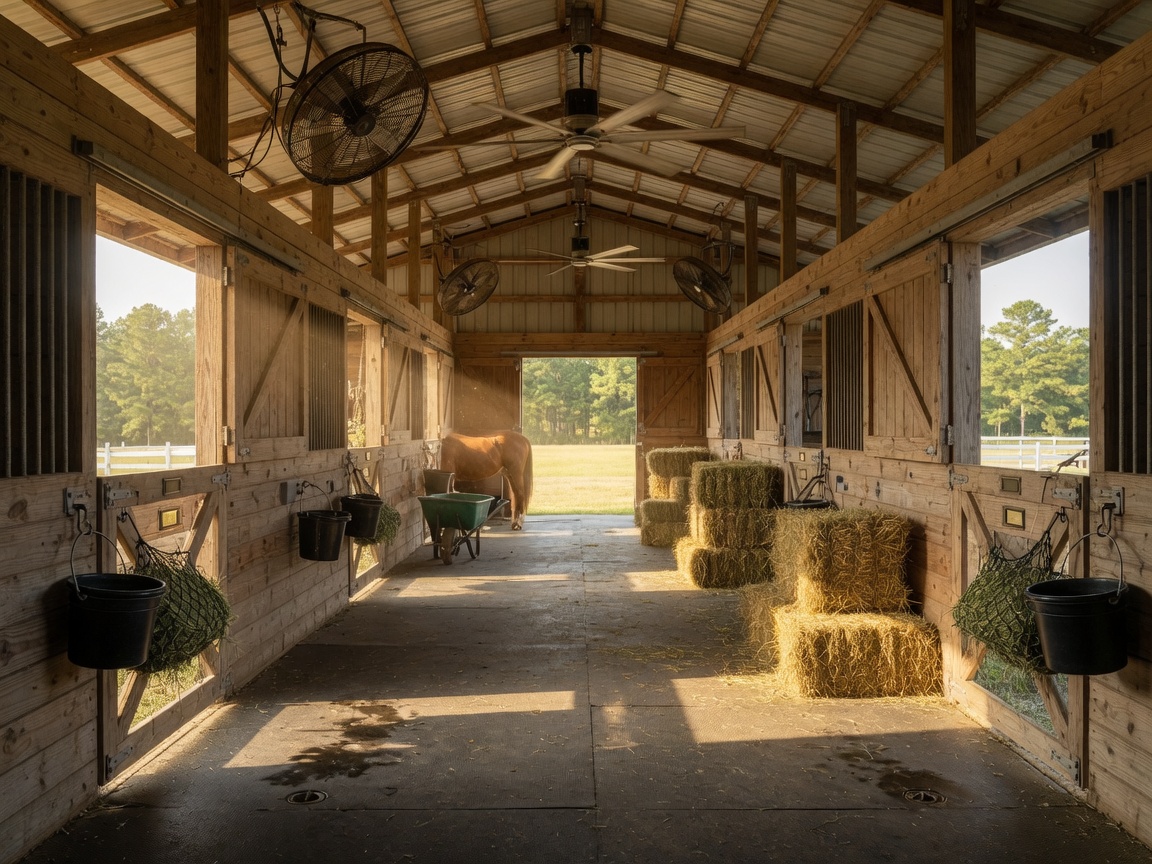
Heat rises — but in a poorly ventilated barn, it also builds. The design of your barn and facilities matters enormously in summer. Traditional Aiken barns, many of which date to the Winter Colony era or were modeled after them, tend to be well-ventilated by design: open aisles, cupolas, and breezeway barns that allow air to move freely. Newer construction isn't always built with the same instinct.
Regardless of your barn's age, here's what to check before the worst of summer arrives:
- Fans: Stall fans and aisle fans should be cleaned, blades wiped down, and mounts inspected. A wobbling fan in a barn is a fire hazard. Mount them high enough that a horse cannot reach them, and aim for cross-ventilation — fans on one side of the barn pushing air toward open doors on the other.
- Cupolas and ridge vents: If your barn has a cupola, make sure the louvers aren't painted shut or clogged with debris. Hot air needs a way to escape upward.
- Stall doors: Open-bottom stall doors or grilled upper halves allow air to move between the aisle and stall. If your stalls have solid lower doors, consider whether airflow is sufficient.
- Sprinkler systems: Misting systems in barn aisles can drop ambient temperature by 10–15 degrees. They're a worthwhile investment for larger barns, especially those housing performance horses in summer training.
Pasture management in the heat
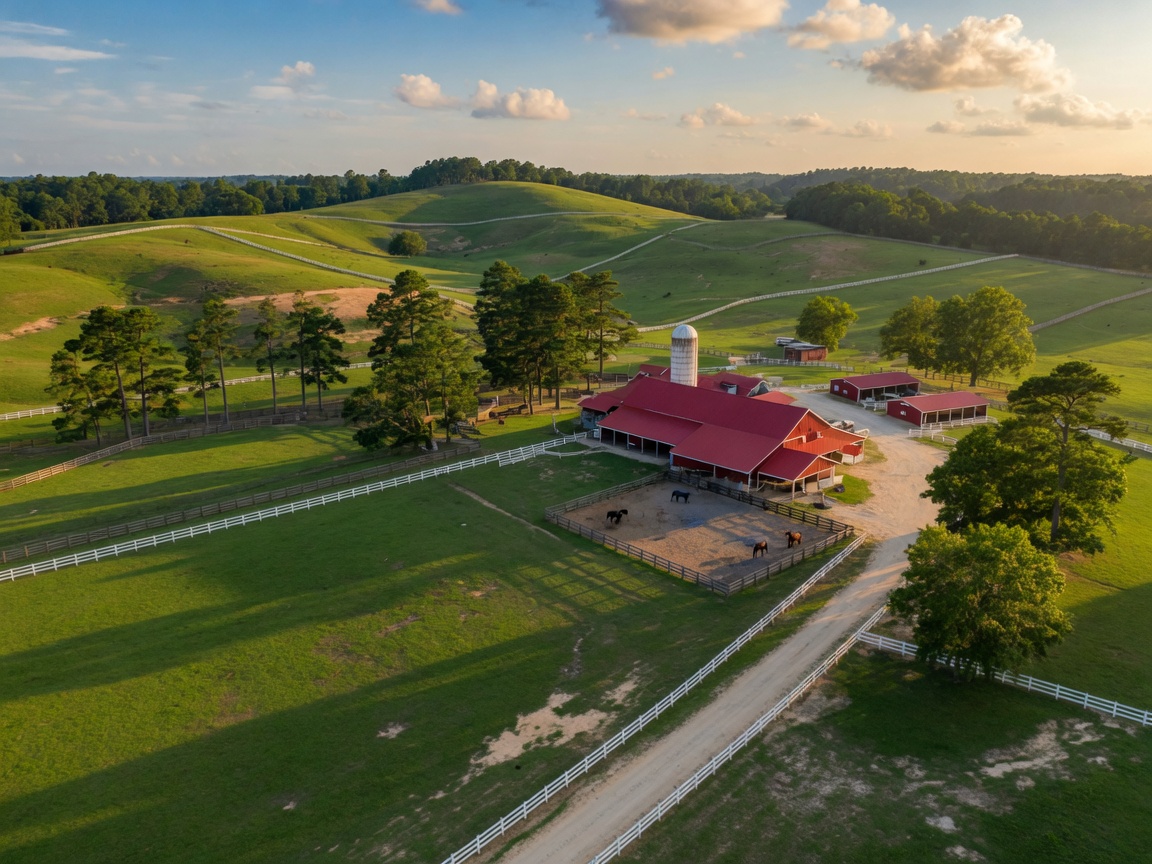
South Carolina summers are tough on pastures. The combination of heat, humidity, and afternoon thunderstorms creates a cycle of growth and stress that challenges even well-managed land. For horse property owners, the key summer pasture priorities are shade, footing, and parasite control.
Shade is non-negotiable. Every pasture where horses spend daytime hours needs accessible shade — either natural (mature trees) or constructed (shade run-in sheds or shelters). Aiken's sandy soils and pine-and-oak landscape mean that many properties already have good tree cover, but open pastures along the Wagener Road corridor and newer developments may have limited natural shade. If your pastures lack mature trees, a simple three-sided run-in with a metal roof can reduce the effective temperature a horse experiences by 10–15 degrees.
Footing matters even in turnout. Standing in mud — especially the clay-heavy areas on Aiken's south side — for extended periods leads to thrush, scratches, and hoof quality problems. Ensure your pastures drain well. If you have low-lying areas that hold water after summer storms, consider adding gravel or sand to create a dry lot area, or rotate horses to higher ground during the wettest months.
Parasite management peaks in summer. The warm, moist conditions in South Carolina are ideal for parasite larvae, and horses on pasture are exposed constantly. Work with your veterinarian on a fecal testing and deworming schedule — the days of blanket deworming every two months are gone. Modern equine parasite management is targeted and based on actual egg counts.
Heat-related horse health
Understanding heat-related illness is essential for anyone keeping horses in Aiken's climate. Heat exhaustion and heat stroke in horses can develop quickly, especially in horses that are overweight, clipped, unacclimated to the heat, or dealing with respiratory conditions like heaves.
The signs to watch for: heavy sweating that suddenly stops (a very dangerous sign), rapid breathing, elevated heart rate, rectal temperature above 103°F, lethargy, and muscle tremors. If you see these signs, move the horse to shade immediately, apply cool (not ice-cold) water to the large muscle groups — neck, shoulders, hindquarters — and call your veterinarian. Hosing the horse with a continuous flow of cool water is the most effective cooling method; fans help, but water does the real work.
Electrolytes are critical in summer. Horses that sweat heavily lose sodium, potassium, chloride, and magnesium. A plain water supply isn't enough — provide a commercial electrolyte supplement either free-choice or mixed into feed. For horses in heavy work, a Paste electrolyte before exercise and access to electrolyte-treated water afterward is standard practice among Aiken's competitive barns.
Turnout schedules may need adjustment. Many Aiken trainers bring horses in during the hottest part of the day — typically 11:00 AM to 4:00 PM — and turn out in the cooler morning and evening hours. If your property allows it, reverse the traditional schedule: stall or run-in during midday, pasture at night.
Fencing and property infrastructure
Summer is the season when fencing problems become visible. Wood fences dry and split in the heat. Vinyl gets brittle. Electric fence batteries drain faster. Take a walking tour of your entire fence line before the peak of summer — and then do it again after the first major thunderstorm. South Carolina summer storms bring down tree limbs, and a fallen branch on a fence line can mean escaped horses and a liability situation.
Pay special attention to gates and latch mechanisms. Heat causes metal gates to expand, and a gate that closed perfectly in April may stick or fail to latch by July. Oil all hinges and check every latch. For properties with long gravel or sand driveways — common throughout Southside Aiken and Cedar Creek — summer rain can wash out culverts and erode road shoulders. Check drainage infrastructure and clear any debris from ditches before storm season peaks.
Preparing for storm season
Summer in Aiken means thunderstorms — often daily, often intense, and occasionally severe. For horse property owners, a storm preparedness plan isn't optional. Know where your horses will go when a severe thunderstorm warning is issued. Barns with lightning protection systems are ideal; if yours doesn't have one, a grounded lightning rod system is a worthwhile investment, especially for taller structures like barn cupolas and silos.
Keep a storm kit ready: flashlights with fresh batteries, a battery-powered weather radio, a basic first aid kit, and copies of your horses' Coggins tests and health certificates. If you board at a facility, ask the barn manager about their severe weather protocol. If you own your property, write one and share it with anyone who helps care for your horses.
How this affects your property
The quality of a horse property's summer infrastructure is something I evaluate when showing properties to buyers. A barn with proper ventilation, well-maintained water systems, adequate shade, and solid fencing tells me the property has been cared for year-round — not just during the photogenic winter season. Conversely, a property where the water system is failing, the barn is stifling, or the pastures have no shade tells me there are likely other deferred maintenance issues.
For sellers, summer can actually be a strategic time to list. Buyers who visit in July or August see the property at its most honest — no social season glamour, just the reality of daily horse care. If your property handles summer well, that's a powerful selling point. And if there are improvements to make, addressing them before listing demonstrates pride of ownership that today's buyers notice.
I evaluate horse properties year-round — not just in peak season.
Whether you're buying, selling, or just want to know if your property is prepared, contact Linda for a thorough equestrian property assessment.
Get in Touch