
Toxic Plants on Aiken Horse Properties: A Buyer's and Owner's Guide to Pasture Safety
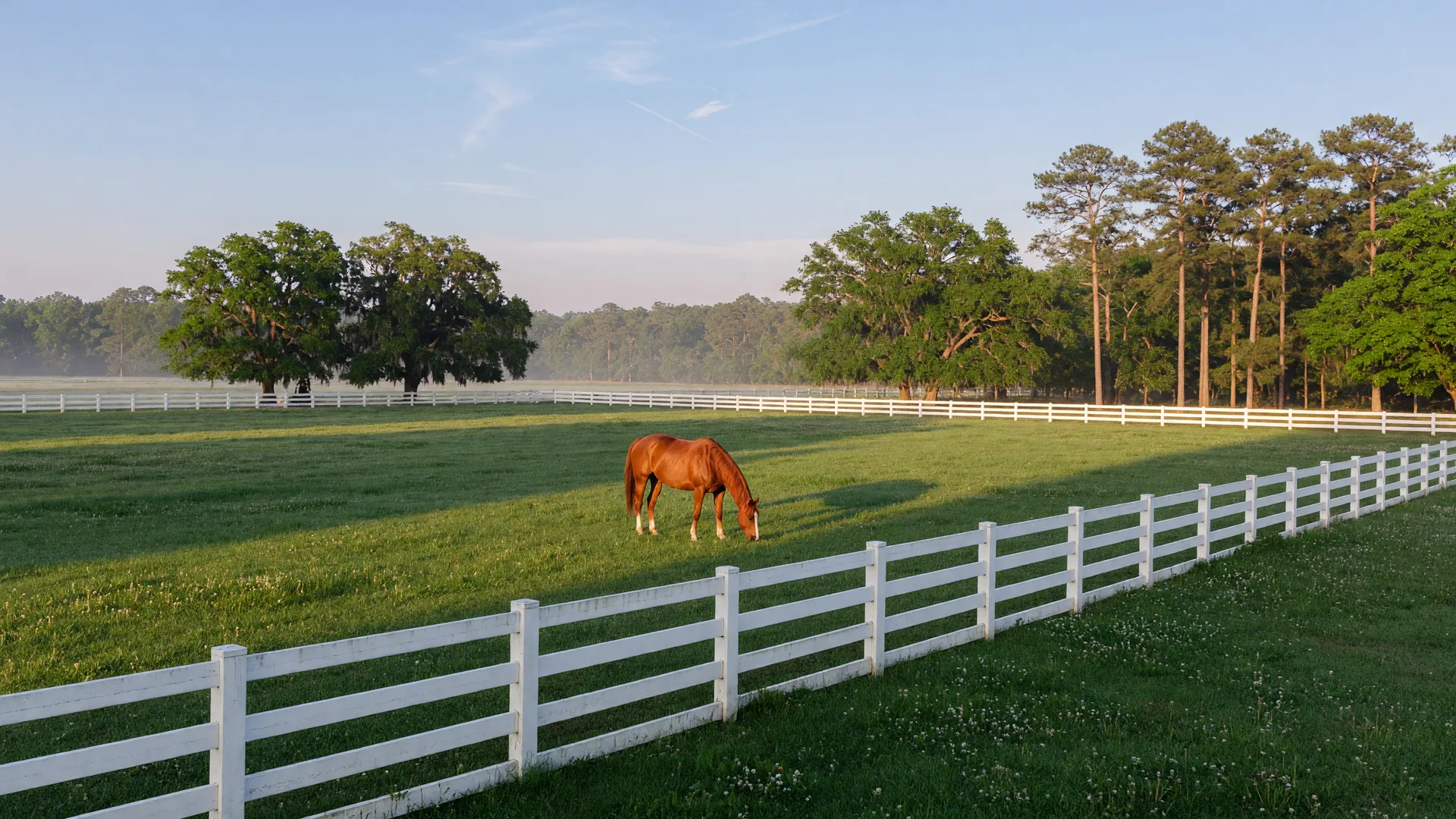
When I walk a horse property with buyers, I spend as much time looking at the ground and the tree line as I do at the barn. I am checking the pasture for bare spots, the fence lines for overgrown edges, and the borders for what is planted where. That is because the plants on a horse property can matter just as much as the stalls and the roof. This guide covers the toxic plants most worth knowing about on Aiken horse properties, where they tend to hide, what to look for when you are viewing a farm, and how to make a pasture safe once you own it. It is written for serious horse people, people who know that the ground their horses live on is part of the deal.
Why Pasture Plant Safety Belongs on Your Checklist
Most toxic plant problems on horse properties are not the dramatic, instantly deadly kind. They are the quiet kind: a horse grazes around the edges of an overgrazed field for years without issue, the weeds slowly spread, and one day a hungry horse samples the wrong leaf, or a bad hay year brings something in from a field down the road. Aiken's Sandhills add a few of their own twists. The sandy, well-drained soil that makes this such glorious horse country also favors certain weeds. The oak-dominated woodlands drop leaves and acorns into pastures every fall. And the Southern landscaping that makes these farmhouses so charming can include shrubs that are genuinely dangerous to horses.
Here is the reassuring part: toxic plants do not have to be a dealbreaker on any property, and most problems are fixable with good pasture management. A dense, healthy stand of grass is the best weed control there is. Regular mowing of fence line perimeters keeps seed heads from spreading. And a little reconnaissance before you buy can save you from surprises later. Clemson Cooperative Extension and the University of Georgia Extension, which both cover the Southeast, emphasize exactly this: keep the grass healthy, keep the edges mowed, and remove toxic branches and plants as soon as you spot them. That is a philosophy that fits Aiken perfectly, because this is a place where people care for their land.
Toxic Weeds to Know in the Sandhills
The weeds below are the ones I see most often along Aiken's fencerows, in overgrazed corners, and in neglected low spots. None of them require you to panic, but all of them are worth being able to identify.
Water hemlock and poison hemlock
Water hemlock is one of the most dangerous plants in the region, and it grows where you might least expect it: in ditches, along pond edges, and at the wet, low end of a pasture. Even a relatively small amount can be fatal, so this is the one plant I take most seriously when I see a marshy corner near where horses graze. Poison hemlock, its taller cousin in the carrot family with clusters of white flowers, prefers fencerows and neglected edges. Both are biennials, so catching and removing them before they go to seed does real good.
Pokeweed, horsenettle, and nightshades
Pokeweed is the tall weed with reddish stems that pops up in disturbed, bare ground across the Southeast, especially along fence lines where the mower cannot reach. Horsenettle, also called Carolina nightshade, is one of the most common contaminants of southeastern pastures, and it is worth knowing twice over, because it is toxic both fresh and dried, which means it can end up in hay from a field that looked fine from the road. If you are buying hay from local fields, ask whether those fields have had horsenettle trouble, and learn to recognize its small, tomato-like fruit along the stem.
Buttercups, jimsonweed, and bracken fern
Buttercups show up where grass is thin and overgrazed, which is exactly why they are a useful signal: a pasture covered in buttercups is telling you it needs rest, rotation, and fertility before it needs anything else. Jimsonweed favors bare, disturbed spots near barns and paddocks. Bracken fern finds dry, sandy ground, which makes it a genuine Sandhills resident, and it appears along wooded edges where the shade meets the pasture. All three are best handled the same way: thicken the stand of grass, keep the edges mowed, and spot remove what remains.
Johnsongrass, rattlebox, and groundsel
Johnsongrass is a useful forage when managed well, but it can produce prussic acid after a frost or when drought stressed, so fields of it need careful grazing management. Over time, heavy grazing of some sorghum family grasses has also been linked to urinary issues in horses. Rattlebox and members of the Senecio family, including groundsel, contain pyrrolizidine alkaloids, which cause cumulative liver damage. These are insidious because the damage builds slowly and may not show up until much later, which is why experts advise keeping them out of horse pastures entirely rather than hoping for the best.
Toxic Trees and Ornamentals Around the Property Line
The trees and shrubs around a horse property can matter as much as the weeds underfoot, and Aiken horse country has its own cast of characters. The highest risk moment is after a storm, when wilted branches fall into a pasture. Horses are far more likely to sample a wilted branch than a living tree, so picking up fallen limbs promptly is one of the simplest safety habits a horse property owner can have.
Red maple
Red maple wilted or dried leaves can cause a serious breakdown of red blood cells, and even a moderate branch blown into a pasture is enough to matter. If red maples border a grazing area, that is a strong argument for fencing the tree line out, or for vigilantly clearing fallen branches after every windstorm.
Wild black cherry
Wild cherry trees, like all members of the cherry family, carry cyanide compounds in their wilted leaves, shoots, and bark. The risk comes almost entirely from wilted material: a branch chewed back after a storm, or leaves raked into a pile that a curious horse investigates. Cherry trees along a fencerow are common in this part of the South, so knowing where they stand relative to grazing is real due diligence. Our guide to the features that matter most covers why the borders and edges of a property deserve as much attention as the barn itself.
Oaks
The Sandhills are oak country, and live oaks dropping leaves and acorns into a pasture every autumn is a fact of life here. Leaves and acorns both carry tannins that can stress a horse's kidneys when consumed in volume, which is why it is wise to keep an eye on how much oak litter is falling where horses graze. You do not have to cut down every oak on the place. Fencing the worst areas, raking in heavy acorn years, and keeping horses well fed so they are not tempted are all sensible steps, and they are the kind of detail I help buyers think through when we walk a property together.
Ornamentals: yew, oleander, azalea, and black locust
This is where the beautiful landscaping around an Aiken farmhouse can hide trouble. Yew is one of the most toxic plants commonly planted near older homes, and even small amounts are genuinely dangerous, so if a yew hedge borders a paddock, or sits where a horse can reach through a fence, that is a plant to remove or fence off. Oleander, azaleas, rhododendron, and mountain laurel are Southern landscaping staples that are toxic to horses. Horses usually pass fresh shrubs by when their bellies are full, but wilted clippings carelessly dumped over a fence, or a bored horse testing a hedge, are real scenarios. Black locust trees carry toxic bark, leaves, and seeds, and they sometimes line older property boundaries. None of these are reasons to reject a lovely property out of hand, but they are reasons to make a removal or fencing plan part of your offer. If you are weighing a fixer upper against a move in ready farm, our turnkey farm versus raw land comparison walks through exactly how to weigh improvements like these.
A word on black walnut while I am here: it is more famous around horse stables as sawdust or shavings from walnut wood, which can be toxic as bedding, than as a pasture plant. If you buy a property with a stall barn, ask what the previous owners used for bedding. And if you have walnut trees on the place, make sure any milling or trimming keeps the wood chips well away from the barn.
What to Look for When Viewing a Property
When you are house hunting for horses, use the same eye on the pasture that you would on the barn roof. Walk the fence lines on foot, both sides if you can. Look along the edges where the mower cannot reach, because that is where weeds go to seed and creep back into the field. Check the overgrazed corners near the water trough and the gate, because thin grass invites weeds. Note any marshy, low spots or ditches, because damp ground is where water hemlock and its relatives like to grow. And look at what borders the pasture beyond the fence: an oak stand dropping acorns, a cherry branch reaching over, a landscaped bed of azaleas or yew right on the other side of the boards, all matter more than you would think.
Ask questions too. Ask about the hay: where has it come from, and have the fields it came from had horsenettle or other weed trouble. Ask how the pasture has been grazed and mowed over the past year, because a weedy field that was simply overgrazed can bounce back fast with rotation, while a neglected one may need renovation you should budget for. And as part of your overall due diligence, compare what you find against our six point buyer's checklist, which treats pasture health as a first class feature, not an afterthought.
Walk the fence lines first.
The fence lines and the low spots tell you more about a pasture than anything else. If a seller keeps the edges mowed, the corners clean, and the drains free of hemlock, that is a farm someone has cared for, and it usually shows in the barn too. If the edges are overgrown, budget for a season of mowing, seeding, and patience, and know that most of it is very fixable.
Making a Property Safe After You Buy
Once the farm is yours, the plant projects do not have to be overwhelming, especially if you take them season by season. Here is the order I would work in:
- Mow the perimeters. A regular mowing rotation along fence lines and around paddock edges is the cheapest, most effective weed program there is, because it keeps seed heads from ever forming. Our seasonal pasture management guide lays out a year round schedule that fits the Sandhills.
- Thicken the stand of grass. The best control for weeds is healthy, competitive forage, and that starts with a soil test. Clemson Cooperative Extension offers affordable soil testing for South Carolina landowners, so pull samples before you spend money on lime or fertilizer blind. The results will tell you exactly what that pasture needs to crowd out the weeds.
- Remove dangerous plants before they seed. Learn to recognize the seedlings of the biennials and perennials on your list, pull or spot treat them early, and always follow the product label when you use an herbicide, keeping horses off treated paddocks for exactly as long as the label directs.
- Make the trees safe. After every storm, walk the pasture and clear fallen branches from toxic species before horses get curious. Where an oak, cherry, or maple overhangs grazing, consider fencing that section of the tree line out, or raking the worst of the fall litter years.
- Review what borders the paddocks. If landscaping shrubs like yew, oleander, or azaleas sit where a horse can reach through or over a fence, move, remove, or refence them. Never dump grass or shrub clippings over the fence into a horse pasture, where they become wilted, more tempting, and more toxic than the living plant.
- Set up a safe hay and feeding routine. Buy hay from growers you trust, and have your veterinarian walk you through a feeding program, which we cover in our equine nutrition guide. A well fed horse grazing a dense pasture is far less likely to go hunting for something it should not eat.
And when you are in doubt, ask. Your veterinarian, your local Clemson Cooperative Extension office, and the experienced barn managers in your neighborhood are all free resources, and in this community people genuinely like to help new horse neighbors get things right. We keep a running list of trusted equine services, from vets to farriers, in our local services guide, and I am happy to point new owners to the folks I trust most.
What This Means for Your Property Search
Here is the buyer's takeaway, and it is a hopeful one: healthy pastures and safe borders are absolutely part of the value of an Aiken horse property, but few plant issues are permanent dealbreakers. A scattered weed population is manageable with a season of good pasture stewardship. A well maintained, dense pasture is worth real money, because it means the next owner is not paying for renovation. And when a property does need work, that is a legitimate negotiating point, just like an aging roof or an undersized well, so it belongs in the conversation, not just in the back of your mind.
As someone who has spent more than 20 years walking farms across the CSRA, I have yet to see a property whose plant issues could not be solved with knowledge, elbow grease, and time. What matters is knowing what you are looking at before you buy, budgeting for the work that is genuinely there, and choosing a property whose scale matches your appetite for projects. That is exactly the kind of clarity I help buyers find, whether we are comparing two farms in our Horse District or weighing a move in ready equestrian property against one with room to make your own.
A Toxic Plant Walk-Through Checklist
- Walk the fence lines on foot, both sides if you can, and look for weeds seeding in from the edges
- Check overgrazed, bare areas near gates, troughs, and shelters, where weeds take hold first
- Look at low, marshy spots and ditches for water hemlock and its relatives
- Note oak, cherry, maple, and black locust trees within or overhanging grazing areas
- Review landscaping near the house and barn for yew, oleander, azalea, and mountain laurel within reach of horses
- Ask about the hay source and whether the fields it came from have had horsenettle or weed issues
- Judge whether weeds are scattered (manageable, with mowing and seeding) or widespread (budget for renovation and soil work)
- Plan a soil test through Clemson Cooperative Extension before the next seeding season
Let me find you a farm whose pastures are as healthy as its barn.
With more than 20 years in the CSRA, I walk every corner of a property, including the fence lines, the low spots, and the tree line, so you know exactly what you are taking on before you make an offer. As the First AI-Certified Realtor in the area, I pair that ground level eye with the tools to compare properties quickly and fairly. Reach out and let us find the right farm for your horses.
Schedule a Consultation