Established Horse Farm vs. Raw Land in Aiken: Which Should You Buy?
When a buyer calls me about Aiken horse country, the conversation almost always arrives at the same fork in the road: buy an established horse farm that is ready to move into, or buy raw land and build the place of your dreams. Both paths lead to a wonderful life here, but they are very different bets on your time, your budget, and your patience. This guide compares the two so you can decide which route fits your goals, your horses, and your bank account.
I have helped buyers and sellers navigate equestrian real estate in the CSRA for more than 20 years, and I have watched buyers succeed brilliantly on both sides of this decision. The key is not which option sounds more romantic. It is which option matches your reality: a working farm ready this season, or a project you will enjoy building over the next year or two.
The case for an established horse farm
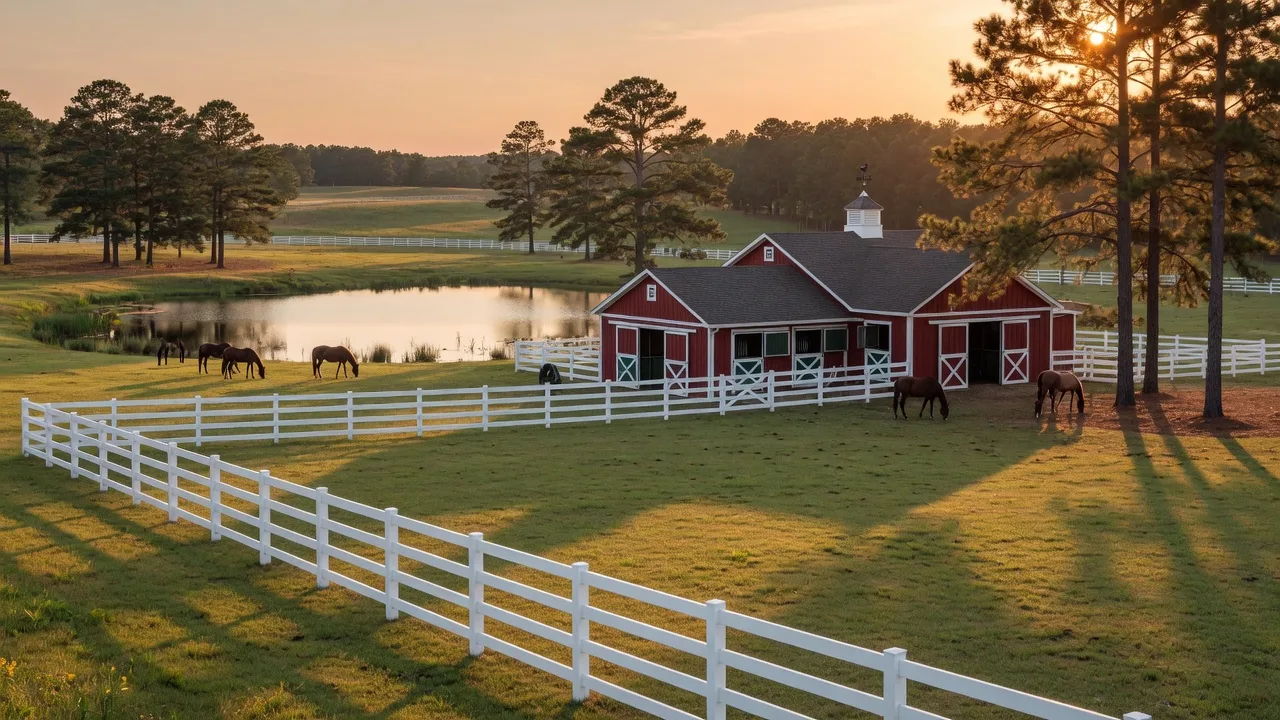
An established farm is a known quantity. The barn is standing, the fences are posted, the arena is leveled, and the well and septic are already drilled, installed, and tested. When you take possession, you can unload the trailer and start riding the same week. That immediate usability is the single greatest advantage of a turnkey property, especially for buyers moving horses across state lines or arriving for a specific season.
Established farms also give you hard numbers before you commit. You can see the horsepower the well produces, open the septic records, inspect the footing in person, and walk every fence line. Our guide to horse property due diligence covers exactly what to verify, from water testing to barn structural evaluations, and it is far simpler to carry out on a property that already has these systems in place.
The tradeoff is flexibility. A finished farm was designed around someone else's horses, routines, and budget. The barn might be in the wrong place for your preferred pasture rotation. The arena footing might suit a dressage rider when you are an eventer. The stalls might be sized for ponies when you ride draft crosses. None of these are deal breakers, but they are worth weighing honestly before you buy.
The case for raw land
Raw land is a blank canvas. You can orient the arena to avoid the afternoon sun, place the barn for prevailing breezes, lay out paddocks for easy rotation, and budget spend exactly where it matters to your discipline. For many serious horse owners, the ability to build precisely the right facility is worth far more than the convenience of a finished property.
Raw land can also be a smart way to spread cost over time. Instead of paying one lump sum for barn, arena, and fencing, many Aiken buyers purchase acreage and then phase in improvements: fence a pasture this year, raise the barn next year, and add the arena when the budget allows. This gradual approach keeps cash flowing and lets you make decisions with the benefit of a full season on the land. See our guide to how much acreage you really need before you shop.
The catch is that "raw" rarely means "cheap once it is done." When you add the land, the well, the septic, the utilities, the driveway, the fences, the barn, and the arena together, building from scratch is usually the most expensive path in total. It is also the slowest, and it depends entirely on the parcel being zoned for the barn and animal numbers you intend to keep.
What an established farm already delivers
Let us look at what you are effectively buying when you pay a premium for a turnkey property. Understanding the value behind the price helps you negotiate fairly and decide whether the convenience is worth it:
- A barn that has already passed inspection. The most expensive line item on any farm is the barn. General horse barn construction typically runs from roughly $30 to $70 per square foot for metal and pole construction, and $70 to $100 or more per square foot for timber framing. On many Aiken farms, a professional 8 to 12 stall facility represents $90,000 to $150,000 or more of value, much of it already standing.
- Established fencing. Post-and-rail fencing across several paddocks is a substantial investment in materials and labor. A finished farm spreads this cost across the purchase rather than asking you to write a separate fencer's check in year one.
- A leveled arena with real footing. Proper drainage and base preparation are the hidden cost of any arena. Buying a farm with an existing ring means the site work and footing expense are already behind it.
- Tested well and septic systems. Drilling a stock well, installing a septic system, and bringing in power are some of the costliest and least visible line items on a new build. On an existing farm, these are known and documented.
- Mature pastures. A farm that has been grazed and managed for years usually has established grasses and a working fencing and rotation system, versus newly cleared land that needs seeding and time to establish.
The true cost of building from raw land
If you are tempted by raw land because the per-acre price looks low, remember that the lot price is only the beginning. The real question is the fully built-out cost. A complete budget includes:
- The land itself. Per-acre values across Aiken vary widely by location, from modest county tracts to premium equestrian corridors near the Horse District and trail systems. Location drives far more of the premium than the improvements on it.
- Site work. Clearing, grading, gravel driveways, building pads, and excavation for footing. This is easy to underestimate and hard to avoid.
- Well, septic, and utilities. Drilling water wells, often more than one for stock and irrigation, installing septic, and running power can add tens of thousands of dollars before a single fence post goes in. Our guide to water, wells, and septic explains what rural infrastructure really costs and how to plan for it.
- The barn. As noted above, a professional facility is easily a six-figure project, and permits and site prep add to it.
- Fencing and arena. These are rarely included in a builder's quote and are routinely added as the project moves along. See our guides to horse fencing and arena construction and footing for a realistic look at these costs.
When you add these together, a fully built-out raw-land project is typically the most expensive route and the longest. That is not a reason to avoid it. It is a reason to go in with eyes open and a builder who understands equestrian construction, so the final facility matches your vision instead of the previous owner's.
Zoning in the Aiken Horse District changes everything
The single most important check before you buy either an existing farm or raw land is the zoning of the specific parcel. Aiken's Horse District is one of the great protections of equestrian living in America, but it comes with rules you must respect. Under Aiken city zoning, the Horse District generally requires a minimum of roughly 10 acres per lot, which limits how land can be split. In unincorporated Aiken County, Residential-Horse districts typically require at least 5 acre lots, and Agricultural zoning offers the most flexibility for barns, arenas, and boarding.
The practical consequence is this: not every beautiful tract you find for sale may legally hold the number of horses you plan to keep, or accommodate the commercial boarding operation you are imagining. Some parcels are zoned strictly residential, with limits on animal numbers and permitted uses. Always verify the parcel's zoning before making an offer. Our detailed guide to Aiken Horse District zoning walks through the acreage minimums, permitted uses, and regulations that shape horse property ownership here.
This is one place where working with a local equestrian specialist pays off immediately. I know which corridors are zoned for the uses buyers actually need and can flag a zoning problem long before it becomes an expensive surprise at closing.
How to decide between the two paths
There is no universal right answer, but these questions will point you toward yours:
- When do you need to ride? If your horses arrive this fall or you are relocating for a season, an established farm is likely the better fit. If you can wait a year or two, raw land becomes viable.
- How specific is your facility wish list? The more particular you are about arena footing, stall layout, barn orientation, and pasture rotation, the more raw land rewards you. The more flexible you are, the more value you capture from a turnkey property.
- What is your comfort with project management? Building a farm means coordinating contractors, permits, and neighbors, with cost overruns as a real possibility. If that energizes you, build. If it stresses you, buy finished.
- How much can you spend up front versus over time? Raw land lets you phase costs across several years. An established farm concentrates the spend in one purchase but delivers immediate value.
- What does the zoning allow on this exact parcel? Neither path works if the land cannot legally support your horses and uses. Verify this before anything else.
For most first-time horse property buyers, I lean toward a quality established farm or a parcel with some improvements already in place. It shortens the timeline, removes the riskiest unknowns, and lets you learn how you actually use the property before investing in major custom construction. For experienced owners who know exactly what they want, raw land in the right (correctly zoned) location is often the most satisfying and, over the long term, the most tailored outcome. Our guide to the property features that matter most helps with both approaches.
A note on timing the Aiken market
Late summer into early fall is an excellent window to look at Aiken properties. The land is showing its full growth, barns are dry and accessible, and you can see how a property handles heat and afternoon sun before the Winter Colony season crowds the calendar. Turnkey farms also tend to be staged and ready to show this time of year, since sellers know buyers scope properties while the pastures are green. When you settle on the right property, whether finished or raw, the evaluation checklist and the due diligence guide I mentioned will keep your process smooth from offer to closing.
Buying a horse property in Aiken is one of the most rewarding decisions a horse person can make. Whether you choose a turnkey farm with the fences already white and the ring already level, or a tract of raw Sandhills land waiting for your vision, the community here will welcome you, and the trails will be waiting. The choice is not about which is objectively better. It is about which version of the dream you want to wake up to.
Let me help you weigh turnkey farms against raw land.
I know the Horse District zoning, the equestrian corridors, and the true cost of building in the Sandhills. Contact me for a personalized search, or schedule a consultation to talk through which path fits your horses and your budget.
Schedule a Consultation