
What Size Horse Property Do You Really Need? A Guide to Acreage and Facilities in Aiken
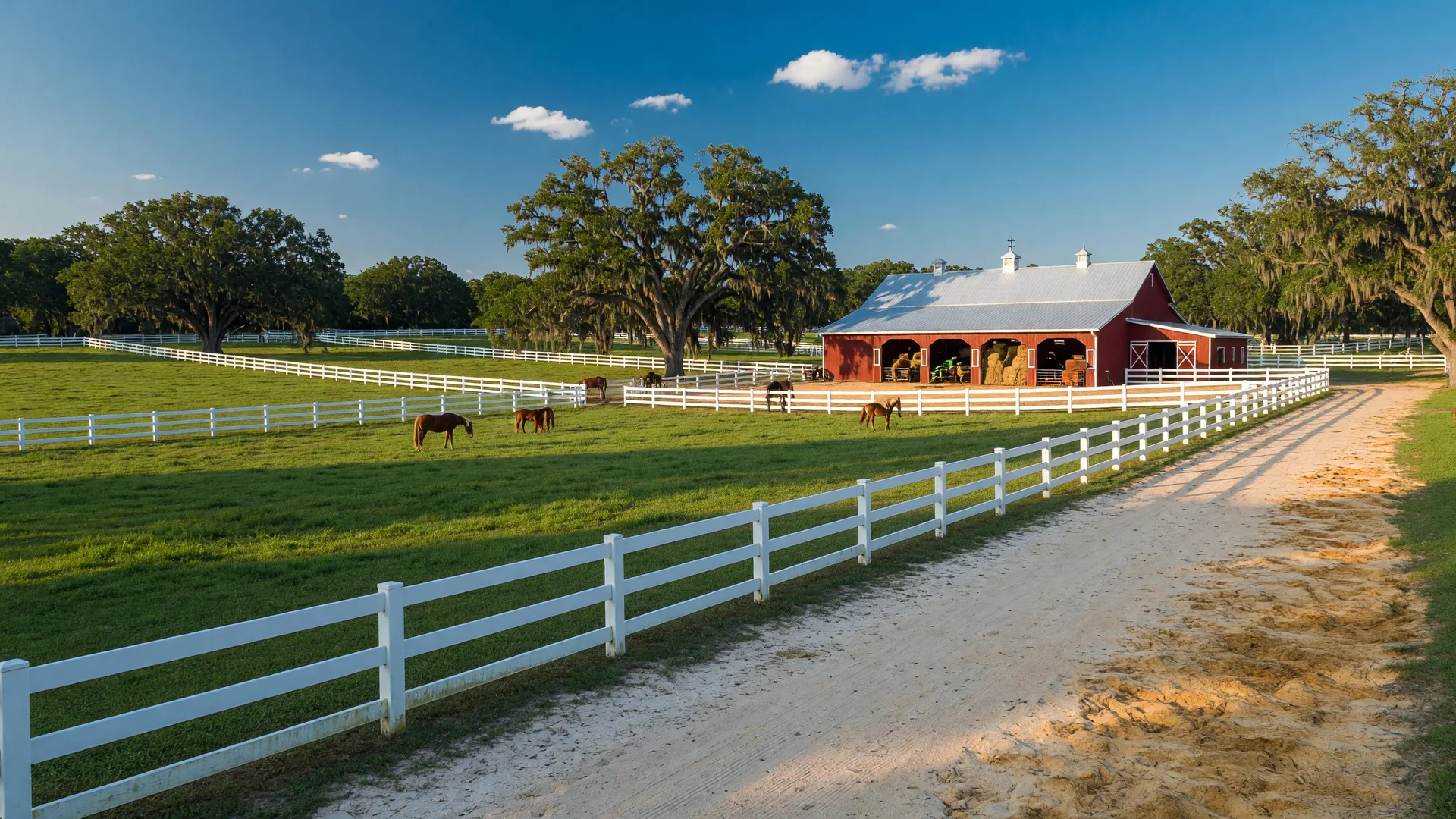
One of the most common questions I hear from buyers exploring Aiken's equestrian market is deceptively simple: "How many acres do I really need?" The answer, as with most things in horse country, depends on what you plan to do with your horses, how many you have, and what kind of facilities you want. Aiken County is home to an estimated 6,785 horses according to a University of South Carolina Aiken study, and the properties that house them range from compact 3-acre parcels in planned equestrian communities to sprawling 200-acre training operations. There is no single right answer, but there are some reliable guidelines that can help you narrow your search.
I have walked hundreds of horse properties with buyers over the past 20 years, and I have seen what works and what doesn't. This guide breaks down the acreage and facility requirements for different types of horse ownership so you can focus your search on properties that fit your actual needs, not just your wish list.
The minimums: what every horse needs
Before we talk about ideal acreage, let's establish the floor. Aiken County's zoning regulations require a minimum of one acre per horse in most residential agricultural zones, but that is a legal minimum, not a practical one. For the health and well-being of your horses, you need more than just enough space to meet the ordinance.
For pasture turnout, the general rule of thumb is two acres per horse for rotational grazing, with additional acreage for hay production or shared turnout. Horses kept on smaller properties need either daily turnout in a dry lot or access to a nearby boarding facility with adequate pasture. Many Aiken horse owners on 5-acre properties keep two horses comfortably by combining a small pasture with a well-managed dry lot and a regular turnout schedule.
Quick reference: acreage by horse count
1 to 2 horses — 3 to 5 acres minimum. This allows for a small barn, paddock, and manageable turnout.
3 to 4 horses — 5 to 10 acres. Enough for rotational grazing, a decent-sized arena, and a multi-stall barn.
5 to 8 horses — 10 to 20 acres. Room for full pasture rotation, a regulation-size arena, and trail access.
8+ horses or commercial boarding — 20+ acres. Larger operations need significant pasture, hay fields, and extensive infrastructure.
The three zones of a horse property
Every horse property has three distinct zones that need to work together: the barn zone, the pasture zone, and the riding zone. How you allocate acreage among these three determines whether a property actually functions well for your needs.
The barn zone
The barn zone includes the barn itself, the immediate paddock or sacrifice area, the run-in sheds, and the access lane. A well-designed barn zone takes up roughly half an acre to one acre, depending on the size of the barn. The barn should sit on high ground with good drainage, close enough to the house for easy access but far enough to keep noise and dust from the living area. Aiken's sandy soil drains well, which is a major advantage, but you still want the barn footprint on a slightly elevated site to avoid runoff collecting around stall doors.
The barn zone also needs space for a manure management area, a hay storage shed, and a place to park a trailer or equipment. These are details that first-time horse property buyers often overlook, but they matter enormously in daily life. See our guide on evaluating a barn for more detail on what to look for in existing structures.
The pasture zone
This is where your horses spend most of their time. The ideal pasture is a mix of open grass and shaded areas, with safe board fencing (five-rail or mesh recommended) and reliable water access. Aiken's coastal Bermuda grass and fescue pastures are well suited to the climate, but they require regular maintenance, including mowing, fertilizing, and weed control.
For rotational grazing, you need at least two to three separate paddocks so you can rest one while the others are in use. This is the single most effective way to prevent overgrazing and keep your pastures healthy. A property with one large open field and no cross-fencing is harder to manage than a smaller property with good paddock divisions. For more on fencing options, see our complete guide to horse fencing in Aiken.
The riding zone
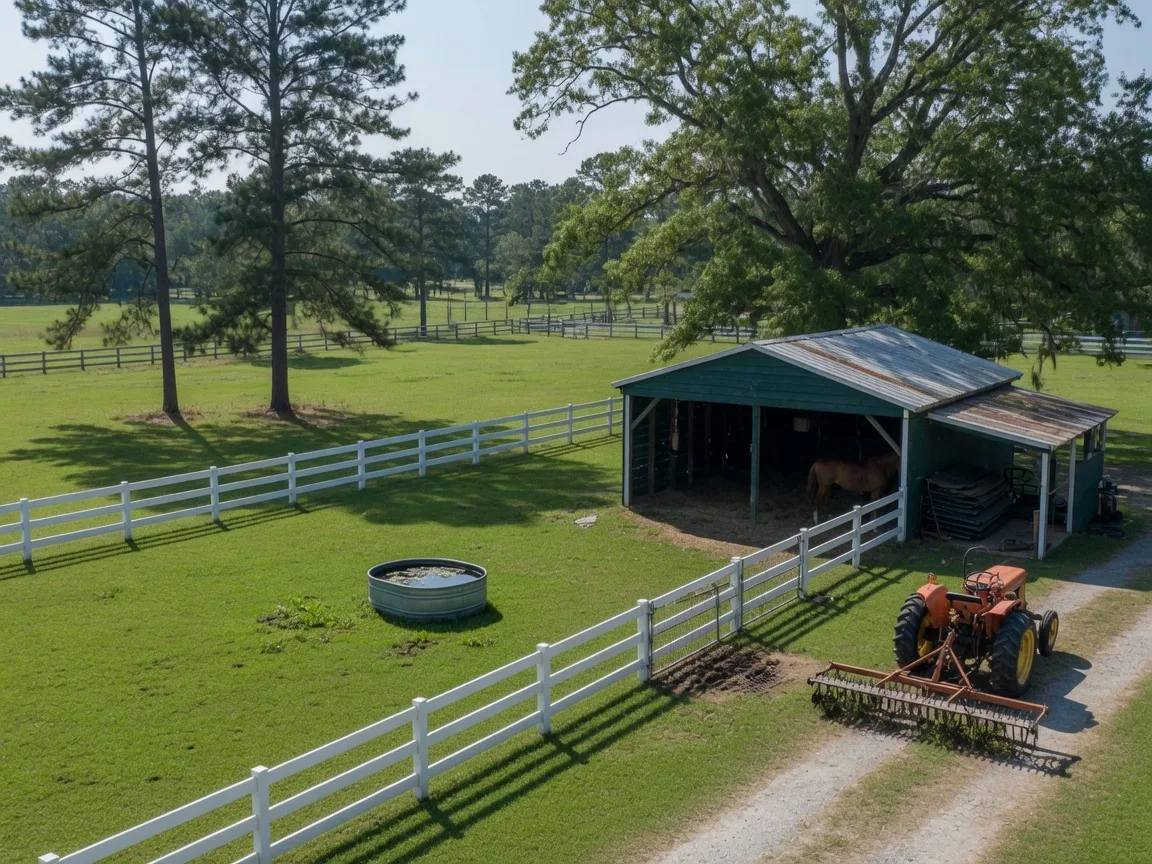
If you plan to ride at home, you need space for an arena or a riding area. A regulation dressage arena is 20 by 60 meters, or roughly one-third of an acre. A standard hunter/jumper arena is typically 100 by 200 feet, or about half an acre. A small riding ring for casual schooling can be as compact as 60 by 120 feet, which fits on about a quarter acre.
Many Aiken horse owners who live in the Horse District or near Hitchcock Woods choose to forgo a home arena entirely because they have direct trail access or belong to a nearby facility with excellent riding rings. If you are willing to trailer or ride out, you can get by with significantly less home acreage. That trade off is one of the reasons properties with trail access command a premium in Aiken's market.
Acreage by discipline
Your riding discipline shapes your property needs as much as your horse count does. A trail rider who keeps two horses and rides out into Hitchcock Woods has very different requirements from a dressage competitor who needs a regulation arena and a climate-controlled barn.
Trail riding / pleasure
3 to 5 acres for two horses. Arena not essential if you have trail access. A small barn or run-in shed, good pasture, and safe fencing are the priorities.
Hunter / jumper
5 to 10 acres minimum. You need space for a 100x200-foot arena, a multi-stall barn with wash rack and tack room, and good pasture for turnout between shows.
Dressage
5 to 10 acres. A regulation 20x60-meter dressage arena needs a flat, well-drained site. Indoor arena space adds significantly to the footprint and budget.
Eventing
10 to 20 acres minimum. Eventers need space for dressage and show jumping arenas plus cross-country jumps. Cross-country courses require significant acreage and varied terrain.
Breeding / foaling
10+ acres for a small operation. Breeding requires additional paddocks for separation, a foaling stall with monitoring access, and pasture rotation for mares and foals.
The Aiken advantage: why less can be more
One of the unique advantages of Aiken's equestrian community is that you do not need a large private property to have a full equestrian lifestyle. The combination of Hitchcock Woods (2,100 acres of maintained trails), the city's bridle path system, and world-class facilities like Stable View, Bruce's Field, and Highfields Event Center means that many horse owners choose smaller home properties and leverage the community's shared infrastructure.
I have worked with clients who keep four horses on six acres in the Horse District and ride five days a week without ever setting foot in an arena at home. They trailer to Stable View for dressage lessons, school at Bruce's Field for show jumping, and hack through Hitchcock Woods on weekends. Their home property is a base camp, not a self-contained equestrian estate. That approach works beautifully in Aiken in a way it does not in many other horse communities.
Water and infrastructure: the hidden acreage factors
Acreage is only part of the equation. A 10-acre property with poor drainage, no well, and no utilities in the barn zone is less functional than a 5-acre property with a good well, properly graded paddocks, and electric and water run to the barn. When I evaluate a property with buyers, I look at these infrastructure factors as closely as the total acreage.
Water supply. Horses drink 10 to 15 gallons per day. A property with automatic waterers in the paddocks and barn saves hours of labor every week. If the property is on well water, the flow rate and water quality matter. Test the well early in the due diligence period.
Drainage. Aiken's sandy soil is naturally well drained, but low spots can still hold water after heavy rain. Walk the pasture after a storm to see where water collects. Wet pastures grow poor forage, and muddy paddocks lead to hoof problems.
Access and layout. A property with a circular drive and direct road access to the barn is easier to manage than one where trailers and feed trucks have to navigate tight turns. Hay deliveries, farrier visits, and veterinary calls all require vehicle access to the barn. If the barn is not reachable by a standard truck, that is a problem.
Planned equestrian communities vs. standalone properties
Aiken has several planned equestrian communities, including neighborhoods in the Horse District, Three Runs Plantation, and Cedar Creek, where properties typically range from 3 to 20 acres. These communities offer shared amenities like riding trails, common pastures, and community arenas, which means you can keep horses on a smaller lot while still enjoying access to excellent riding infrastructure.
Standalone horse farms, particularly those along the Wagener Road corridor and in the outlying areas of Aiken County, tend to be larger, ranging from 10 to 100+ acres. These properties offer more privacy and autonomy, but they also come with more maintenance responsibility. Every acre of pasture needs mowing, every fence line needs inspection, and every water source needs monitoring.
The choice between a planned community and a standalone property is largely a lifestyle decision. I help buyers work through this trade off during every consultation. For more on the different areas, see our neighborhood guide.
Start with your real needs, not a number
When you start looking at horse properties in Aiken, it is tempting to fixate on a specific acreage target. "I need at least 10 acres," buyers often say. But what they really need is a safe place for their horses, a comfortable barn, and access to the riding they love. Sometimes that means 10 acres. Sometimes it means 5 acres in the right location with a great barn and trail access out the back gate.
The best approach is to define your non-negotiables first. How many horses do you have now, and how many might you have in five years? What discipline do you ride? How much time do you want to spend on property maintenance? Do you need an arena at home, or are you willing to use community facilities? Once you have clear answers to those questions, the right acreage range becomes obvious.
If you are ready to start looking, I would love to help you find the property that fits your horses and your life. I know every equestrian corridor in Aiken County, and I can help you evaluate properties not just for their square footage and countertops, but for their pasture quality, barn condition, and riding potential.
Let me help you find the right size horse property in Aiken.
I work with buyers across every discipline and budget. Contact me for a personalized consultation based on your horses, your goals, and your lifestyle.
Schedule a Consultation