
Winter Horse Care in Aiken: A Complete Guide for Sandhills Horse Owners
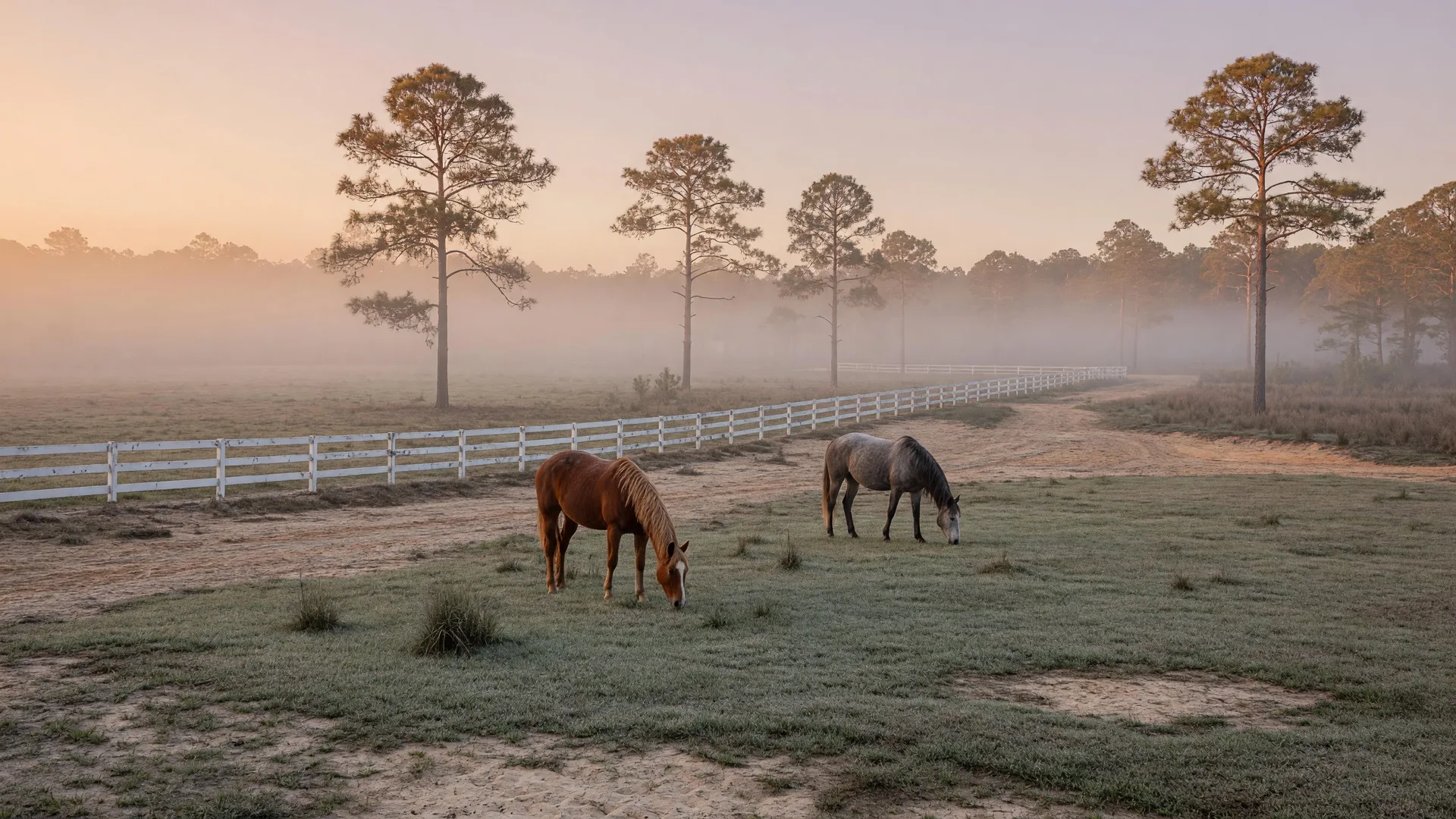
When horse people think of Aiken, they think of winter — the Winter Colony season, the polo matches, the fox hunts, and the social calendar that draws equestrians from across the country. But for horse owners who live here year-round, winter is also the season that demands the most practical know-how. Aiken winters are mild by northern standards — January highs average 55 to 59°F — but the temperature swings can be dramatic. A sunny 60-degree afternoon can give way to a 28-degree night with frost on the paddock fences. The sandhills soil that makes Aiken's footing so exceptional also drains fast, which means pastures dry out quickly after rain but offer little insulation for horses standing on frozen ground at dawn. Whether you manage a full barn or keep a single horse on five acres along the Wagener Road corridor, here's what you need to know.
Feeding when the grass stops growing
The single biggest shift in winter horse management is nutrition. Aiken's warm-season grasses — bermuda, bahia, and centipede — go dormant by late November. By December, a pasture that was lush and green six weeks earlier offers little more than dry, brown stubble with minimal nutritional value. Horses that spent summer maintaining weight on pasture alone will begin to lose condition if you don't supplement.
Hay becomes the foundation of winter feeding. Most Aiken horse owners feed a mix of coastal bermuda hay and timothy or orchard grass. Coastal is abundant in the Southeast, affordable, and familiar to every horse in the region. The general rule: feed 1.5 to 2 percent of a horse's body weight in forage per day. For a 1,000-pound horse, that's 15 to 20 pounds of hay daily. In practice, that means a standard 50-pound square bale should last roughly two and a half to three days per horse — and if your horse is burning through a bale faster, you may need to increase the ration or evaluate the hay quality.
Hay quality matters more in winter than many owners realize. Poor-quality hay — stemmy, dusty, or overly mature — has lower digestibility and less protein. A horse eating 20 pounds of low-quality coastal hay may not be getting the same nutrition as one eating 15 pounds of early-cut timothy. If you're buying hay locally, ask the dealer about cutting date and maturity. If you're buying from out of state (common in Aiken, where hay is often trucked in from Georgia, Alabama, or the Piedmont), inspect every load. Look for green color, fine stems, and minimal seed heads.
Winter Feeding Quick Reference
- Feed 1.5–2% of body weight in forage daily
- Supplement pasture with coastal, timothy, or orchard grass hay
- Add grain or concentrates only if condition score drops below 5
- Provide a salt block and free-choice minerals year-round
- Increase hay ration on nights forecast below 30°F — digestion generates body heat
Shelter: what Aiken horses actually need
Unlike northern states where blanketing and full barn housing are winter necessities, Aiken's climate means most healthy horses with a winter coat can live comfortably outdoors with access to a three-sided run-in shed. The key is wind protection. Aiken winters bring occasional cold fronts with sustained winds from the northwest, and a horse standing in an open paddock with no windbreak will burn calories just staying warm.
A well-designed run-in should face south or southeast, away from prevailing winter winds. The open side should be positioned to avoid direct north or northwest exposure. Inside, the shed should be large enough for all horses using it to stand comfortably without being crowded — a minimum of 12 by 12 feet for two horses, larger for groups. Deep bedding (straw or shavings, at least four to six inches) provides insulation from frozen ground and encourages horses to stand in the shelter.
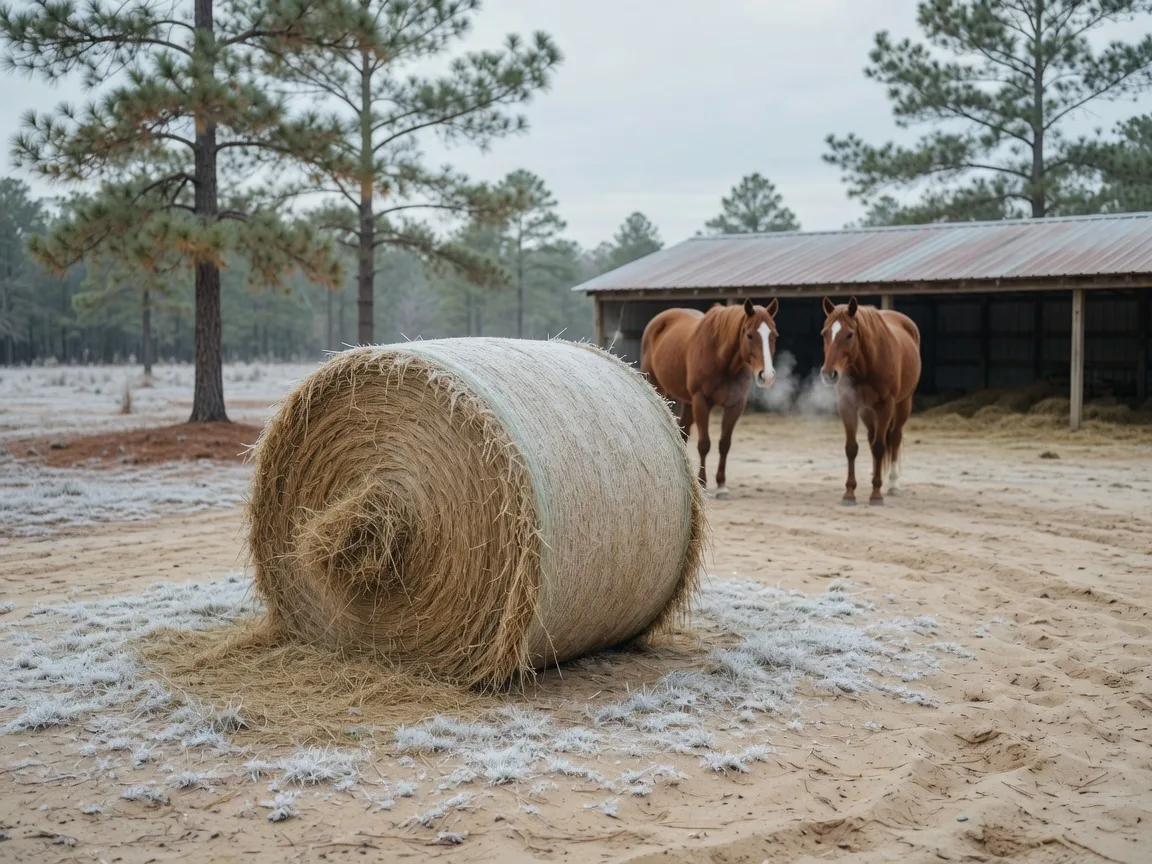
Do Aiken horses need blankets? For most healthy, sound horses with access to shelter, the answer is no. A horse's winter coat is remarkably efficient insulation. Clipped horses in active work, senior horses, or horses with Cushing's disease (which can impair coat shedding and thermoregulation) are the exceptions. If you do blanket, remember that blankets replace the horse's natural insulation — once you start blanketing, you generally need to continue until the coat grows back in spring. A waterproof sheet for rain events is often more practical than heavy blankets in Aiken's mild winters.
Water in winter: the invisible crisis
Dehydration is a winter risk that catches horse owners off guard. Horses drink less when the weather is cool — a horse that voluntarily drank 12 gallons a day in summer may drink only 8 to 10 gallons in January. But a horse eating dry hay needs more water, not less, to keep its digestive system moving. Impaction colic — caused by insufficient water in the gut — is one of the most common winter health emergencies in the Carolinas.
The solution is straightforward but requires attention. Check water sources daily. In Aiken, where many properties rely on well water delivered through automatic waterers or frost-free hydrants, the risk of a frozen or malfunctioning waterer is real during hard freezes. Trough heaters or heated water buckets are essential during Aiken's occasional deep freezes. Keep a thermometer in your water trough — horses prefer water between 45 and 65°F and will drink less if it's near freezing.
One practice I see at well-managed Aiken barns: adding a small amount of electrolytes or a flavored water additive to encourage drinking during cold snaps. It's a simple habit that can prevent a colic call to the vet at 2:00 AM.
Pasture management in the dormant season
Winter is when Aiken's pastures are most vulnerable. Dormant grass offers little protection against hoof traffic, and wet ground — even on the well-drained sandhills soils — can turn high-traffic areas into mud. The areas around gates, water troughs, and feeding stations take the worst punishment.
Smart horse owners in Aiken address this by creating sacrifice areas or dry lots for winter use. A sacrifice area is a designated turnout space — typically surfaced with sand, gravel, or geotextile fabric — where horses are kept during the wettest or coldest periods to preserve the main pastures for spring recovery. For properties on Aiken's clay-heavy south side, this is especially important. On the sandier soils north of town, the ground dries faster, but high-traffic zones still benefit from supplemental footing.
Spring planning starts in winter. If your pastures need reseeding, weed treatment, or fence repair, winter is when you schedule it. Contractors are less booked, and getting work done before the growing season begins means your pastures recover faster. This is also the time to soil test — South Carolina's Clemson Extension offers affordable soil testing that will tell you exactly what your pastures need for spring.
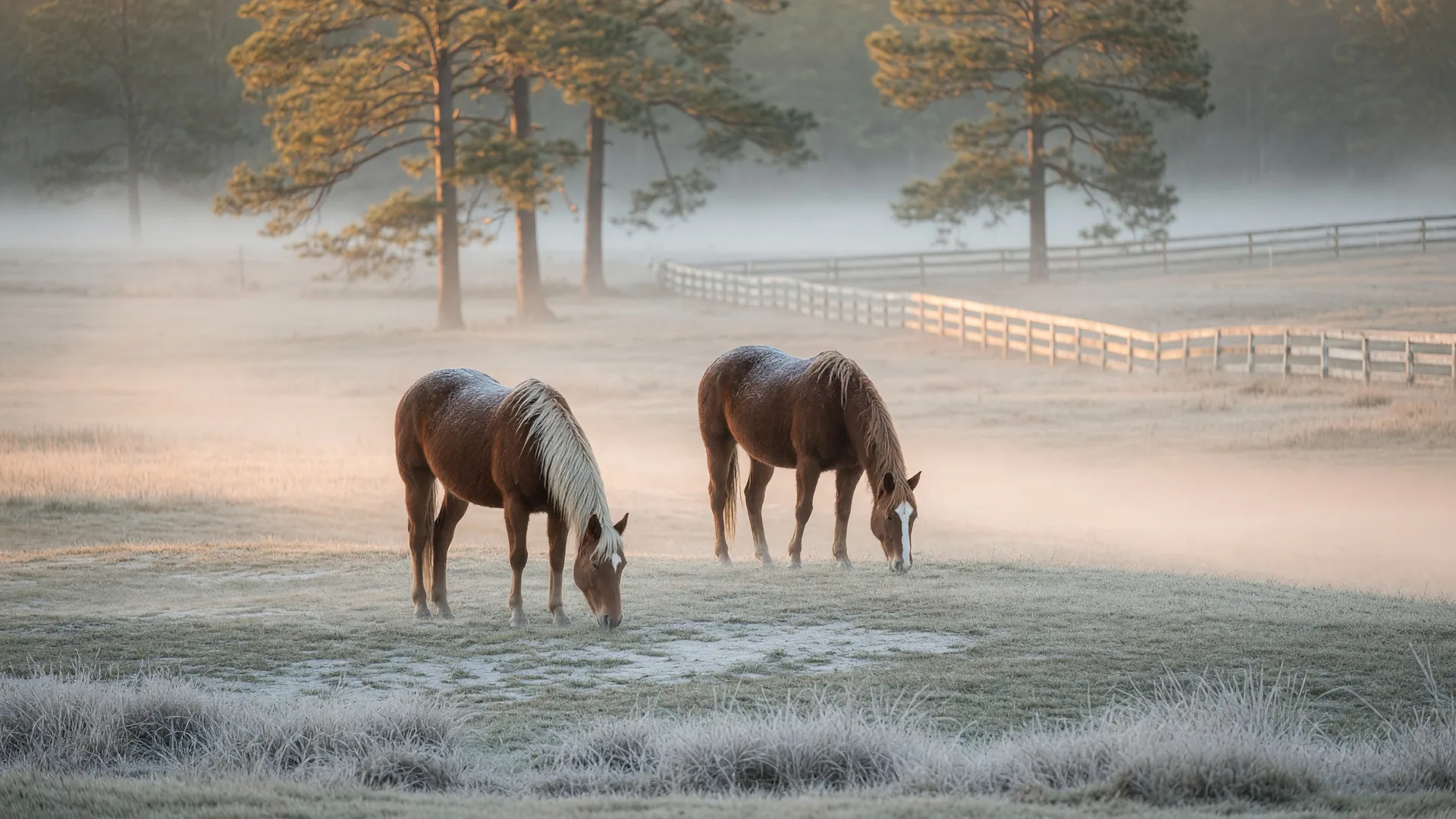
Hoof care and the farrier schedule
The combination of wet winter ground and Aiken's sandy soil creates specific challenges for hoof health. Mud leads to thrush — a bacterial infection of the frog that thrives in wet, anaerobic conditions. Sand, while excellent for drainage, can work its way into hoof cracks and around the coronary band, causing irritation. Regular farrier visits (every six to eight weeks, year-round) are non-negotiable, but in winter, pay extra attention to hoof picking and frog care.
Keeping stall bedding clean and dry is your first line of defense against thrush. If your horse is turned out on wet ground, a thorough hoof cleaning before and after turnout helps. A thrush treatment (copper sulfate solution or a commercial product) applied prophylactically during the wettest months is common practice among Aiken's barns.
Exercise and riding in Aiken's winter season
Here's the good news: winter is arguably the best riding season in Aiken. While northern riders are trapped indoors, Aiken riders enjoy dry, sunny days in the 50s and 60s — ideal conditions for extended trail rides, schooling sessions, and conditioning work. The trail network through Hitchcock Woods and beyond is at its most enjoyable in winter, with cool temperatures, firm footing on the sandhills soils, and fewer insects.
The practical considerations: warm up thoroughly before riding. Horses' muscles and tendons are slower to warm in cool weather, and pulling a cold horse directly into intense work is a recipe for soft tissue injury. Give your horse 15 to 20 minutes of walking before asking for trot, canter, or jumping work. If you're riding in the early morning, watch for frost on wooden bridges, gates, and metal surfaces — and be aware that a horse that has been blanketed will need 10 to 15 minutes to adjust to cooler air if you remove the blanket before riding.
The bottom line for buyers
If you're buying a horse property in Aiken, winter is the best time to visit. A December or January walk-through tells you more about a property than any spring showing. You'll see how the barn handles cold mornings, whether the water systems are frost-protected, how the pastures drain after winter rain, and whether the run-in sheds are positioned properly. A property that's well-prepared for winter — clean barns, functional waterers, adequate hay storage, solid fencing — tells you the previous owner understood year-round horse care. That's the kind of property that will serve you well in every season.
See Aiken's horse properties at their most honest.
Contact Linda to schedule a winter property tour and experience Aiken's equestrian lifestyle firsthand.
Get in Touch