
Underfoot: The Ancient Sand That Shaped Aiken's Equestrian Legacy
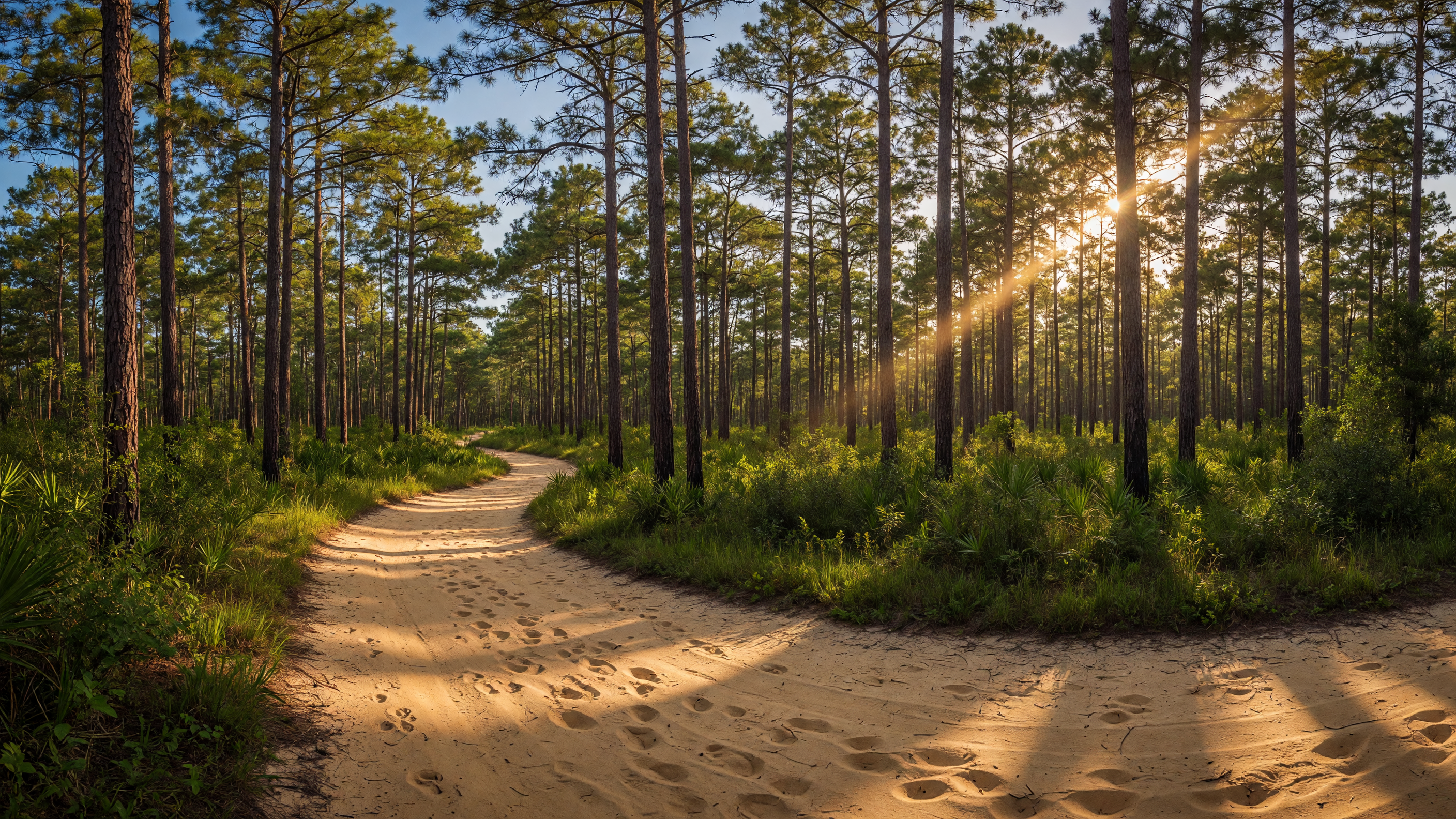
Walk any trail in Hitchcock Woods, ride through any paddock along the Wagener Road corridor, or stand in any arena in Three Runs Plantation, and you will be standing on the same thing: deep, fine-grained, well-drained sand that has been shaping equestrian life in Aiken for more than a century. This is not ordinary dirt. It is the surface expression of the Carolina Sandhills, a geological formation that runs in a 15-to-60-kilometer-wide band from Georgia through South Carolina and into North Carolina, and it is the single most important natural resource that made Aiken an equestrian destination.
The geology: ancient sand, modern horses
The Carolina Sandhills are composed of unconsolidated sand deposited as wind-blown sheets and dunes between approximately 75,000 and 6,000 years ago, when sea levels were higher and the ancient Atlantic shoreline reached further inland. As the ocean receded, it left behind vast deposits of fine, sub-angular sand that now form the well-drained, gently rolling terrain of the Sandhills region. Aiken sits squarely within this formation, and the character of the soil — its depth, drainage, texture, and stability — defines nearly everything about how horse properties function here.
Unlike the clay-heavy soils found across much of the Piedmont and Coastal Plain, Aiken's sand drains almost immediately. Rain falls, and within minutes it percolates through the topsoil and into the water table below. There is no standing water, no mud season, no waterlogged pastures. For horse owners, this translates into a deceptively simple but profoundly important benefit: dry ground, year-round. Horses standing in mud develop thrush, scratches, and hoof quality problems. Arenas that don't drain become unusable after a single rainstorm. Trails that turn to mire in spring are abandoned for weeks. In Aiken, the sand solves these problems before they start.
Why sand is the best footing for horses
Equestrian footing — the surface horses work, train, and compete on — is one of the most critical factors in equine soundness and performance. The wrong footing leads to bowed tendons, suspensory injuries, navicular changes, and chronic lameness. The right footing absorbs impact, provides traction, and allows the hoof to move naturally. Natural sand, particularly the sub-angular variety found in the Sandhills, does this better than almost any other material.
Sub-angular sand particles — grains that are neither perfectly rounded nor sharply jagged — interlock under pressure while still allowing movement. This creates a surface that is firm enough to provide stable support but forgiving enough to absorb the concussion of a 1,200-pound animal landing at speed. The result is reduced strain on tendons and ligaments, better proprioception for the horse, and a lower overall injury rate compared to harder surfaces like compacted clay or synthetic footing.
How the sand shaped Aiken's equestrian identity
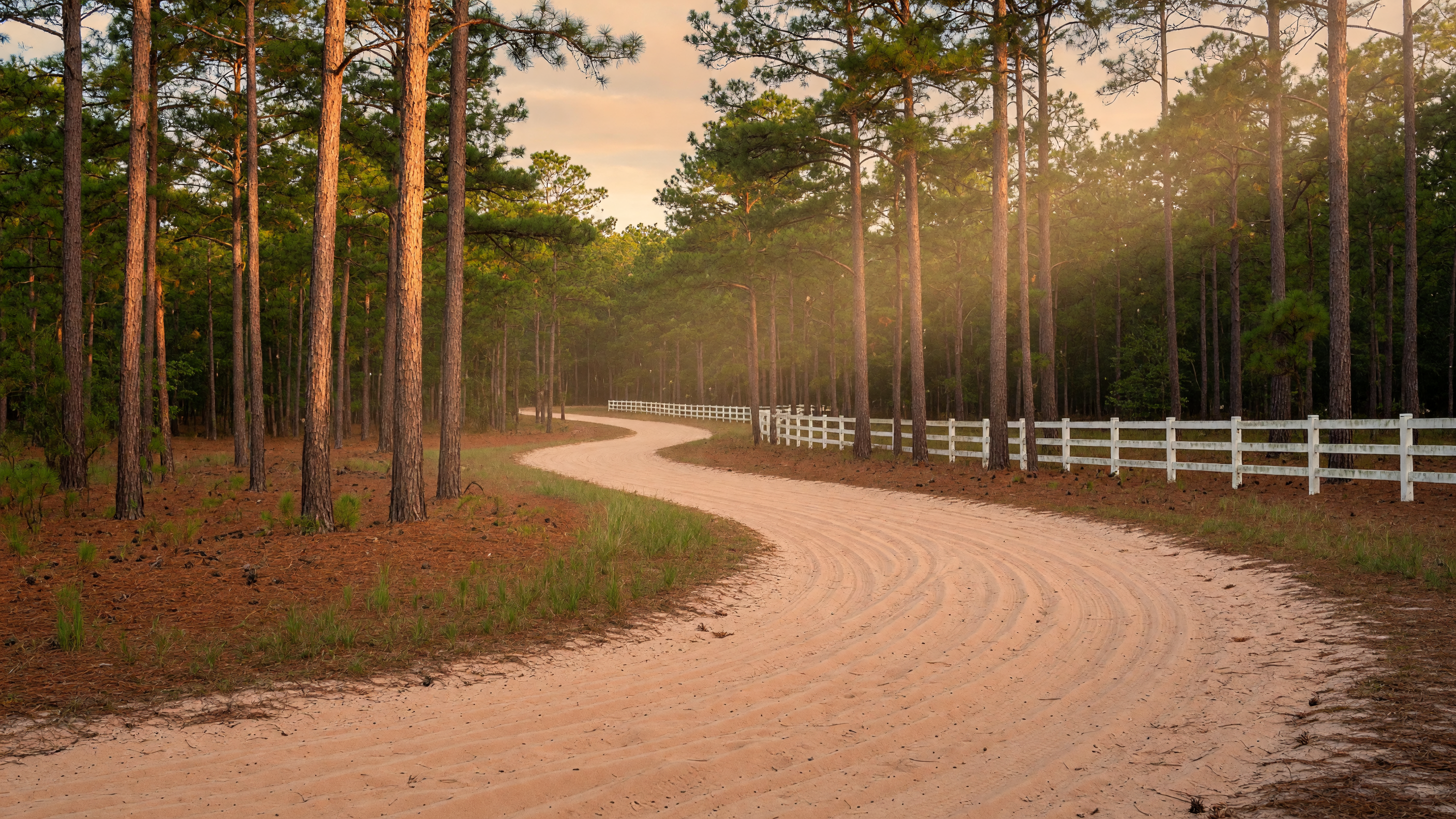
The connection between Aiken's sand and its equestrian heritage is not coincidental — it is causal. When the Winter Colony families began arriving in the 1880s, they were drawn not only by the mild climate but by the ground itself. Thomas Hitchcock, William Whitney, and Celestine Eustis recognized that Aiken's sandy soil offered something rare: a natural training surface that was gentle on horses' legs, dry enough to ride on year-round, and perfectly suited to the kind of intense Thoroughbred training they had in mind. They built their estates, polo fields, and steeplechase courses on this sand, and the tradition has endured for nearly 150 years.
Today, Aiken's trails, arenas, and paddock footing are all direct products of this geology. The 70-plus miles of trails in Hitchcock Woods are maintained as sand tracks, and their quality is one of the Woods' most cherished features. The Aiken Steeplechase course uses the natural sandy substrate for its race track. The polo fields at Whitney Field sit on well-drained sand that recovers quickly from the wear and tear of competitive play. Even the city's bridle paths, which run through the historic Horse District and downtown neighborhoods, are sand-surfaced — a feature that is nearly unique among American cities.
What this means for property buyers
For buyers evaluating horse properties in Aiken, the sand is both an advantage and a factor to understand. The good news is substantial. Properties on Sandhills soil offer naturally well-drained pastures, quick-drying arena surfaces, minimal mud management, and trails that are rideable within hours of a rainstorm. These are not small benefits — in many horse regions, mud and poor drainage are the single biggest sources of frustration, expense, and horse health problems.
The considerations are also real. Sand soils drain so quickly that they can become dusty in dry summer months, requiring regular watering of arenas and paddocks. The low clay content means the soil holds less organic matter, so pastures may need more intentional management — regular fertilization, overseeding, and rotational grazing — to maintain quality forage. Some properties, particularly those along the southern edge of the Sandhills formation where clay content increases, may have mixed soil profiles that behave differently across the same parcel. Understanding your soil composition is as important as understanding your barn layout.
Sand Soil: Advantages and Considerations
- Excellent drainage: No mud, no standing water, rideable trails year-round
- Superior footing: Natural shock absorption and concussion reduction for soundness
- Quick drying: Arenas and trails recover from rain faster than clay-based surfaces
- Lower maintenance: No standing water to pump, no mud lots to build, no erosion from water pooling
- Pasture challenge: Requires regular fertilization and soil amendment to maintain quality forage
- Dust management: Arena and paddock surfaces may need watering during dry summer stretches
The sand and the trails: a unique infrastructure
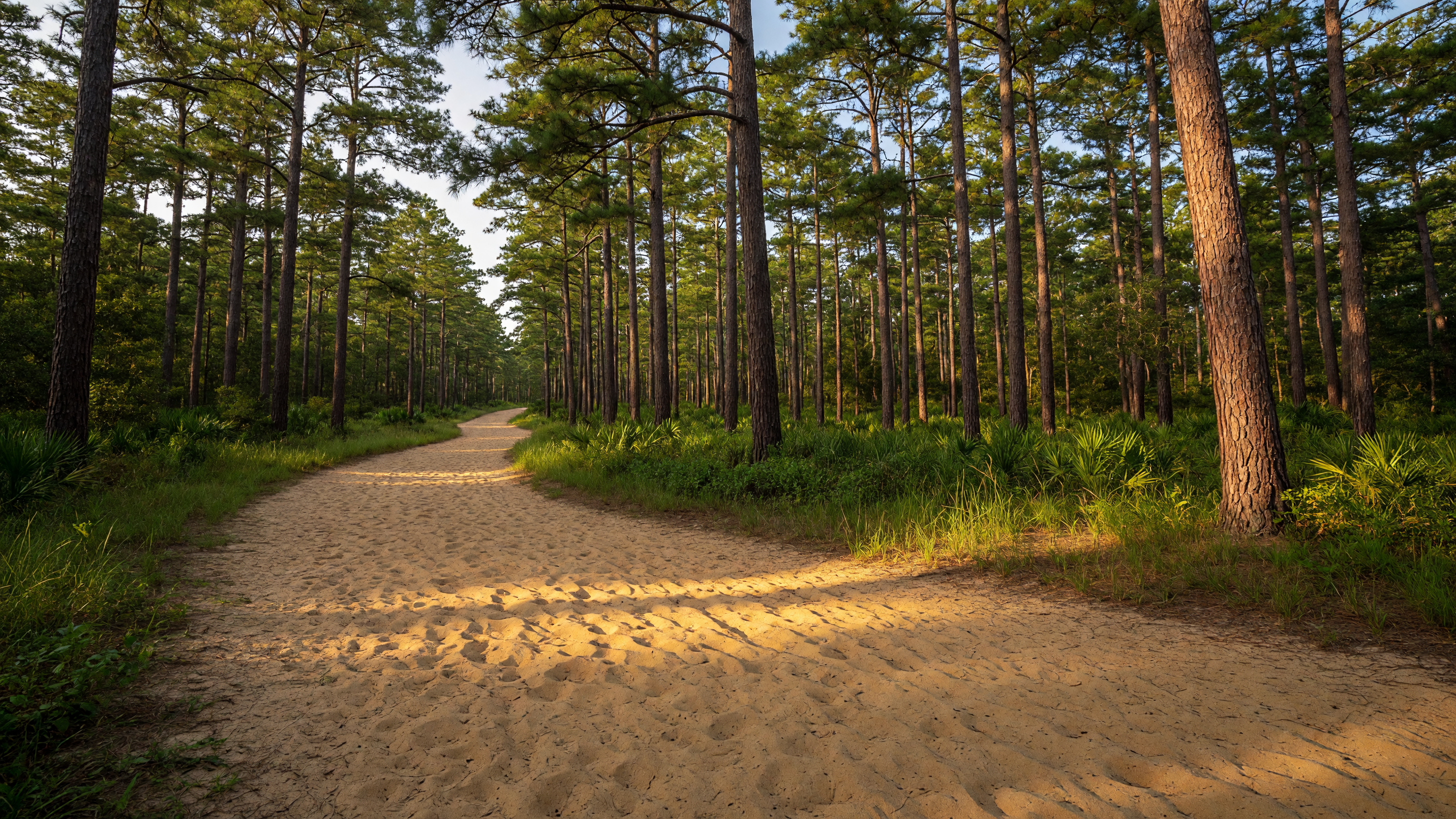
One of Aiken's most distinctive features as an equestrian community is the direct connection between its geology and its trail infrastructure. The city's bridle paths — sandy trails that run along streets through the historic Horse District and downtown — are only possible because of the native sand. In a region with clay soil, these paths would erode, rut, and become impassable after a single rain event. In Aiken, they remain rideable in virtually all conditions, and they have been used continuously since the Winter Colony era.
This trail connectivity is one of the features that makes Horse District properties particularly valuable. A rider can leave their barn, travel along a city bridle path, connect to a Hitchcock Woods trailhead, and ride for hours — all on sand footing, all without loading a trailer. This infrastructure is not manufactured; it is a natural extension of the terrain, and it is one of the reasons Aiken's trail system is considered among the best in the Southeast.
Arena footing: what buyers should know
For buyers evaluating arena facilities, understanding sand footing is essential. Not all sand is created equal, and the quality of arena footing depends on grain size, shape, and the presence or absence of fine particles that can compact and harden over time. In Aiken, many properties benefit from naturally occurring Sandhills sand that provides a solid baseline for arena surfaces. However, arena footing often requires maintenance regardless of the native soil — regular dragging, watering, and occasional addition of sand or fiber additives to maintain optimal consistency.
Indoor arenas in Aiken typically use a base of compacted sand topped with a layer of loose sand or sand-fiber mix. The natural sand substrate beneath the base provides excellent drainage, which is one reason so many Aiken properties have outdoor arenas that perform well with minimal intervention. Properties with indoor arenas may have imported footing materials layered on top, but the drainage advantage of the underlying Sandhills soil is consistent across the region.
When evaluating a property's arena, I always ask three questions: What is the footing material? How deep is it? And how does it drain? The answers tell you how much maintenance the arena will require, how often it will need watering, and whether the surface is appropriate for your intended discipline. For serious riders — particularly those in eventing, jumpers, or dressage — arena footing quality is a factor that directly affects the value and usability of a property.
The sand and water connection
The Sandhills geology affects more than just the ground surface. The same porous sand that provides excellent footing also creates a distinctive hydrology. Rainfall percolates rapidly through the sand into underground aquifers, which feed the wells that supply water to most Aiken horse properties. Well water in the Sandhills region tends to be soft and relatively low in dissolved minerals, which is beneficial for horses — high mineral content in water can affect taste, hydration, and in extreme cases, health. Most Southside Aiken and Horse District properties draw from this sand-filtered groundwater, and the water quality is consistently good.
The flip side of rapid drainage is that surface water is scarce. Streams and ponds are less common on Sandhills properties than they are in clay-heavy areas to the south and west. This means horse properties in the Sandhills typically rely on well-fed water systems rather than natural surface water sources. For buyers, this is a positive — well water is generally more reliable and cleaner than surface water — but it does mean that well capacity and quality should be tested as part of any property due diligence.
Why the sand still matters today
The Carolina Sandhills formation is ancient — tens of thousands of years old — but its impact on Aiken's equestrian community is immediate and ongoing. Every property listing, every trail ride, every arena session, every fox hunt through the Woods is shaped by this geology. For buyers who are new to Aiken, understanding the sand is not academic; it is practical knowledge that affects which property you choose, how you manage it, and what your daily equestrian life looks like.
After more than twenty years of working with horse properties in the CSRA, I still consider soil when evaluating a listing. A property with deep, well-drained sand will handle horses better, require less infrastructure investment for drainage, and provide a better day-to-day experience than a property on clay — regardless of how beautiful the barn is. The sand is not the only factor, but it is the foundation. Literally.
The right property starts with the right ground beneath it.
I evaluate soil conditions, drainage, and footing quality as part of every property assessment. Contact Linda to find a horse property in Aiken that is built on the right foundation.