
The Real Cost of Owning a Horse Property in Aiken, SC: A Buyer's Guide to Budgeting for Land, Barn, and Everyday Care
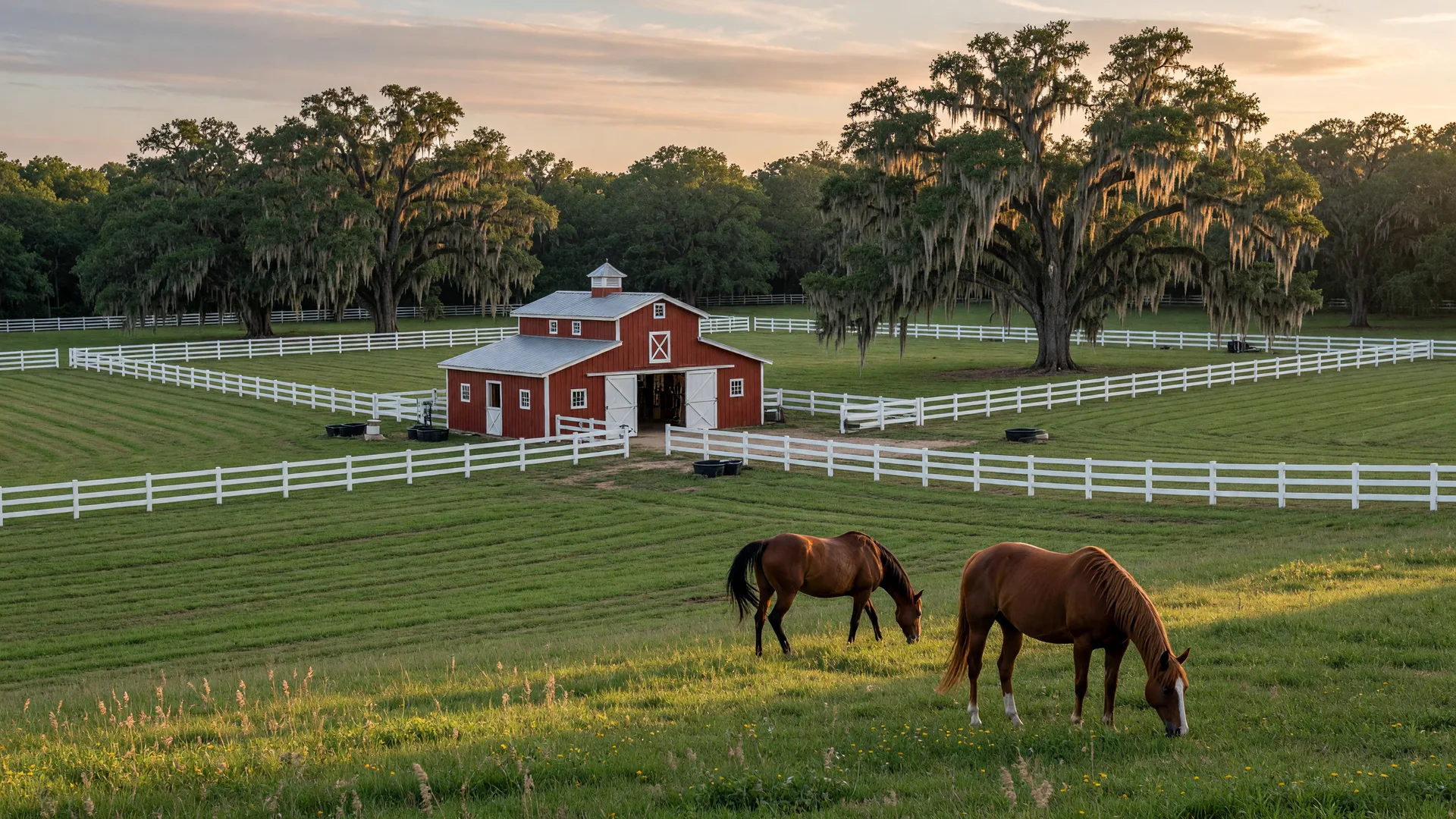
When buyers start looking at Aiken horse properties, they often focus on the purchase price and lose sight of everything that comes after the closing table. That is a mistake I have seen cost people real money over more than 20 years in CSRA real estate. This guide lays out the honest, realistic cost of owning a horse property in Aiken: the one-time investments in land and barn, and the monthly rhythm of feed, farrier, vet, and upkeep that goes with keeping horses in South Carolina horse country. Whether you are buying your first farm or upgrading to a bigger one, a clear budget is the difference between living your dream and watching it turn into a burden.
The Purchase Is Only the First Payment
The sticker price of a horse property is exactly that: a starting point. When you buy acreage, you are also buying a barn that may need repairs, fencing that may need replacing, water and septic systems that need maintenance, and a pasture that needs care through every season. The buyers who do best in Aiken are the ones who build a line item for the property's ongoing care into their budget before they make an offer, not after the first broken fence board.
Before you commit, walk the property with a clear eye toward what it already has and what it will need. Horse property due diligence matters in Aiken precisely because these costs add up so quickly. A solid property with good bones can save you tens of thousands in the first few years, while a cheap one with hidden problems can quietly drain you. That is why I always encourage buyers to budget generously and inspect carefully.
What It Costs to Keep a Horse in Aiken, Month to Month
A useful way to approach the budget is to separate the property costs from the day-to-day cost of caring for your horses. Even if you own your own land and barn, the monthly cost of a single horse in Aiken typically lands in the $700 to $1,100 range, and can climb to $1,300 to $1,700 or more at a premium training facility. If you instead board at a full-service barn, those figures are what you would pay to the barn, and the local boarding market we cover in our guide to boarding in Aiken reflects similar numbers.
Here is where that money goes, with the ranges I most often see in Aiken:
- Board or the home-care equivalent: $600 to $1,100 a month for full-service care at a standard barn, with premium and training facilities reaching $1,500 or more.
- Hay and grain: often included in full board; if bought separately, roughly $60 to $130 a month for hay, plus $30 to $80 for grain when it is needed.
- Farrier: trims around $40 to $75 every six weeks, or $100 to $150 per set if your horse is shod, which adds up to $100 to $150 a month.
- Routine vet care: $300 to $800 a year for vaccines, a Coggins test, dental work, and deworming, or about $30 to $70 a month, with the first year usually costing more.
Those are the everyday numbers. They do not include the unexpected vet bill, the emergency colic surgery, or the day the winter blankets finally give out. Setting aside a true contingency fund is not optional for horse people. It is as essential as the hay itself.
Building or Renovating a Barn
A barn is often the single largest line item after the land itself. In the Southeast, building a new horse barn in 2025 typically runs $30 to $100+ per square foot installed, with standard metal and pole barns on the lower end and timber-frame or premium builds on the upper end. On a per-stall basis, expect roughly $5,000 to $14,000 per stall for basic to mid-range finishes, and $14,000 to $22,000 per stall for premium builds.
To put that in context, a common six- to eight-stall barn typically lands in the $72,000 to $240,000 range, and an eight-stall barn with a basic-to-mid-level finish runs roughly $120,000 to $210,000. Those figures vary with roof style, materials, site prep, insulation, and whether you add a tack room, wash stall, or water and electric in every stall. If you are comparing that to buying an existing property, the math can tell you a lot. A farm that already has a sound barn may carry a higher price today, but it can save you the six-figure cost of building one from scratch.
If you do build, the details matter as much as the square footage. Our guides on stall sizing and indoor versus outdoor arenas walk through the decisions that affect both comfort and cost. A few thousand extra on the right footing, proper drainage, or a well-placed water line now is far cheaper than correcting a mistake later.
Fencing, Footing, Pasture, and Water
Beyond the barn, the biggest recurring property costs are fencing, arena footing, pasture management, and water. Good perimeter and cross fencing is not a one-time expense; it is an ongoing line item. Our guide to horse fencing in Aiken breaks down the materials and their longevity, and the smart buyers budget for maintenance and eventual replacement rather than treating the boards and rails as permanent.
Arena footing deserves its own budget category. The top-quality sand under Aiken's arenas is one reason the town became horse country in the first place, but maintaining a ring means adding footing, harrowing, and managing dust through the seasons. Pasture is likewise a working asset, and seasonal pasture management costs real time and money in seed, fertilizer, hay testing, and rotational grazing.
Then there is water. Aiken properties often rely on private wells and septic systems, and keeping them tested and serviced, with enough flow for livestock, is a recurring cost that catches many new owners off guard. Add in drainage and you start to see why the day-to-day care of the land rivals the cost of the horses themselves. The good news is that most of these are controllable and predictable if you plan for them.
Taxes, Insurance, and the Quiet Costs
Two costs that surprise buyers are property insurance and taxes. Owning horses and running a barn adds liability and equine coverage on top of a standard homeowners policy, and those premiums reflect the real risk of keeping large animals on the land. On the tax side, Aiken County offers agricultural use valuation that can meaningfully lower the property tax burden on qualifying acreage, a benefit we cover in our guide to land and tax benefits. Working with a local agent and a tax professional who understands agricultural exemptions can save you thousands every single year.
There are also labor costs that many buyers underestimate. If you intend to keep several horses and work a job, planning to pay for daily turnout, mucking, and feeding can add a meaningful monthly amount. The honest way to build your budget is to price out the care you would need even on the days you cannot be there, because horses do not take weekends off.
A Realistic Monthly Budget Check
- Per-horse care (board or the home equivalent, feed, farrier, routine vet): roughly $700 to $1,100 a month at a standard barn
- Premium or training-level care: $1,300 to $1,700 a month and up
- Property maintenance reserve (fencing, footing, pasture, well, septic): set aside a fixed amount every month
- Emergency/contingency fund for the unexpected vet bill or equipment failure: non-negotiable
- Insurance, agricultural taxes, and any paid labor: line items, not afterthoughts
Buying Smarter With the Full Picture
None of this is meant to discourage you. Owning a horse property in Aiken is one of the most rewarding decisions a horse person can make, and the lifestyle is genuinely hard to beat. The point is simply to go in with your eyes open and your budget realistic, so the property becomes a source of joy rather than financial strain. I have represented buyers who planned their five-year barn and pasture budget before ever making an offer, and they are consistently the ones who thrive here longest.
When you work with me, I help you factor all of these costs into the search. We look at the features that matter, the acreage you really need, and the realistic condition of any barn and fencing on the property. Whether you are coming from out of state, covered in our relocation guide for horse owners, or moving within the CSRA, my goal is to match you with the property that fits both your horses and your budget for the long term.
Let me help you budget an Aiken horse property with the full picture in mind.
With more than 20 years in the CSRA, I know what these properties truly cost to own and maintain, and I will help you weigh the purchase price against the ongoing care. As the First AI-Certified Realtor in the area, I pair that local knowledge with modern tools to find and market the right property for you.
Schedule a Consultation