
Horse Boarding in Aiken, SC: A Complete Guide to Facilities, Costs, and Choosing the Right Stable
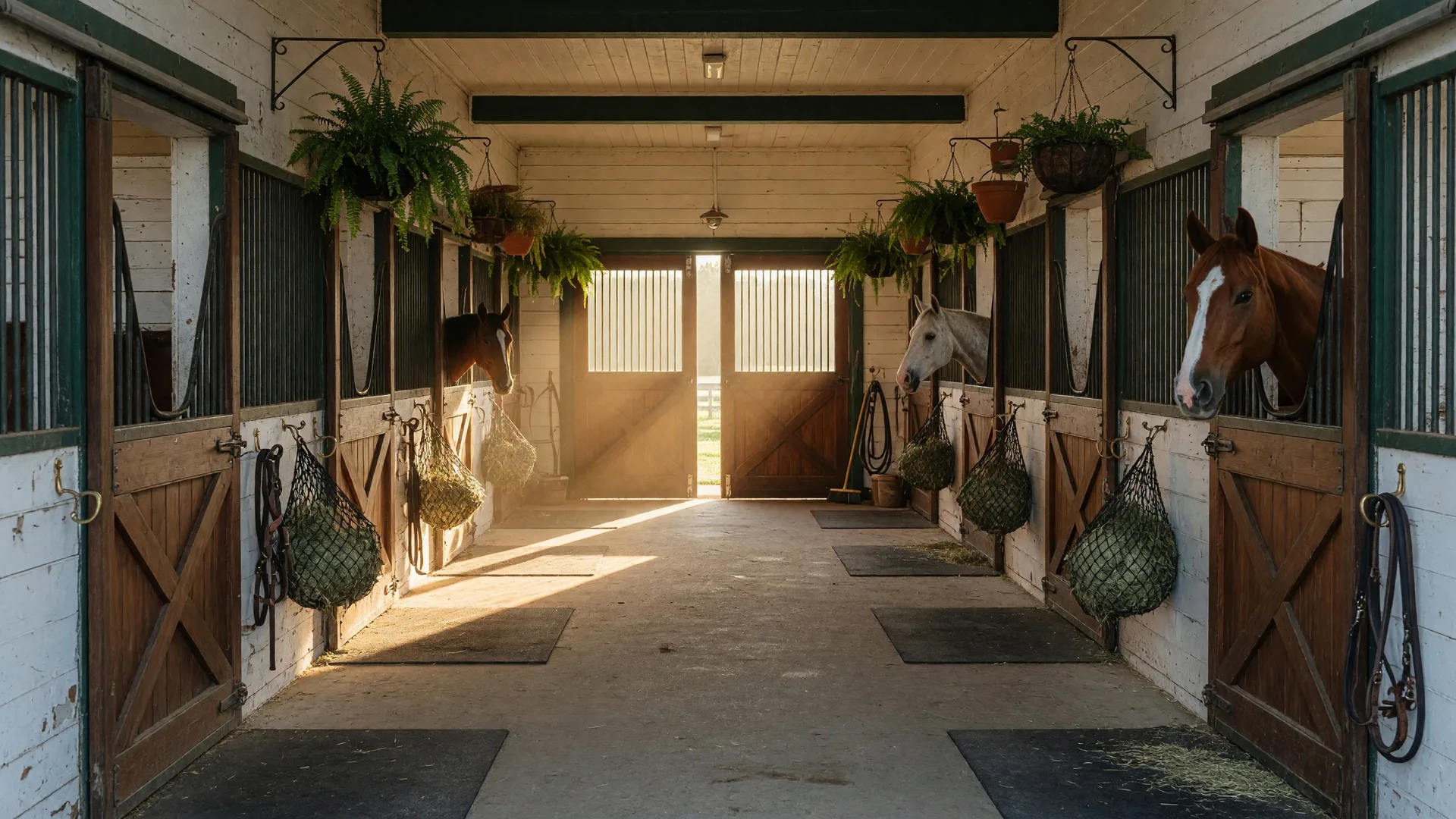
One of the most common questions I hear from buyers considering a move to Aiken is: "What if I'm not ready to buy a property yet?" The answer is simple — you don't have to own a barn to keep your horse in one of the best equestrian communities in the country. Aiken has a robust network of boarding facilities that serve everyone from competitive eventers who need professional training programs to retirees who want their horses on a quiet pasture with good grass. Understanding your boarding options, what they cost, and how to evaluate a facility is the first step for any horse owner considering a move to the Aiken area.
Types of boarding in Aiken
Aiken's boarding facilities offer a wider range of care levels than most communities this size. That's a direct reflection of the town's diverse equestrian population — from Winter Colony seasonal residents who need full-service care during the social season, to year-round locals who manage their own horses on a budget. Here's what you'll find.
Full board
Full board is what most people picture: a stall in a barn with daily cleaning, two or three feedings, turnout management, and access to the facility's arenas, trails, and amenities. At an Aiken full-board facility, your horse typically gets a 12×12 matted stall cleaned at least once daily, hay fed two to three times, grain according to your specifications, and daily turnout either in an individual paddock or a small group. You also get access to shared riding spaces — outdoor arenas, round pens, and in many cases, direct trail access.
Full board is the right choice for owners who want a hands-off experience. You show up, ride, and leave the daily care to the barn staff. It's also the standard option for horses in active training, since most trainers in Aiken require that their students board at their facility or a partner barn.
What does full board cost in Aiken?
Full stall board in Aiken typically ranges from $625 to $1,400 per month, depending on the facility, barn quality, and included amenities. Training barns with arena access, professional staff, and direct trail connections tend to fall at the higher end. Basic full board at a smaller farm starts closer to $625–$800. Premium facilities with climate-controlled barns, extensive footing, and competition infrastructure can exceed $1,200.
Additional costs to budget for: Farrier (every 6–8 weeks, $150–$350 per visit depending on shoes), veterinary care (annual wellness, Coggins test, vaccinations — typically $500–$1,000/year), deworming, dew teeth, and training or lesson fees if applicable.
Partial board
Partial board — sometimes called partial care — is a middle ground. The facility provides the stall, hay, and basic feeding, but you handle some or all of the daily care yourself. You might clean your own stall, do your own turnout, or manage your horse's blanketing and supplements. This option is less common than full board at professional facilities, but several Aiken farms offer it as a way to reduce monthly costs while still providing barn shelter and feed.
Partial board makes sense for owners who live nearby and have the time to provide daily care but want the infrastructure of a barn — stalls, arena footing, water systems, and fencing — without purchasing and maintaining it themselves. Monthly costs typically run 20–30% less than full board at the same facility.
Pasture board
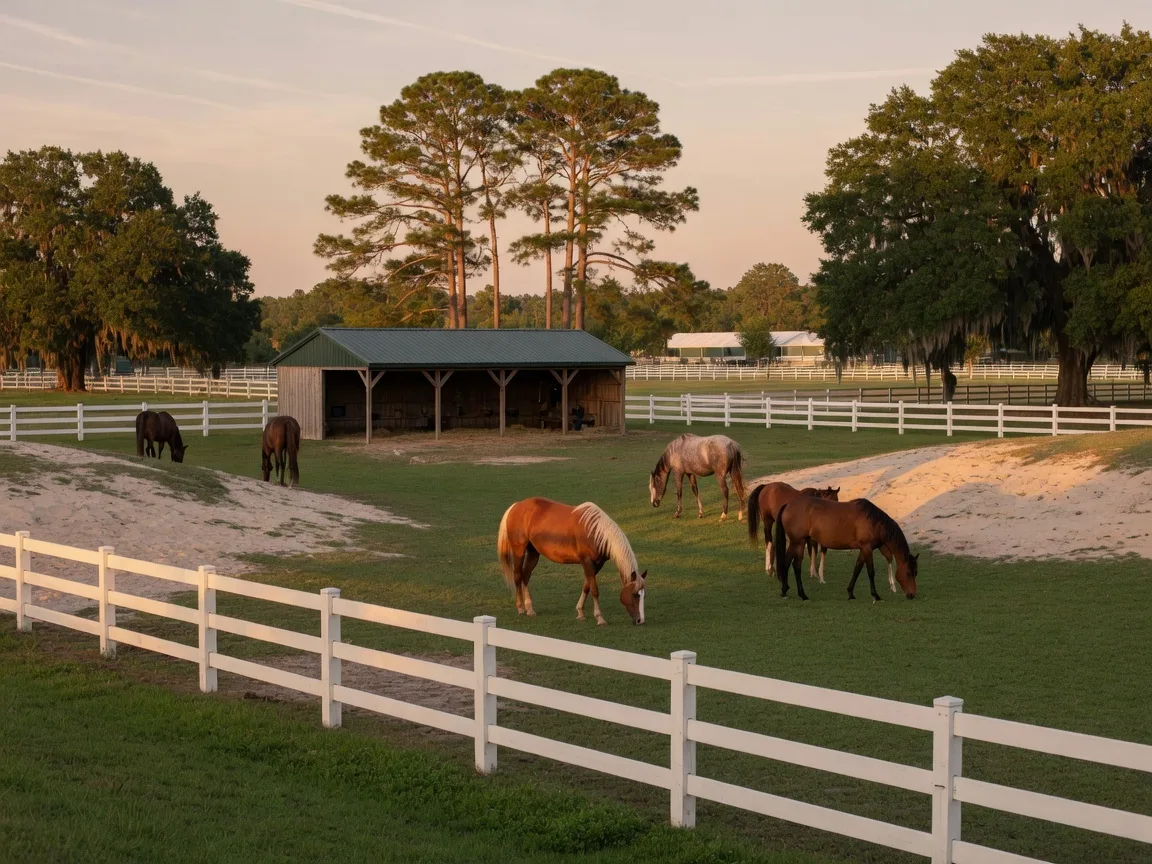
Pasture board is the most affordable boarding option and one that Aiken's climate supports particularly well. Your horse lives outdoors in a designated paddock with access to grass, shelter (usually a run-in shed), and a water source. The facility provides the land and basic infrastructure; you provide the rest — or hire someone to handle supplementary feeding, blanketing, and health checks.
Aiken is well-suited for pasture board because the sandhills soil drains well, reducing mud-related hoof problems. The mild winters (January highs in the mid-50s) mean horses can live outdoors comfortably with a run-in shed for most of the year. However, summer heat and limited grass growth in the driest months mean you'll need to budget for hay supplementation from roughly June through September, even on pasture.
Pasture board typically costs $150–$400 per month in the Aiken area, depending on the quality of the pasture, the size of the paddock, and whether the facility includes basic feeding or simply provides the space.
Self-care and DIY boarding
Some Aiken facilities offer self-care or DIY boarding, where you rent a stall and/or paddock and provide all care yourself. You bring your own hay, clean your own stall, manage your own turnout schedule, and handle all feeding. The facility provides the physical space, water, and sometimes electricity. This is the most affordable barn option — typically $250–$500 per month — and it's popular with hands-on horse owners who work from home or live on the same property.
Self-care works best when you live on-site or very close by. Without daily presence, self-care arrangements can quickly become problematic — missed feedings, unnoticed injuries, or weather-related emergencies. If you're considering this option, proximity matters as much as price.
Specialized boarding options
Aiken also offers boarding niches you won't find in every market:
- Retirement board: For older horses or horses no longer in work. These facilities focus on quiet surroundings, quality pasture, and gentle daily care without the demands of a training barn. Sandy Bottom Farm, for example, specializes in retirement and rehabilitative boarding.
- Rehabilitative board: For horses recovering from injury or surgery. These facilities offer controlled turnout, veterinary coordination, and careful monitoring during recovery periods.
- Seasonal board: Many Aiken facilities accommodate Winter Colony residents who bring horses for the season (October through April) and ship them home for summer. Seasonal rates are common, though availability can be tight during peak season — book early.
- Training board: Includes professional riding and training in addition to daily care. Common at eventing, dressage, and hunter/jumper barns. Training board is the most expensive option, typically $1,500–$2,500+ per month, but it includes professional rides several times per week, show preparation, and hauling to competitions.
What to look for in an Aiken boarding facility
Not all boarding barns are created equal, and the differences matter. Aiken has facilities ranging from world-class training operations to casual pasture setups on five acres. Here's what I tell buyers to evaluate when they're touring boarding options.
Barn condition and stall quality
Walk the barn aisle. Is it clean? Are the stalls matted? Is the bedding adequate? Look at the stall dimensions — a standard 12×12-foot stall is the minimum for most horses; larger breeds may need 12×14 or 14×14. Check the ventilation: open aisle barns with good airflow are ideal for Aiken's climate. Stuffy, closed-up barns with no cross-ventilation are a red flag, especially in summer. Look at the ceilings — they should be high enough that a horse can't contact a light fixture or rafter with its head.
Turnout and pasture quality
How much turnout does the facility offer? A horse that lives in a stall 23 hours a day is a horse with behavioral and health problems waiting to happen. Look for facilities that offer a minimum of four to six hours of daily turnout. Check the fencing: is it safe, maintained, and appropriate for horses? Wood board, vinyl, and no-climb wire are standard. Barbed wire is never acceptable. Walk the pasture: is the grass maintained? Are there toxic plants? Is the footing safe, or are there deep mud holes around gates and water troughs?
In Aiken's climate, shade is critical. Every pasture should have either natural tree cover or a run-in shed. A horse standing in full South Carolina sun without shade for hours on a 95-degree day is at risk for heat-related illness.
Water systems
Check the water. Every pasture should have a clean, functioning water source. Automatic waterers are ideal for larger facilities, but they need regular maintenance. Troughs are simpler but require daily monitoring and cleaning, especially in summer when algae builds rapidly. Ask about the water source — most Aiken properties use well water, and quality varies. If you're paying for full board, clean water should be a given.
Arenas and riding facilities
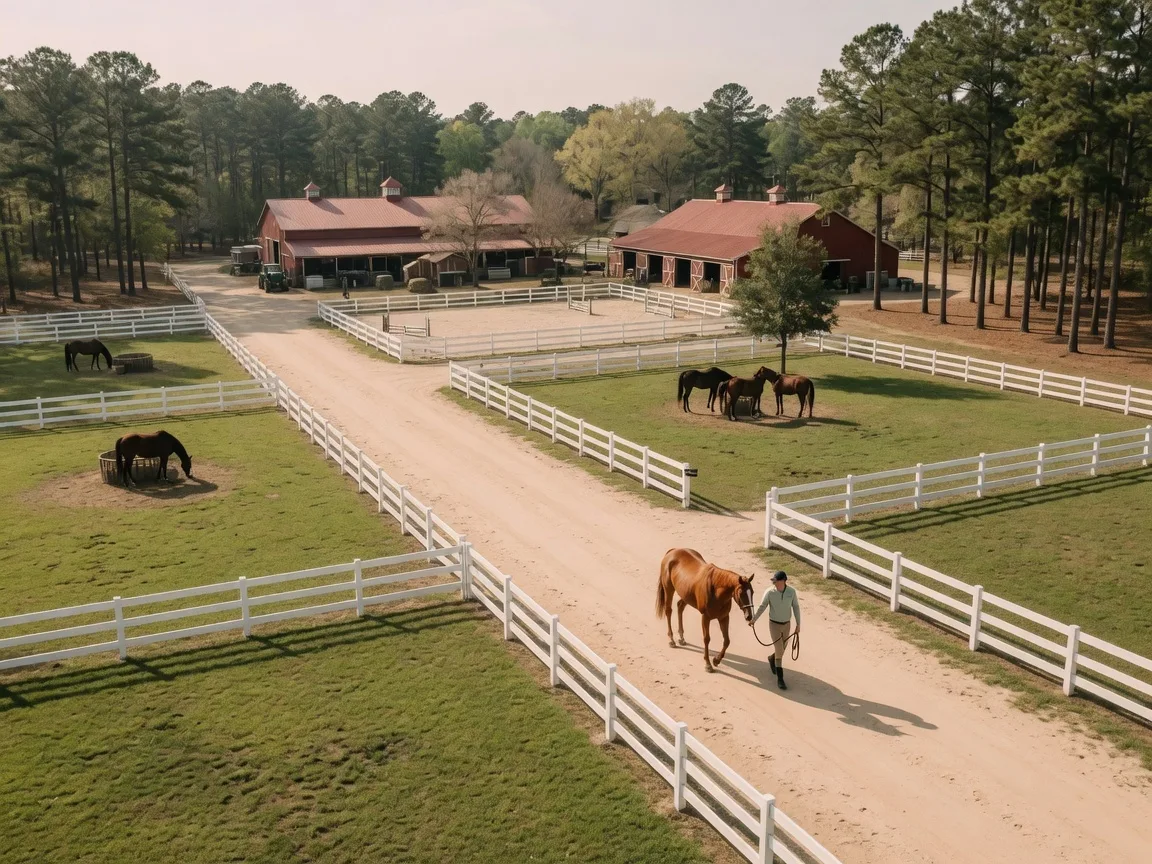
If you ride regularly, the quality of the riding space matters. Look for at least one outdoor arena with quality footing. Sand footing is standard in Aiken, and the local sandhills soil makes for excellent arena base material. Some facilities also offer covered or indoor arenas — valuable during summer afternoon thunderstorms and the occasional cold rain in winter. Ring size varies: a dressage rider needs a minimum 20×60-meter arena; a jumper rider can work in a smaller space but appreciates a large one.
Beyond the arena, ask about trail access. Properties near Hitchcock Woods or with direct trail connections are highly desirable. Aiken's trail network is one of the biggest quality-of-life advantages of keeping a horse here, and a facility with direct trail access saves you from trailering every time you want a hack.
Staff and management
The people matter as much as the buildings. Visit the facility at different times of day — morning feeding, midday, and evening. Are the horses fed on time? Are the stalls cleaned? Is there someone on the property who can handle an emergency? Ask about staff ratios: how many horses does each farm hand manage? A single attendant covering 40 horses is stretched thin; a ratio of one staff member per 10–15 horses is more typical of a well-run operation.
Ask about the facility's emergency protocols. Who handles colic calls at 2:00 AM? Is there a veterinarian on call? Does the barn have a relationship with a local equine vet practice? In Aiken, the equine veterinary community is strong, with several reputable practices serving the area — but not every barn has a direct relationship with them.
Boarding contracts and policies
Get everything in writing. A proper boarding contract should spell out: monthly board rate and what's included; feeding schedule and hay/grain specifications; turnout schedule; liability and insurance requirements; notice period for moving your horse; and the facility's policies on vet and farrier access. Some facilities require you to use their veterinarian or farrier; others allow you to choose your own. Either approach is fine, as long as it's clearly stated.
Pay attention to deposit requirements and cancellation terms. Some Aiken barns require a two- to four-week deposit, and seasonal facilities may have minimum stay requirements during the Winter Colony season. If you're a seasonal resident, clarify whether your stall will be held for you the following year or if it's first-come, first-served.
Notable boarding facilities in the Aiken area
The Aiken area has dozens of boarding facilities, ranging from small private farms to nationally recognized training centers. A few names come up repeatedly when horse people discuss the local options:
- Stable View — A 1,000-acre premier equestrian facility on the outskirts of Aiken. Offers full-care boarding, world-class arenas, indoor training, and competition hosting for dressage, eventing, and show jumping. Stable View is where serious competitive riders gravitate.
- The Stable on the Woods — A 70-acre boarding and training facility with direct Hitchcock Woods access. Offers training in dressage, hunters, jumpers, eventing, and foxhunting. The trail access alone makes this a standout location.
- Stronghill Farm — A well-regarded boarding and training facility offering full and partial care options with 12×12 matted stalls and walk-out grass paddocks.
- Ligara Farm — A 24-acre farm offering full care and self-care boarding, popular with owners who want more hands-on involvement.
- Green Hill Farms — A 127-acre facility offering both full care and pasture board, with room for horses at various stages of life and work.
This isn't an exhaustive list, and the right facility depends entirely on your needs, budget, and riding goals. A competitive eventer's ideal barn looks nothing like what a retiree with a single trail horse needs. That's where working with a local expert — someone who knows the facilities, the management styles, and the reputations — makes a real difference.
Boarding while shopping for property
One of the most practical strategies for buyers relocating to Aiken is to board first and buy later. Ship your horses to an Aiken boarding facility, settle in, ride the trails, visit the local events, and get to know the different neighborhoods before committing to a property purchase. Six to twelve months of boarding gives you time to understand where you want to be, what kind of property suits your needs, and what the market looks like across different price points and locations.
I've worked with many buyers who started this way. They arrive for the Winter Colony season, board at a facility on the south side, ride through Hitchcock Woods, attend a few events at Bruce's Field, and by spring they have a clear picture of exactly where they want to put down roots. That kind of informed decision-making leads to better purchases and fewer regrets.
Let me help you find the right boarding facility — and the right property.
Whether you're boarding temporarily while you shop, or ready to find your forever horse property in Aiken, I can guide you through every step. Contact Linda for a personalized consultation.
Get in Touch