
Why Fall Is the Best Time to Buy a Horse Property in Aiken: What Autumn Reveals About a Farm
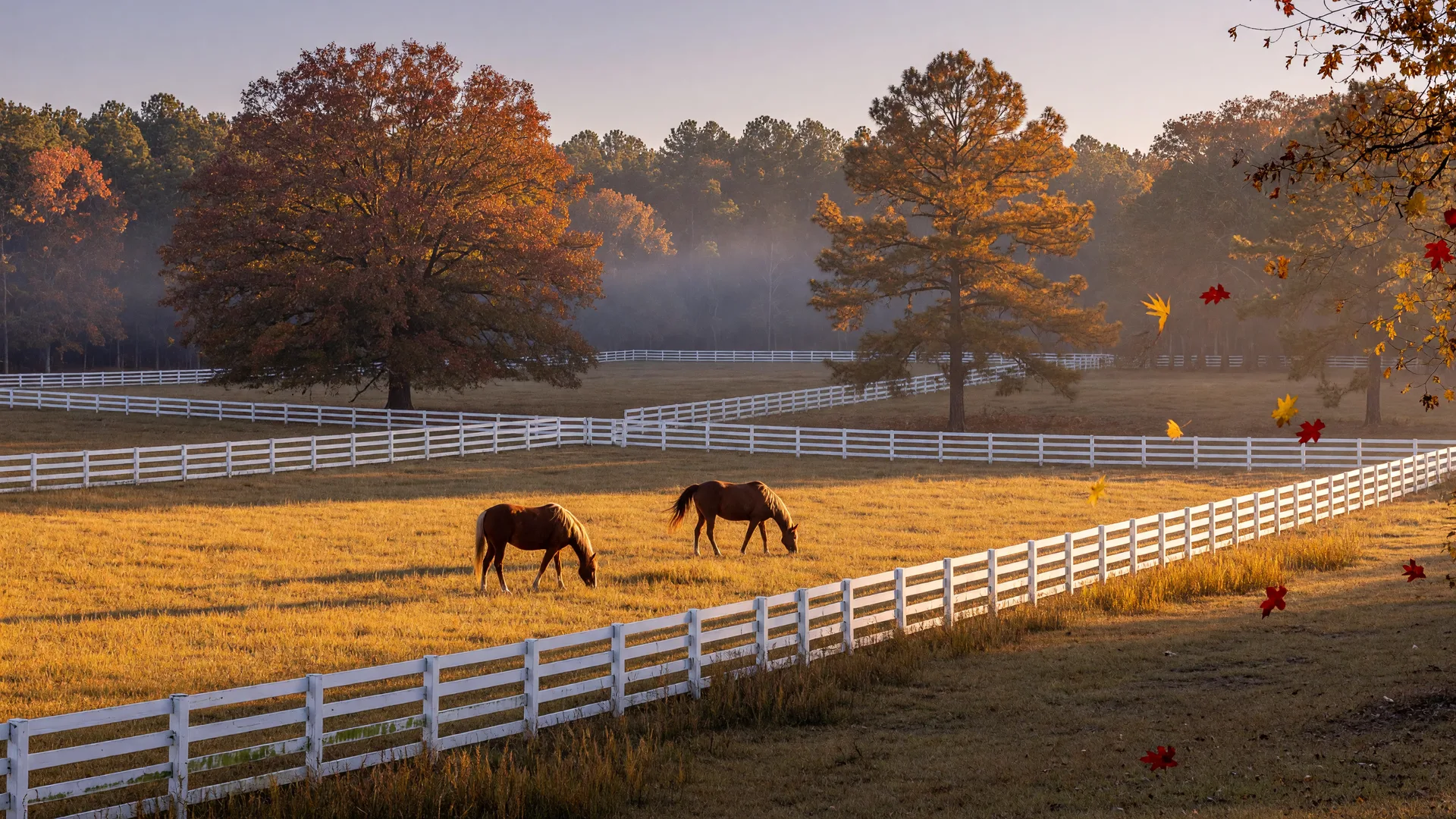
October is the month Aiken horse country shows off. The summer heat finally breaks, the first cool fronts drift through the Sandhills, riders reappear on the Hitchcock Woods trails, and the calendar fills with horse shows, polo, and the Fall Steeplechase. For buyers, that timing is more than pleasant. A farm tour in October answers questions a spring visit cannot: how the land drains after autumn rains, what the pasture looks like heading into winter, whether the arena footing survived a full season, and how the barn will treat your horses when the first frost arrives. This guide explains why fall is my favorite season for touring and buying Aiken horse property, and what to look for with every step.
October is Aiken's sweet spot for touring farms
October is arguably the best month to be outdoors in Aiken. Average daily highs run from the high 70s early in the month down to about 70 degrees by Halloween, with overnight lows in the 50s. That is textbook riding weather, and it makes long farm tours comfortable in a way summer tours never are. You can walk an entire boundary line, hike around every paddock, and stand in an open hay barn without wilting. The deep sand of the Carolina Sandhills drains quickly after rain, so the trails and turnouts you see in October are usually the best-conditioned surfaces any Southern property offers all year.
October is also when Aiken feels most like itself. The winter colony riders arrive to begin training season, the hunting community starts its fall season in Hitchcock Woods, and neighbors compare notes on hay orders and arena footing at the feed store. When you drive the country roads on a Saturday in October, you see horses on every corner: people riding out, hacking to shows, or just enjoying the cool air. For a buyer trying to picture daily life on an Aiken horse farm, there is no better month to get that impression in person.
The fall calendar puts the community on display
Tour with your calendar open, because the fall season is when Aiken's equestrian calendar is at its fullest. The Aiken Steeplechase Association hosts the 33rd running of the Aiken Fall Steeplechase on Saturday, October 31, 2026, at the Aiken Steeplechase Racecourse on Richland Avenue East. At Bruce's Field, the fall hunter and jumper season runs from early September through mid-December, with the two "Fall in Love With Aiken" shows on October 15 through 18 and October 22 through 25, followed by "November at Bruce's Field" from November 5 through 8 and the Aiken Holiday Classic series later in the season. See our fall season events guide for the full month-by-month picture.
Why does the calendar matter to a buyer? Because a farm tour is only one impression, and the community around the property is the other half of the purchase. In October you can watch a horse show at Bruce's Field, tailgate at the steeplechase, and visit a training barn mid-morning all in the same weekend, then drive the back roads and see which neighborhoods are quiet and which are alive with horses. Fall is the fastest way to learn whether a specific property sits in the middle of the Aiken you want to live in.
What autumn reveals about the land
Drainage is the first thing autumn audits for you. By October, the pattern of afternoon thunderstorms has usually settled, and the paddocks have taken their share of autumn rain. Walk every turnout after a wet spell and look for standing water, eroded gateways, and muddy sacrifice areas. Aiken's sandy soil drains remarkably fast, so a low spot that still holds water in October is telling you something real about the land. If the owner shows you a pasture that has stayed dry through fall showers, that is a farm that understands grading and drainage. Our drainage guide covers the details worth checking.
Pasture is the second thing October exposes. By mid-fall, summer grasses are fading and the grazing story of the year is visible: where the grass held, where the weed pressure built, which fields were overgrazed, and which gateways turned to dust. Plenty of Aiken farms overseed with annual ryegrass in October, which keeps pastures green and grazeable through the winter months. Look for whether the owner has a winter plan for the fields and how much hay is stored in the barn for the months ahead. Our pasture management guide explains what healthy Sandhills pasture looks like in every season.
Trees are the third thing autumn reveals, and most buyers never think to look up. Once the leaves fall, the tree lines become honest: you can see the shape of the property line, the condition of boundary fencing, and how much sun each paddock receives in winter. A farm with deep winter shade sheds slower, and a paddock that looked charming in June can look dark in December. October is the month to see both sides of that coin, because the deciduous canopy is just beginning to thin while the pines stay green year-round.
What autumn reveals about the barn
Cooler weather is the best barn inspector you will ever hire. On a warm October morning, notice how the barn breathes: does the aisle stay dry, are the stalls bright and airy, is there condensation on windows or metal, and does a cold front make the building drafty or snug? A barn built for Carolina summers and winter colony mornings needs ventilation that works in both directions, and fall is when ventilation problems first show up. Look at the roof from the outside and the ceiling from inside after the season's first hard rain, because autumn storms test every roof in Aiken. Our barn evaluation guide walks through the full checklist.
Water systems get their own autumn test. The first frost in Aiken usually lands between late October and the second week of November, with about a 50 percent chance of a 32-degree morning by Halloween. That means by the time you are touring in October, a well-managed farm has already thought about winter water: heated automatic waterers, frost-free hydrants, wrapped pipes, and a plan for troughs when temperatures drop. Ask where the well is, what it produces in a dry spell, and whether the water lines to the paddocks are buried below frost depth. These are the systems that keep a farm running through the winter colony season, and they are much easier to inspect in October than in January. Our water, wells, and septic guide and first frost checklist cover both sides of that question.
What autumn reveals about footing and fencing
An arena tells you the most about a farm after a full season of use, and October is the busiest riding month of the year. Walk the ring and feel the footing: is the sand deep and springy, or compacted, rutted, and skimpy? Has the surface been dragged recently, or is it pockmarked from a summer of lessons? Ask when the footing was last amended and what type of sand the ring uses, because Aiken's native Sandhills sand is excellent rideable footing, and knowing what is under your horse makes a difference from day one. Our arena and footing guide explains what good surface feels like.
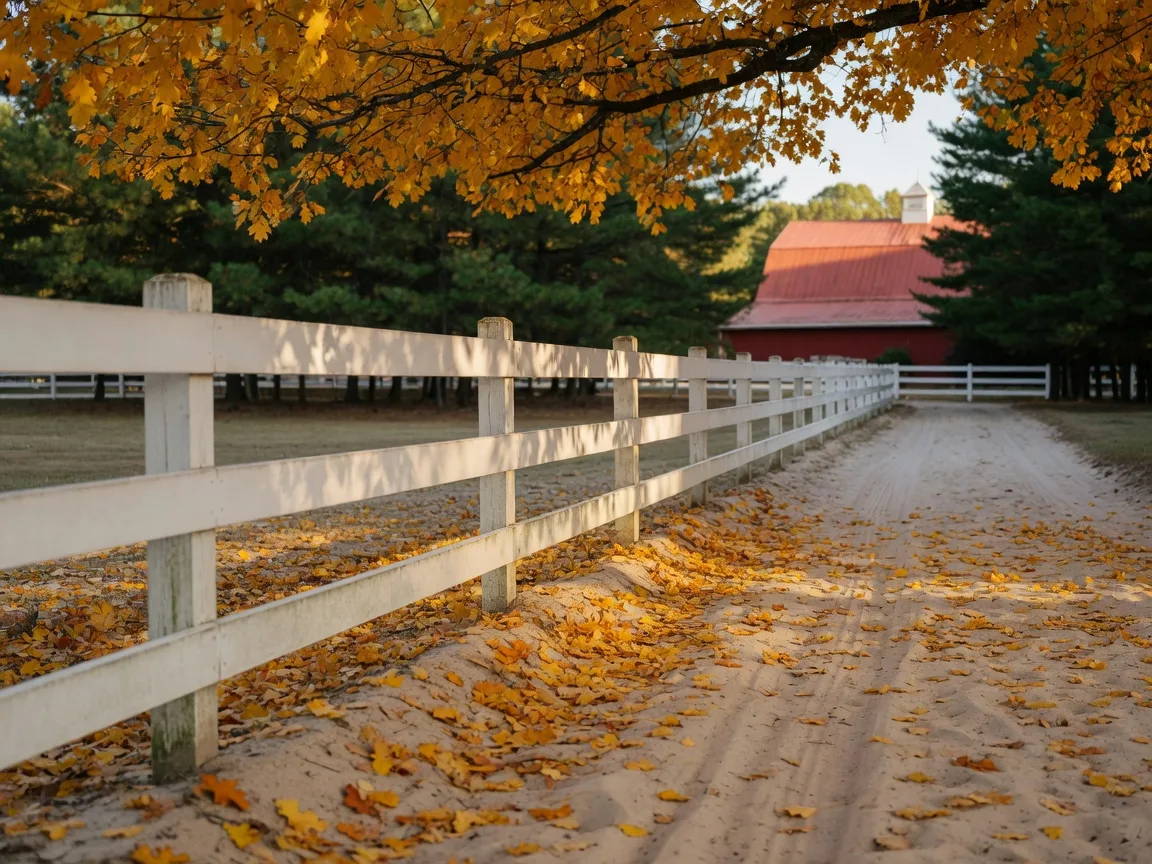
Fencing is easier to judge in October than in any other month. The leaves are down, so you can see every post, rail, and gate along long runs of fence. Look for sagging board fences, rotting posts, gaps under gates, and the places where horses lean and paw. Check that every gate latches cleanly and that no fence line crowds a tree, because overhanging branches invite horses to test their boundaries. Wood fences are beautiful and classic in Aiken, but they demand maintenance, so note the condition of the paint and the staple lines along the top rails. Our horse fencing guide covers the options and the honest upkeep each one requires.
The practical advantages of a fall closing
Beyond what the farm shows you, autumn is a good season to be on the buying side of the table. The spring peak brings its own competition; by October, serious listings tend to be priced with a genuine motivation to sell, and buyers walking tours this time of year are typically ready to move. Closing in late fall means you can settle in before the holidays, and for winter colony riders it means your horses can be in their new stalls before the season's busiest months arrive. Fall is also a forgiving time for renovations: fence painting, barn repairs, and arena work are all more pleasant in 70-degree weather than in July, and the October overseeding window means new owners can put in winter pasture right after closing. For a broad look at where the market stands, see our 2026 market update.
The honest limits of an autumn tour
Fall is a window, not the whole house, and I want you to tour with clear eyes. Leaf cover can hide footing issues and fence damage, so look carefully where the leaves collect. Summer pasture can look thin by October even on a well-managed farm, because warm-season grasses are simply winding down for the year; ask about the summer story rather than judging the whole growing season on one November field. And a single sunny afternoon cannot tell you how the property behaves in a hard rain or a cold snap. The strongest move is to visit twice: once on a dry day to fall in love, and once after a wet spell to check the bones. Pair the visit with our due diligence guide so the questions you ask on tour become the items you verify before you write an offer.
Autumn tour tip for buyers
Ask the owner when the pasture was last soil-tested and whether they overseed with annual ryegrass in October. The answer tells you more about how the farm has been managed than almost any other single question, and a farm that manages its soil that carefully usually manages its fences, barn, and water the same way.
Questions to ask on an October tour
A short list of questions will turn a good autumn tour into a decisive one:
- Drainage: Do any paddocks or turnout areas hold water after autumn rains, and where exactly?
- Pasture: How many horses winter here, which fields do they graze, and what is the winter feeding plan?
- Water: Where is the well, what does it produce in a dry spell, and are the lines and hydrants frost-protected?
- Barn: How does the barn keep air moving on a cold morning, and has the roof ever leaked through autumn storms?
- Hay: Is this season's hay already in the barn, and what does a full winter's supply look like for this farm's herd?
- Footing: When was the arena last groomed or amended, and what surface does it use?
- Fencing: When was the fence last repaired, and which sections tend to need attention first?
- Community: Which local events do the owners attend in the fall, and how far is it to the nearest show venue and trailhead?
A note for sellers
If you are selling a horse property, October is one of the strongest windows on the calendar. The buyers touring your farm this month are serious: they are the families who want to be settled before the winter colony season, and they arrive from the steeplechase, the Bruce's Field shows, and the training barns with a clear sense of what Aiken riding life looks like. Show the farm at its autumn best: mow the lanes, drag the arena, tidy the tack room, and let the show-season foot traffic work for you. Schedule your photography in October light, because golden-hour photos of an autumn pasture sell a property faster than any description can. See our seller's guide for the full marketing playbook.
Let me help you find the farm that autumn proves out.
I can line up a full day of property tours in Aiken horse country, pair each farm with the right community and venue access, and walk every field with you so the season's answers become part of your decision.
Start Your Search