Seven Things to Check Before Buying a Horse Farm
A horse farm can look perfect from the driveway and still hide expensive surprises behind the barn. The good news is that most of those surprises are findable before you close, if you know what to look for. This is the pre-purchase checklist I walk buyers through on every equestrian property, from boundaries to barns to the paperwork that governs the land. Work through these seven items with an equine-savvy inspector and your local professionals, and you will buy with your eyes open.
I have spent more than 20 years helping buyers evaluate horse properties across Aiken, North Augusta, and the wider CSRA, and I can tell you the farms that close smoothly are the ones where this homework happened early. My due diligence guide covers the full inspection and verification process, and this post distills the seven checks that matter most before you make an offer.
1. Property boundaries and the survey
Start at the edges. Order and read the current survey, then walk the lines yourself with a copy in hand. Look for corner markers, encroachments, and fences that sit inside or outside the true line. A fence that looks like the boundary but sits a few feet inside it can quietly cost you usable pasture, and a neighbor's structure or driveway on your side of the line is a problem you want to know about before the offer, not after. Your agent and a licensed surveyor can help you read what the plat actually shows.
2. Fencing and gates
Walk every fence line, not just the front one. Check posts for rot at ground level, rails and boards for breaks, wire for tension and rust, and every gate for a latch that works one-handed with a horse waiting. Look hard at the corners and the gateways, the places fences fail first, and ask whether the fencing is genuinely horse-safe or just decorative. Replacing a worn perimeter can be one of the largest line items on a farm, so the condition of the fencing belongs in your negotiation, not in your surprise budget. My complete guide to horse fencing in Aiken covers the materials and what holds up in sandy soil.
3. Barn construction and ventilation
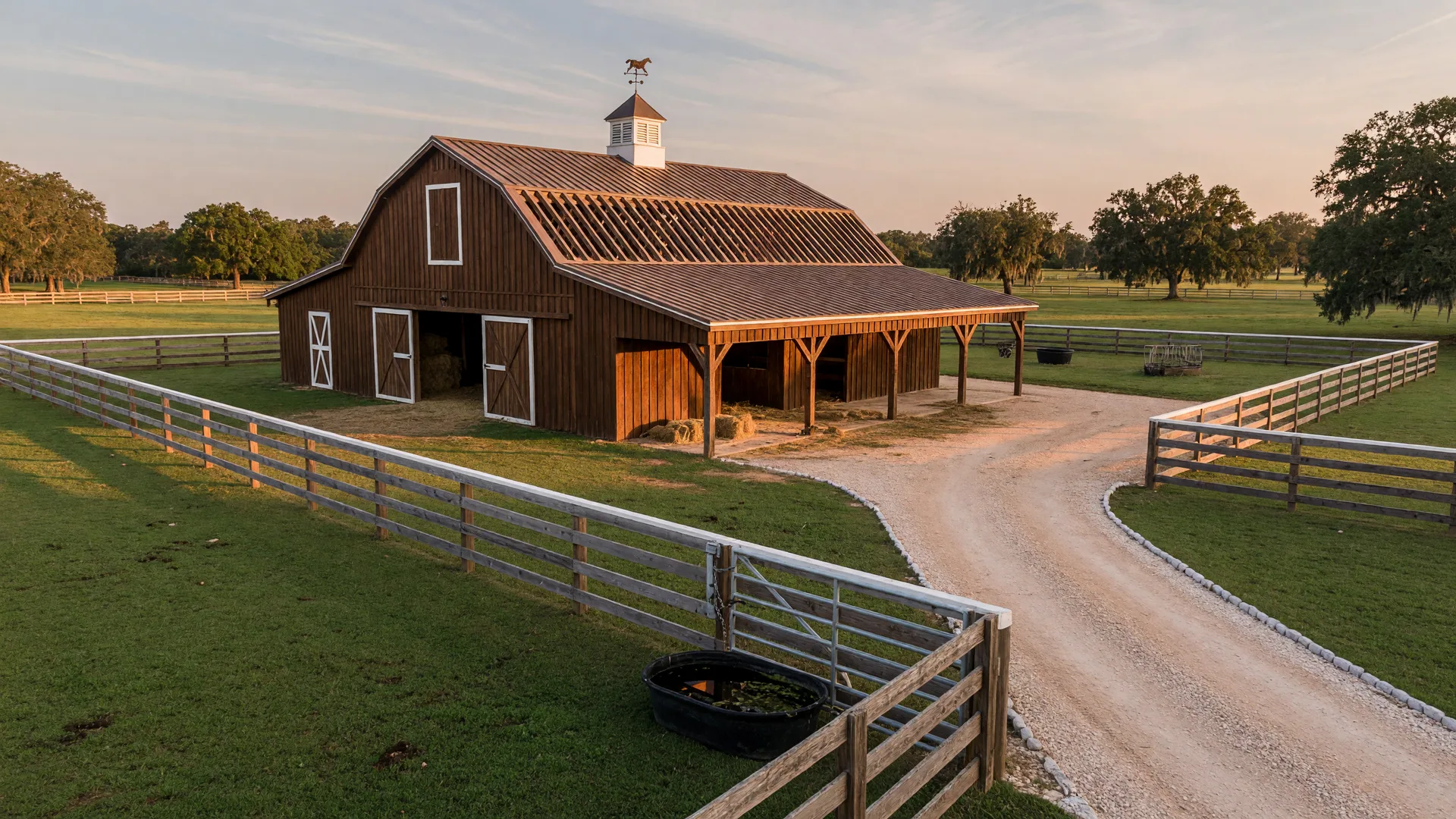
The barn is the heart of the farm, and it deserves a real inspection. Look at the roof, the foundation, the framing, and the stall walls with an eye for rot, leaks, and repairs that were patched rather than fixed. In the Carolina climate, ventilation is not a luxury: a barn with good airflow, high ceilings, and openings on two sides keeps horses healthier than a tight, stuffy building, no matter how pretty it is. Have a barn inspector who knows equestrian structures walk it with you. My guides to evaluating a barn and to the horse property features that matter most both detail what to check stall by stall.
4. Water sources
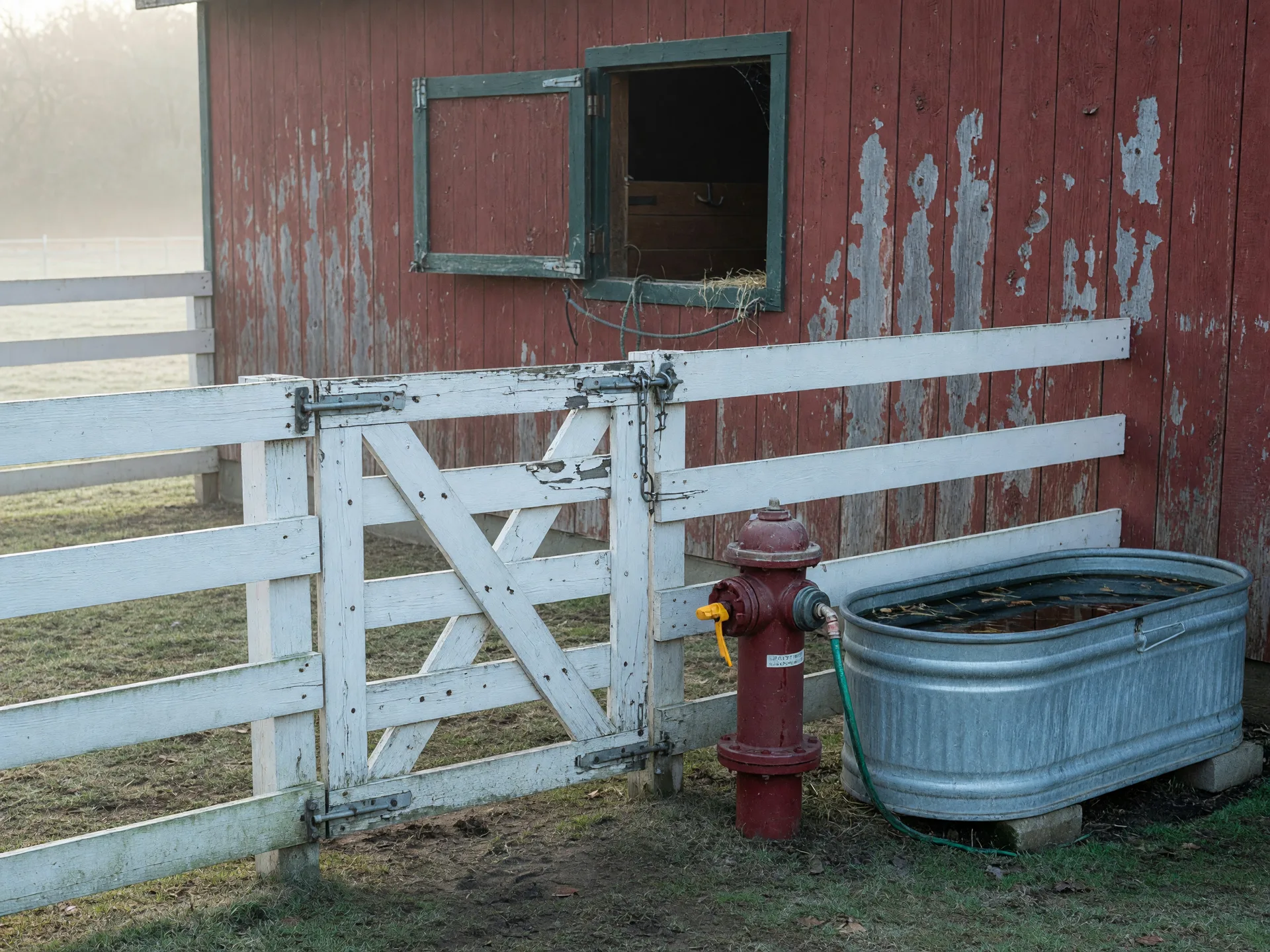
Water is the infrastructure you cannot see from the driveway. If the farm is on a well, get the well log, test the water quality, and confirm the flow rate can cover the horses, the house, and any irrigation you plan. Check automatic waterers in stalls and paddocks, frost-free hydrants, and how the troughs are plumbed. If there is a pond or creek, understand what it is used for and what regulations apply. Horses drink a lot, and hauling water is a chore you do not want to inherit. My guide to water, wells, and septic on Aiken horse properties walks through the full picture.
5. Drainage and soil
Aiken's sandy soil drains fast, which is why the footing is famous, but low spots still hold water after heavy rain. Walk the property after a storm if you can, and look at the barn site, the paddocks, the gateways, and the arena for standing water and runoff paths. Poor drainage turns pastures to mud, undermines footing, and shortens the life of fences and barn floors. A soil test through Clemson Cooperative Extension tells you what the pasture needs and what it can carry. The stormwater and drainage guide for Aiken horse properties covers how to read the land before you buy.
6. Easements and access
Not every inch of a pretty farm is yours to use as you please. Check the title work for recorded easements: utility lines, shared driveways, drainage easements, and trail or road access that may cross the property or give neighbors rights on it. If the farm is advertised with trail access, confirm in writing that the access is deeded and maintained, not just convenient. Also confirm the road frontage and whether the driveway sits on the property or crosses a neighbor's land. These details rarely stop a sale, but they shape how you can use the farm for decades.
7. Permits and land-use restrictions
Finally, verify what the land is legally allowed to do. Confirm the zoning and the permitted uses, including whether the existing barn, arena, and any other structures have the permits and approvals they should. Check subdivision covenants or HOA rules if the farm sits in a community, and ask about agricultural assessment if the property is taxed as farmland, since the status can affect value and future use. My guide to Aiken Horse District zoning covers the districts and the questions to put to the county and your closing attorney.
Who should you work with on these checks?
No single person sees everything, so build a small team. An equine-savvy inspector who has worked on barns before can catch structural issues a general home inspector might wave through. A licensed surveyor reads the boundary lines, a well contractor tests flow and water quality, and a closing attorney who handles rural property reviews the easements and title work. Your Realtor coordinates the process and knows which local professionals have a track record on horse farms. The complete guide to buying horse property in Aiken and the horse property checklist will help you organize the whole effort.
Buying a horse farm is a decision you want to make with your eyes open, and every one of these seven checks is doable before you commit. Pair them with the right local professionals, and the surprises shrink to the manageable kind. I have walked buyers through this checklist on farms all over Aiken, and I would be glad to walk it with you.
Let me walk the property with you before you make an offer.
I have evaluated horse properties across the CSRA for more than 20 years, and I know the inspectors, surveyors, well contractors, and attorneys who do this work well. Together we will check every one of these seven items before you commit.
Schedule a Consultation