
How Many Acres Do You Really Need for Horses?
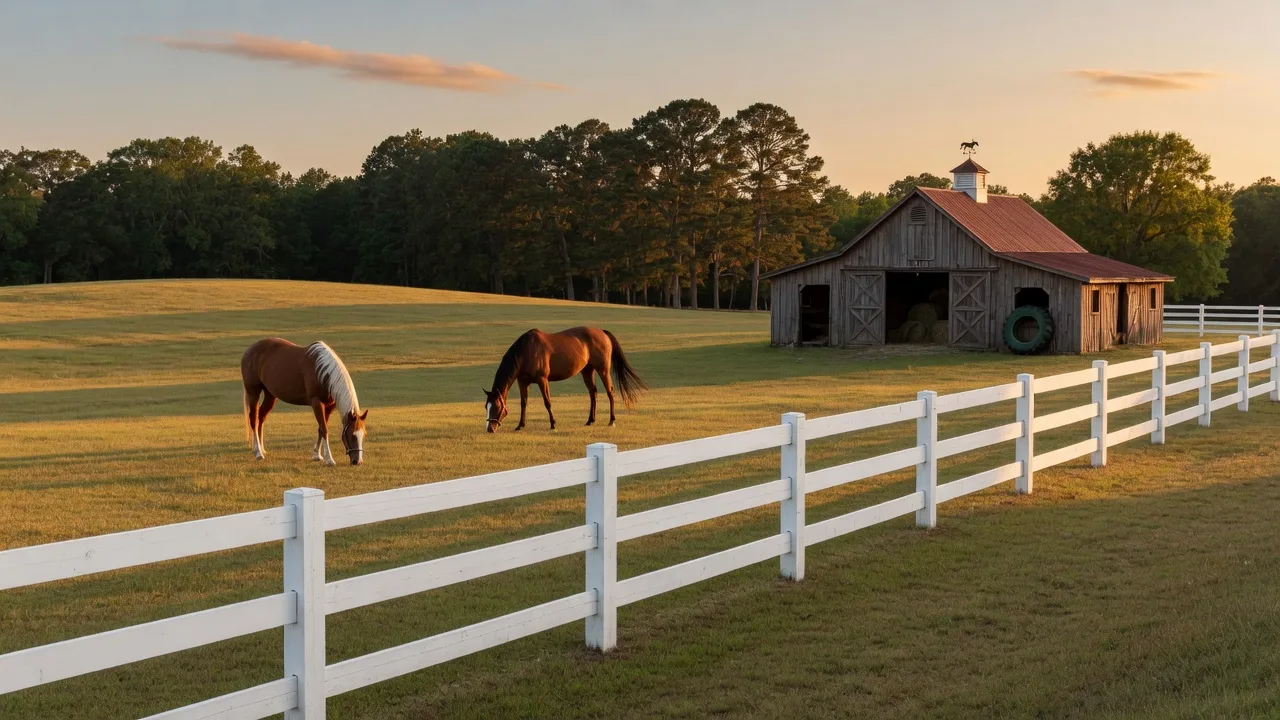
There is no single acreage number that fits every horse owner, and anyone who tells you otherwise is selling something. The right answer depends on how many horses you keep, how you use them, the quality of your pasture, and what you want to build on the land. In Aiken, where the sandy Sandhills soil drains fast and the equestrian community shares trails and facilities, the honest answer is often less land than buyers expect, managed better. This guide works through each factor so you can arrive at a number that fits your horses, your budget, and your plans.
I have walked buyers through this exact question for more than 20 years across Aiken, North Augusta, and the wider CSRA, and the pattern is always the same: the right acreage is the one that matches how you actually keep horses, not the one that sounds impressive on paper. My longer guide to what size horse property you really need covers the same ground in more depth, and this post focuses on the factors that move the number most.
How many horses are you planning for?
Start with the horses, not the acreage. A common rule of thumb in horse country is roughly two acres of pasture per horse for grazing, with additional land for the barn, paddocks, and riding space. That guideline assumes decent pasture and a sensible rotation; it is a starting point, not a guarantee. A single retired horse on three well-managed acres can live very well, while two hard-keeping performance horses on the same three acres will run the grass into the ground by August. The number of horses you actually keep, and their workload, sets the floor for everything else.
Intended use matters just as much as head count. A trail rider who hacks out into Hitchcock Woods three days a week needs less home pasture than a breeding operation or a boarding barn, because the community carries part of the load. If you plan to board horses, teach, or run a training program, the acreage and infrastructure requirements change completely, and that is a different conversation from buying a private home for your own horses.
A starting point for acreage
One to two horses — roughly three to five acres gives room for a small barn, a paddock, and manageable turnout.
Three to four horses — five to ten acres allows rotational grazing, a decent-sized ring, and a multi-stall barn.
Five or more horses — ten acres and up, with more pasture rotation, more infrastructure, and room for the horses to be out of one another's way.
These are general guidance, not rules. Pasture quality, management, and local zoning all move the number.
What does good pasture actually change?
Pasture quality changes the acreage math more than almost anything else. A lush, well-maintained stand of coastal Bermuda or bahia can carry more horses per acre than a thin, weedy field twice its size. Aiken's Sandhills soil drains beautifully, which is a gift for footing, but sandy soil also holds fewer nutrients and dries out fast, so pasture here needs deliberate management: soil testing, liming, fertilization, and careful grazing pressure. Clemson Cooperative Extension offers soil testing and pasture guidance for South Carolina horse owners, and it is the right place to start before you commit to a property or a stocking plan.
When you tour a farm, look past the green color and ask what is actually growing. Walk the fields, check for bare patches, weeds, and overgrazed corners, and ask the owner about the mowing and fertilization routine. My seasonal guide to pasture management in the Sandhills covers grass types and care through the year, and it is worth reading before you judge a pasture with your own eyes.
How does rotational grazing change the math?
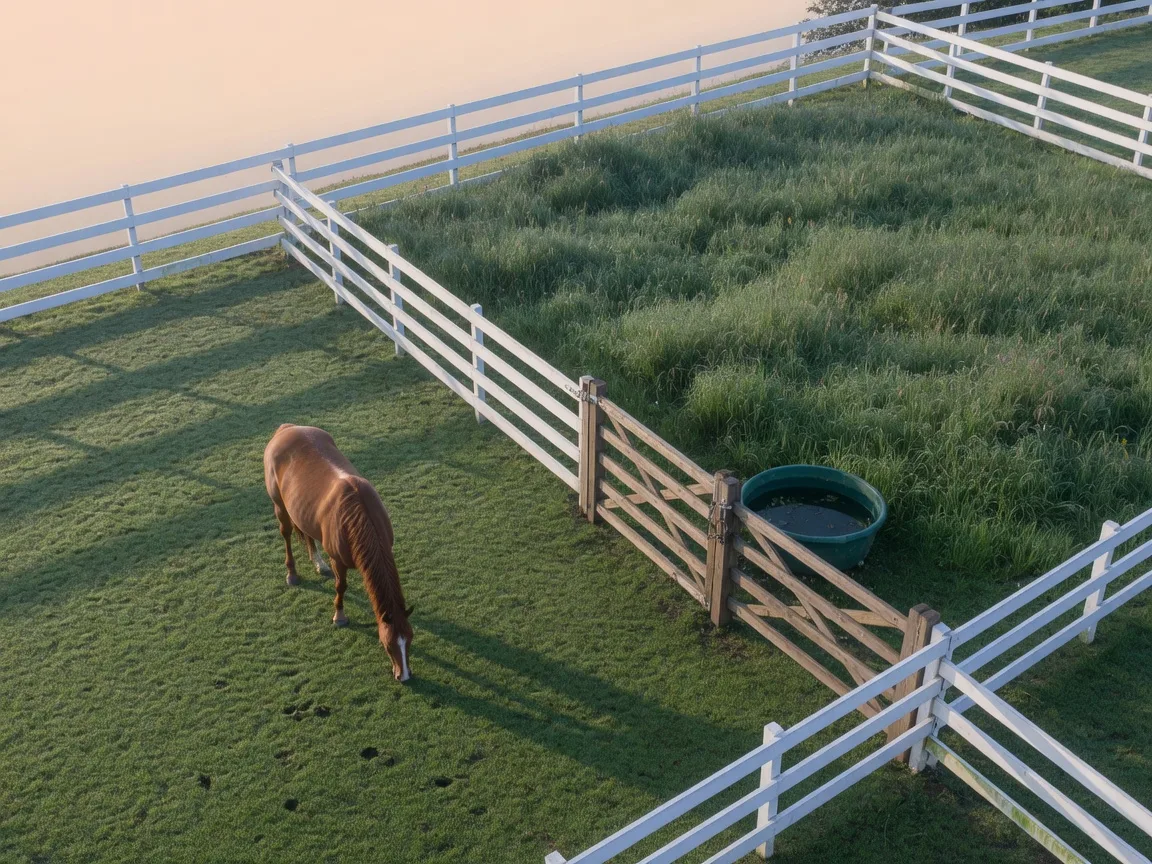
Rotational grazing is the single most effective way to get more grazing out of less land. Instead of one big field grazed all season, you divide the pasture into several paddocks and move horses through them, letting each section rest and regrow while the others are grazed. A property with two or three cross-fenced paddocks and a sacrifice lot will carry horses far better than a single open field of the same size, which is why smart buyers count paddocks, not just acres.
The fencing that makes rotation work is a real investment, and it is one of the first things I ask about when a buyer is comparing farms. My complete guide to horse fencing in Aiken covers the materials that hold up in sandy soil, from board to no-climb wire to electric tape for interior lines.
What space do the barn and arena need?
Acreage for grazing is only part of the picture. The barn, its paddocks, the sacrifice lot, hay storage, a manure area, and any riding ring all take space that grazing horses cannot use. A modest barn with a run-in shed, a small paddock, and parking for a trailer can sit comfortably on an acre or two. A regulation dressage arena is 20 by 60 meters, a typical hunter jumper ring is 100 by 200 feet, and a casual schooling ring can be as small as 60 by 120 feet, each with room for drainage and a safe margin around the fence line.
Siting matters as much as size. The barn should sit on high, well-drained ground close enough to the house for easy access, and the arena needs a flat site with good footing. My guide to arena construction and footing in the Sandhills and the guide to building a new barn on an Aiken property both cover the space, siting, and drainage details in depth.
What do local zoning rules say?
Zoning sets the legal floor, and it varies by where the property sits. Aiken County's Residential-Horse district generally requires a minimum of five acres for a horse property, while the City of Aiken's Horse District requires a larger minimum lot, on the order of ten acres, with its own permitting process. Some planned equestrian communities allow horses on smaller lots with shared amenities. The details change, so verify the current requirements for the specific parcel with Aiken County Planning and Development or the City of Aiken planning office before you fall in love with a property. My guide to Aiken Horse District zoning explains the districts and the questions every buyer should put to the county.
How do you plan for future needs?
The best acreage decision accounts for the horses you want in five years, not just the ones you have today. A second horse, a foal, a bigger arena, or a move from trail riding to competing can all change the land you need. Buying a property with room to cross-fence, add a stall, or expand a ring is usually cheaper than moving later, and it protects your equity if your plans grow.
It also helps to know what the community provides. Aiken's trails, venues, and boarding options mean many owners keep fewer acres at home and ride out, which is one of the reasons smaller properties here work so well. The complete guide to buying horse property in Aiken ties all of these decisions together, from acreage to barns to due diligence.
So how many acres do you really need?
The honest answer is: enough for your horses to graze safely, your barn to sit well, and your riding to happen close to home, with a margin for the future. Work backward from your horses and your plans, verify the zoning for the specific parcel, and get pasture and soil advice from the local agricultural authorities before you commit. When you are ready to look, I can help you match the land to the horses, and the horse property checklist is a good place to start comparing farms on paper.
Let me help you match the acreage to the horses, not the other way around.
I know the equestrian corridors of Aiken County, the zoning that applies to each parcel, and the pasture and infrastructure questions that separate a workable farm from a money pit. Bring me your horse count and your plans, and we will find the property that fits.
Schedule a Consultation