Building Your Horse Property Team in Aiken: Farm Managers, Grooms, and the People Who Keep Horse Country Running
A great many Aiken horse properties are bought by people who cannot be in the barn at feeding time. Whether you commute for work, travel for competitions, or simply want your evenings back, the people you hire to help run the place decide whether owning a farm is a joy or a second full-time job. This guide walks through the roles that actually matter on a private Aiken horse property, what each hire should bring, where to find trusted equestrian staff in the Sandhills, and how the team question should shape the property you choose to buy.
Why the Team Matters as Much as the Turf
Aiken draws owners at every level of experience, from Winter Colony families with a full staff to first-time farm buyers who plan to do the work themselves. What the community understands, and what many newcomers learn quickly, is that the daily rhythm of a horse property, feeding, watering, mucking, turnout, grooming, and monitoring health, is relentless. In our guide to life on an Aiken horse property we are honest about how much of that rhythm is physical labor. The owners who stay happiest in horse country are the ones who built a dependable team before they needed one.
Almost every conversation I have with a relocating buyer features the same three questions: Who will feed my horses when I travel? Who do I call before a farrier? And what does good help cost? The answers depend on how you intend to use the farm, how many horses you keep, and how much of the work you enjoy doing yourself.
Map the Farm Before You Make the First Hire
The most common staffing mistake on a private farm is hiring a "barn help" role that has never been defined. Write down what the farm actually needs on a weekly basis first: how many stalls to clean daily, how many horses to feed and turn out, whether the arena needs dragging, whether the pastures are mowed, whether the equipment needs routine service, and how much record keeping you want to stay on top of. That list will tell you whether you need a full-time barn manager, a groom on the ground, a part-time farmhand, or a combination.
A good rule of thumb for a private farm: one full-time staff member can typically keep roughly six to ten horses fed, mucked, turned out, and monitored on a well-planned daily schedule, which is exactly the scale of many Aiken estates. When you start pushing toward a dozen horses, a competition schedule, or an active breeding program, you are likely into two paid people or a manager with grooms beneath them. Our acreage and facility guide helps you size the property, and the same math applies to the staff who will work it.
Farm Manager, Groom, or Both?
The roles are genuinely different. A barn or farm manager runs the place, people and horses alike: daily feeding and grooming, coordinating veterinary and farrier visits, administering medications, keeping records and supply inventory, maintaining stalls, pastures, fencing, and equipment, and hiring or scheduling the staff beneath them. Solid managers usually carry five or more years of horse-farm experience, a working knowledge of equine anatomy, nutrition, health, and behavior, basic mechanical skills, and enough leadership to run a team in your absence.
A groom or stable hand is the daily muscle: feeding, grooming, bathing, turnout, mucking stalls, monitoring health and vital signs, and reporting anything that looks off. It is a skilled job, and a good groom in Aiken is the person who notices the slight change in appetite days before the vet does. The distinction matters when you interview: a wonderful groom is not automatically a manager, and a confident manager who will not scoop a stall himself is not the right fit for a small private barn. In a private setting, most owners hire a hybrid who does the daily care and coordinates the rest, so the interview should be about the actual days on your farm, not a title.
What Care Team Staffing Costs in 2026
Salary data for farm and equestrian staff varies, but the ranges are consistent enough to budget around. National survey data place full-time horse farm managers roughly in the $55,000 to $65,000 range, with larger operations at the higher end and experience pushing salaries well above that; grooms and stable hands typically fall around $30,000 to $33,000 a year, or roughly $15 to $20 an hour, with premium barns paying more. For many private Aiken farms the real figure that matters is net cost, because housing is often part of the package.
A manager or groom who lives on site saves your mornings and their commute, and staff housing is one of the most valuable assets a horse property offers. If a farm has a well-built manager's quarters or a full service apartment over a garage, the operational value can exceed what the same square footage is worth in town, because it makes a strong candidate doable. When I show a property with two staff quarters, buyers who travel understand immediately why that farm is priced the way it is.
Hire the Contractor Team Before You Need Them
Your farrier and veterinarian are the other two legs of the team. A settled farrier who knows the sand and clay of Aiken's pastures, and an equine vet who does not have to be introduced to your horse's history at an emergency call, are priceless. Fortunately, Aiken is one of the best-served horse towns in the region. The depth of equine veterinary services and the roster of farriers, tack shops, and equine specialists here is one of the reasons owners move from busier cities and find life easier.
Book these relationships early, not after a problem. When you are looking at a property, ask the seller or the listing agent which vet and farrier actually work on the place, and keep those contacts for your first year. Our first-year guide walks through that transition step by step, from temporary boarding to setting up a new care team, and it is worth reading before you even close.
Where Do You Find Staff in the Sandhills?
Aiken's equestrian community is small, and word of mouth is the strongest recruiting tool in the county. Trainers at the leading venues, barn managers with open stalls, tack shop operators, and even the farriers themselves all hear about capable grooms between seasons. If you are already plugged into the local scene, start by asking the people whose judgment you trust. If you are new, get yourself introduced: volunteer at a show or event, spend time at the tack shop, and let the local professionals know you are looking.
Seasonal rhythm matters too. The community swells with grooms, exercise riders, and assistants during the late fall and winter Winter Colony and early show seasons, which is an excellent time to meet people, but it is also when good help comes attached to a trainer's program. Planning for that Northern migration, both people and horses, is part of the rhythm the best barns build their calendars around.
Interview Like a Horse Person
Horse people hire horse people way differently than corporate interviewers, and that is a good thing. Ask the candidates to talk through the first hour of their day in a barn, and the last hour of it. When did they last pull a horse in for a suspected laminitis flare? How do they handle a horse who has choked on his meal, or a feed shed that is nearly empty? The answers tell experience far better than schooling on paper.
A working assessment is standard practice in this industry, and you should use it. Invite the candidate to spend a morning on the farm, doing the actual work your way, with pay. Watch the hands, not the stories: how they read a horse's eye before entering the stall, how they tie a knot, and how they respond when something does not go to plan. Horse industry hiring guides that advise running a practical assessment under pressure are right, because the client-facing moments of a working barn are never scripted. Then call the previous barn, not just the references they hand you, and ask how the candidate handled a sick horse, a long season, and a difficult owner.
How Staffing Should Shape the Property You Buy
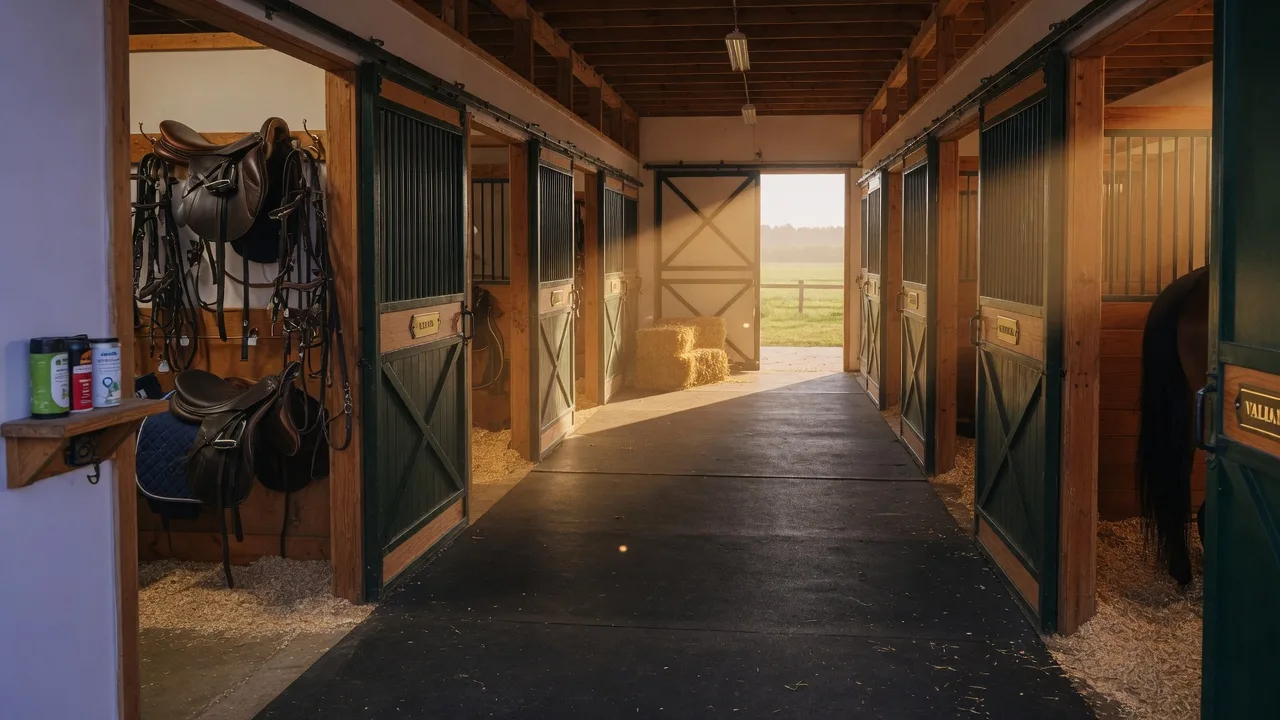
If you know you will depend on help, buy the farm as if someone else will live in it. That means a manager's cottage or a habitable apartment, a barn with a feed room, a wash stall and an office so the daily work does not live in your kitchen, and layout that lets a single person see the pastures without walking a mile. Our guide to the features that matter most and our barn evaluation checklist both cover this ground from the buyer's side, but treat them as staffing questions, too.
Ask on the farm the same questions a manager would. Is the housing separate from the main residence? Is the arena lit for ground work in the late summer? Is there a tack room that locks, and room for a full week of hay? The farms that keep great teams long term are usually the ones designed by owners who thought about the people doing the daily work. If you plan to run a small boarding or training business, the staffing math changes again, and the zoning question moves to the top of your list.
Your Hiring Checklist
- Write the job without a title: feeding, mucking, turnout, upkeep, equipment
- Define the weekly: how many stalls, horses, rides and hours
- Decide manager or groom, and be honest about the blend you want
- Budget fairly: national ranges, and add the true value of housing
- Book the vet and farrier before you need them
- Ask the local equestrian community, and work your barn network
- Interview around real barn mornings, not resumes
- Run a paid working day, and watch the hands
- Call the references behind the barn door, not the handed list
- Put it on paper: duties, schedule, pay, housing, and days off
Your Next Step Into Aiken Horse Country
The best Aiken farms run on two currencies: good horses and good people. The good horses are why you are here. The good people are worth finding before you need to, and worth paying for what they really do. Whether you are buying your first Aiken farm, adding a second stall at the back, or simply hoping to keep the weekend rides instead of the hay hauling, a trustworthy team is the difference between a property you own and a farm you manage.
I have spent more than 20 years helping buyers and sellers in the CSRA match the right people with the right places, and I know which farms put staff at the center of the design. If you are looking for a horse property in Aiken, let us walk the floor together. I will point out the manager's cottage, the barn office, and the hay storage before we ever walk the stalls, because those are the things that will keep you happily here for a long time.
Let me help you find a farm with the space, the barn, and the staff that fit your plan.
With more than 20 years in the CSRA, I know the Horse District and every equestrian corridor in between. As the First AI-Certified Realtor in the area, I combine local knowledge with practical guidance on buying, selling, and living with horses in Aiken.
Schedule a Consultation