
A Day in the Life: What It's Really Like Living on a Horse Property in Aiken
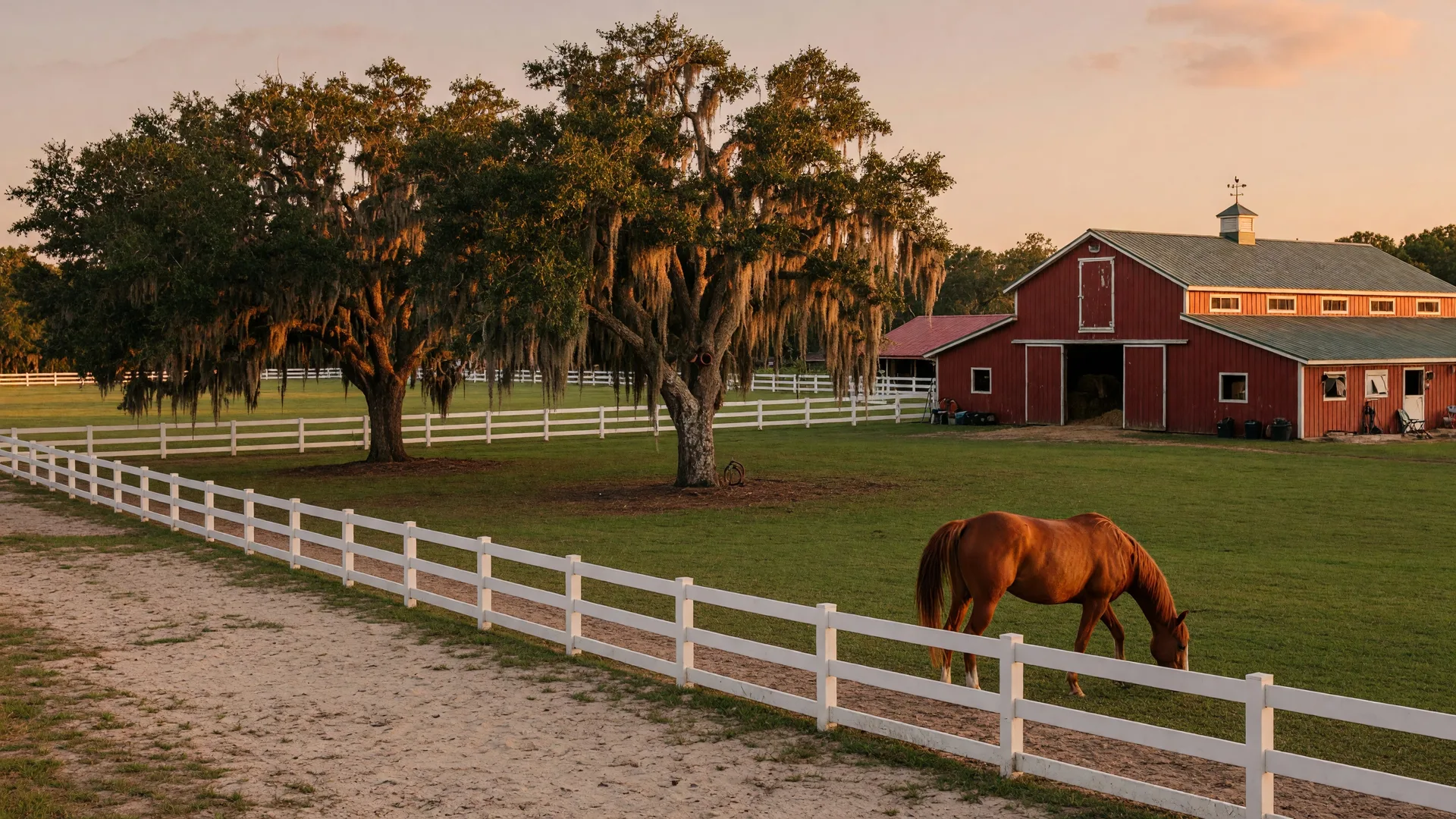
People ask me all the time what it's actually like to live on a horse property in Aiken. Not the Instagram version with perfect lighting and clean breeches. The real version. The one where your alarm goes off at 6:00 AM on a Saturday and your first thought is whether the water troughs froze overnight. After more than 20 years of helping buyers find their way to equestrian properties in the Aiken area, I've learned that the people who love it most are the ones who go in with open eyes. So here's an honest look at daily life on a horse property in South Carolina's horse country.
The morning routine
Horse people are morning people, whether they planned to be or not. The day starts early. For most property owners in Aiken, that means heading to the barn between 6:00 and 7:00 AM to feed. Horses do best when they eat forage at regular intervals, so morning feeding is non-negotiable. Hay goes in first, followed by grain about 30 minutes later. While you're at the barn, you'll check water buckets, look over each horse for any cuts, swelling, or changes in attitude, and muck out stalls. A basic morning routine takes about 15 to 20 minutes per horse.
Then comes turnout. Opening the barn door and watching your horses trot out to pasture never gets old. Whether you've got five acres or fifty, there's something about that morning light hitting the Sandhills soil with horses moving through it that reminds you why you chose this life.
Midday: the quiet hours
Unlike the stereotype of constant barn activity, midday on a well-managed horse property is often the quietest part of the day. Horses are out in pasture, the morning chores are done, and the evening feed is hours away. This is when Aiken really shines. The mild Carolina climate means you can ride nearly year-round, and midday is often when people head out for a hack through Hitchcock Woods or along the sandy roads that wind through the historic Horse District.
It's also when the practical side of horse ownership kicks in. Farrier visits typically happen every six to seven weeks during the riding season. Veterinary appointments, deworming schedules, dental floating, and tack maintenance all fill these midday windows. One of the advantages of living in Aiken is that the equestrian support network is robust. Farriers, equine veterinarians, and trainers are abundant, and most are accustomed to the rhythm of a working horse property. You can find a full list of recommended local services on our equestrian services directory.
Evening: bringing it all back in
As the afternoon cools, you head back to the barn. Horses come in from pasture, get a second feeding, and have their stalls refreshed with fresh shavings. Evening is when you really get to know your horses. You notice if someone is eating less than usual, if a hoof looks a little warm, or if a horse who usually greets you at the gate is hanging back in the corner. That attentiveness is what keeps horses healthy, and it's one of the quiet rewards of keeping your own horses at home.
Many Aiken horse owners close out the evening with a ride. The temperature drops, the light turns golden through the live oaks, and the trails are empty. It's the kind of riding that reminds you why you moved here in the first place.
The community you didn't expect
One thing that surprises new arrivals is how tight-knit the Aiken equestrian community really is. You'll know your neighbors by their horses' names before you learn their own. The Sunday polo matches at Whitney Field, the Spring Steeplechase, the fox hunts, the horse shows at Hitchcock Woods, these events aren't just entertainment. They're where friendships form, where trainers connect with new clients, and where the equestrian culture of this town stays alive.
For families, the lifestyle has a way of shaping daily life in unexpected ways. Kids who grow up on horse properties learn responsibility, patience, and the kind of practical problem-solving you can't get from a textbook. The equestrian community in Aiken supports that with pony clubs, 4-H programs, and youth riding opportunities throughout the year.
What it costs (and what it's worth)
I believe in being straightforward about the financial side of horse ownership. Keeping horses at home on your own property is not the cheapest way to own a horse, but it is often the most rewarding. Between feed, hay, farrier visits, veterinary care, insurance, and property maintenance, horse owners in the Aiken area should budget for the ongoing costs that come with the lifestyle. Farrier visits run roughly $35 to $100 depending on whether your horse is trimmed or shod, and they happen every six to eight weeks. Quality hay, grain, and supplements add up monthly. Property maintenance, including fencing repairs, arena footing, and barn upkeep, is part of the picture too.
But what you get in return is hard to put a number on. Direct trail access from your backyard. A barn you designed for your horses' needs. The freedom to ride at dawn without loading a trailer. For many of my clients, those things are the whole point.
The seasons shape everything
Aiken's four seasons each bring a different rhythm to life on a horse property. Spring is the busiest, with the Steeplechase, the Aiken Horse Show, and the peak of the Winter Colony season all converging. Summer is slower and hotter, which means adjusting ride times to early morning or evening and paying closer attention to hydration and fly control. Fall brings cooler temperatures, the fall hunt season, and a renewed energy across the community. And winter in Aiken is mild by most standards, but the Sandhills can surprise you with a cold snap that sends you to the barn early to check water troughs and throw extra hay.
Understanding these seasonal patterns matters, especially when you're evaluating a property. A property that works beautifully in October might need adjustments for July. That's one of the things I walk buyers through during a horse property consultation. The land, the barn, and the infrastructure all need to work year-round, not just during the pretty months.
Is it right for you?
Living on a horse property in Aiken is a privilege and a commitment. It asks something of you every single day, rain or shine. But for the people who are drawn to it, there's no substitute. The combination of world-class equestrian infrastructure, a deeply rooted horse community, beautiful land, and a quality of life that's hard to replicate anywhere else makes Aiken one of the best places in the country to live with horses.
If you're thinking about making the move, I'd love to help you find the right property. Every horse owner's needs are different, and finding a place that fits your horses, your discipline, and your life is what I do best.
Ready to find your horse property in Aiken?
Contact Linda for a free consultation about buying or selling equestrian property in Aiken, SC and the greater CSRA.
Schedule a Consultation