
Aiken's Polo Heritage: How 140 Years on the Pitch Shaped the Horse Property Capital of the South
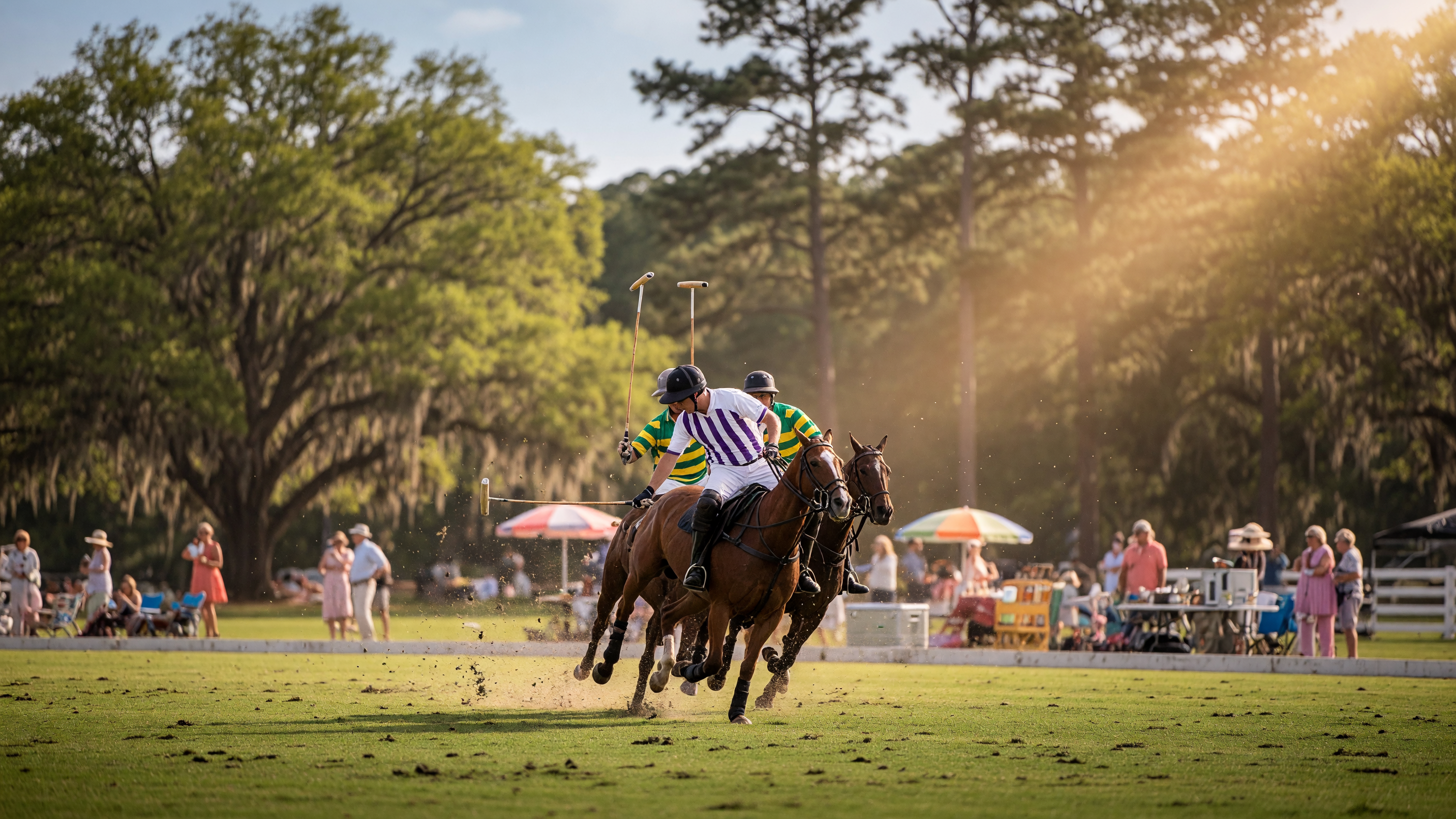
On March 27, 1882, a group of Northern industrialists gathered on a cleared field in Aiken, South Carolina, and played what is widely acknowledged as the first recorded game of polo in the American South. The players, members of the Winter Colony elite who had discovered Aiken's mild climate, sandy soil, and wide-open spaces a decade earlier, had no idea they were laying the foundation for a real estate market that would command national attention 140 years later. Today, Aiken remains one of the most important polo communities in the United States, and the sport's legacy is embedded in every horse property, equestrian neighborhood, and sand-clay road that defines the town's identity.
The Winter Colony and the birth of Aiken polo
To understand why Aiken's horse properties carry the weight they do today, you have to understand who built them. In the late nineteenth century, families like the Whitneys, the Hitchcocks, and the Vanderbilts began spending winters in Aiken, drawn by the town's dry climate, the well-drained red clay soil that was ideal for horses, and the relative seclusion it offered away from the press and scrutiny of New York and Newport. They didn't just visit; they built. Large estates went up along the sandhills, many of them modeled after the country houses of England's fox-hunting gentry, but scaled to Southern proportions and anchored by equestrian facilities that were, for their time, unmatched anywhere in the country.
Polo arrived naturally. The sport had already gained traction in the Northeast, and Aiken's flat, sandy terrain was ideal for laying out a regulation polo field. Thomas Hitchcock Jr., one of the great figures in American polo, was instrumental in establishing the sport locally. By the 1920s and 1930s, Aiken's Golden Age, the town hosted multiple polo clubs, including the Palmetto Polo Club and the Aiken Polo Club, and the quality of play rivaled anything on Long Island or in Argentina.
Whitney Field: the oldest pitch in continuous play
Whitney Field is the physical and spiritual center of Aiken polo. Named for Harry Payne Whitney, one of the wealthiest men in America at the turn of the twentieth century and a passionate polo player, the field has hosted competitive matches since the early 1900s and remains the oldest continuously-used polo venue in the United States. The Aiken Polo Club still operates here, hosting public matches during the spring season (March through June) and fall season (September through November).
What makes Whitney Field significant for property buyers is not just its history but its location. The field sits adjacent to Hitchcock Woods, the 2,100-acre urban forest that anchors Aiken's Historic Horse District. Properties in this corridor, within walking or riding distance of both the woods and the polo field, consistently command premium pricing. The combination of direct trail access, proximity to world-class equestrian competition, and the social cachet of the Winter Colony's most storied venues creates a location dynamic that has few parallels in American equestrian real estate.
How polo reshaped Aiken's property landscape
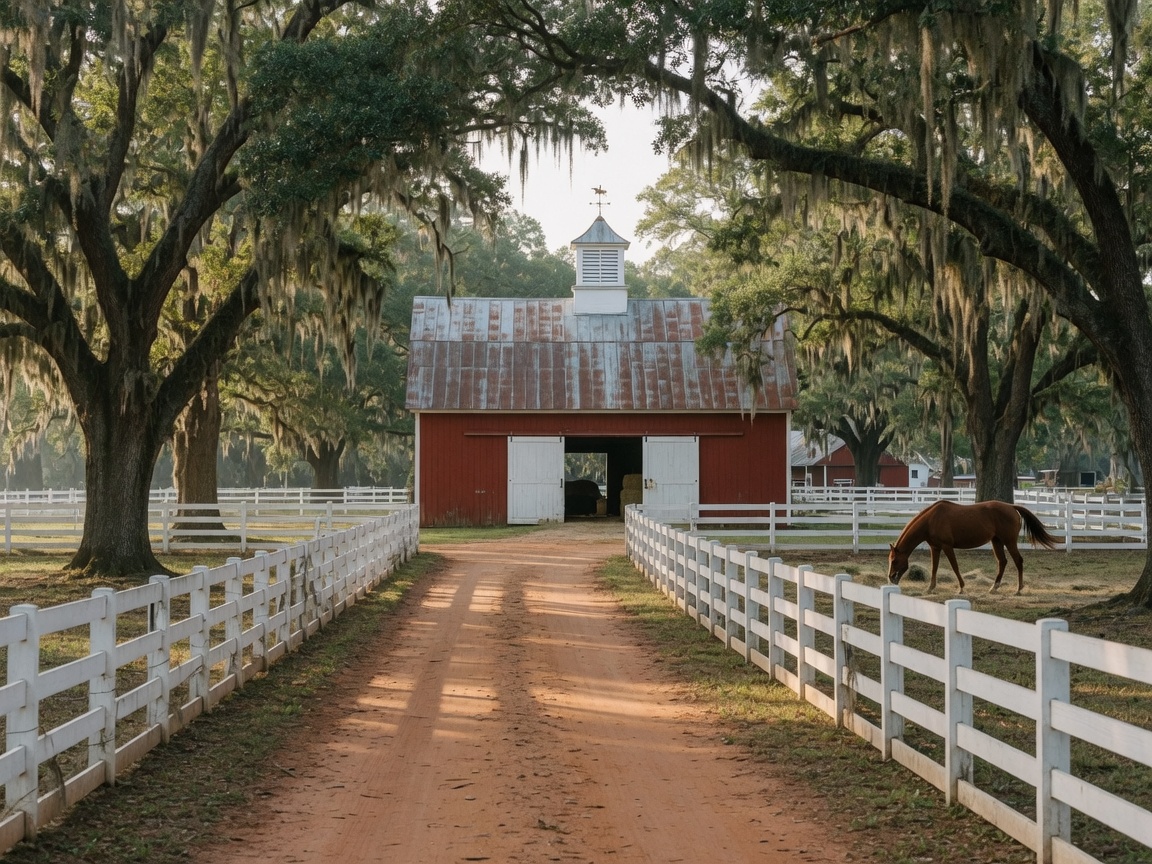
Polo didn't just land in Aiken; it transformed the town's physical geography. The sport requires space, a regulation field is 300 yards long and 160 yards wide, roughly the size of nine football fields, plus room for parking, stabling, and the social infrastructure surrounding match day. Those requirements drove development patterns that still define the area today.
The earliest polo families acquired vast tracts of land, not just for playing fields but for training grounds, breeding facilities, and the sprawling estates that supported dozens of horses at a time. The Hitchcock estate, for example, encompassed thousands of acres that included the woods, polo fields, training tracks, and multiple barns. When portions of these estates eventually came to market over the decades, they formed the backbone of what are now some of Aiken's most desirable equestrian communities.
New Bridge Polo & Country Club is the most direct modern expression of this heritage. Established in the early 2000s on 861 acres, New Bridge features five championship polo fields, an arena, and extensive riding trails within a private, gated community. Home sites within New Bridge offer residents the rare opportunity to keep horses on-site while living steps from organized polo. The community's design, wide equestrian corridors, centralized barns, and shared facility infrastructure, mirrors the Winter Colony model of communal equestrian living, updated for contemporary buyers.
Aiken's Polo Venues at a Glance
- Whitney Field — Historic venue in the Horse District; spring and fall matches open to the public
- New Bridge Polo & Country Club — 861-acre private community with five championship fields and arena
- Aiken International Polo Club — Hosts high-goal tournaments and seasonal leagues
The Sunday match and the social infrastructure
What distinguishes Aiken polo from polo elsewhere is the town's relationship with it as a social institution. In many communities, polo is an insular sport, private club affairs behind tall hedges. In Aiken, the Sunday match at Whitney Field functions as a community gathering. Spectators tailgate along the sidelines, families set up picnic blankets behind the white rail fencing, and the match itself becomes the anchor for a Sunday afternoon tradition that stretches back generations.
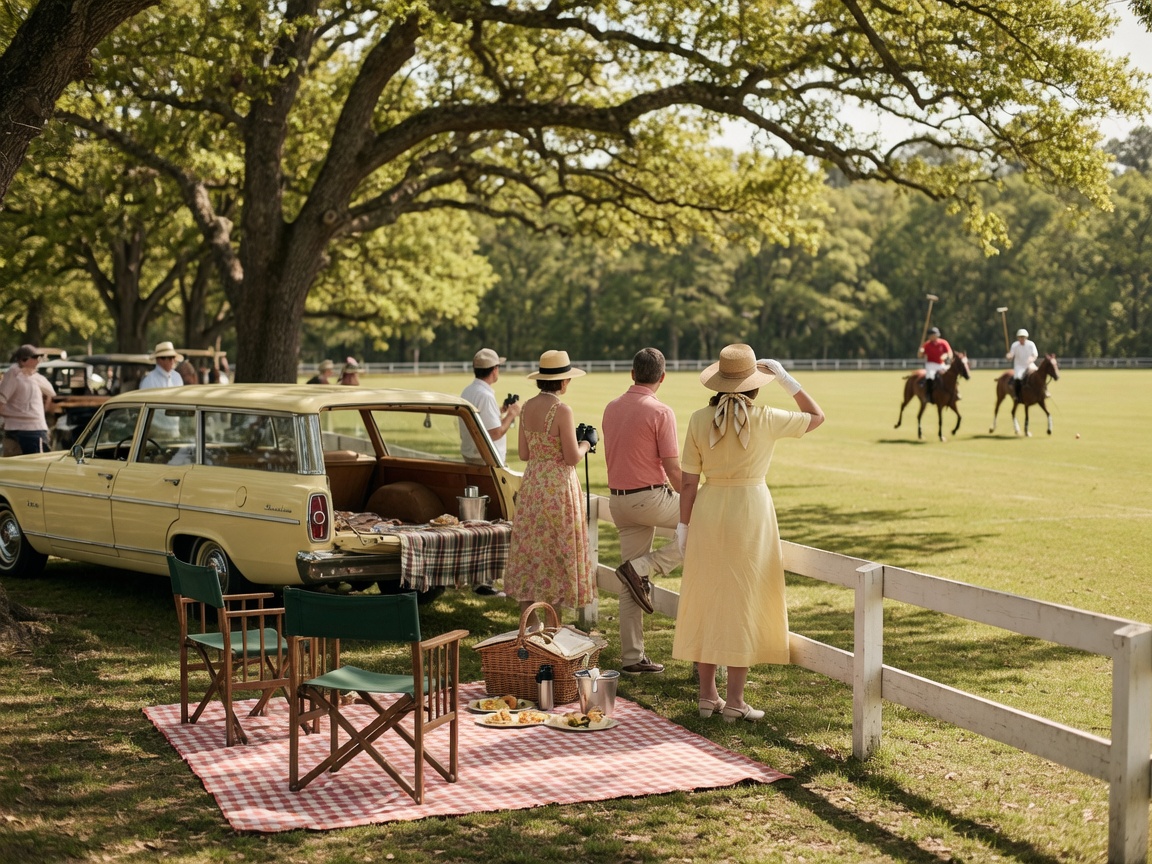
This accessibility matters for property values. Buyers relocating to Aiken are often drawn not just to the sport itself but to the culture surrounding it. The ability to ride out of your own barn on a Saturday, school your ponies on well-maintained fields, and spend Sunday afternoon watching a high-quality match alongside your neighbors, this is the lifestyle package that distinguishes Aiken from other horse communities in the Southeast. It's not performative; it's woven into weekly life.
What polo means for horse property buyers
If you're evaluating horse properties in Aiken, proximity to polo infrastructure is worth understanding as a value driver, even if you have no intention of playing.
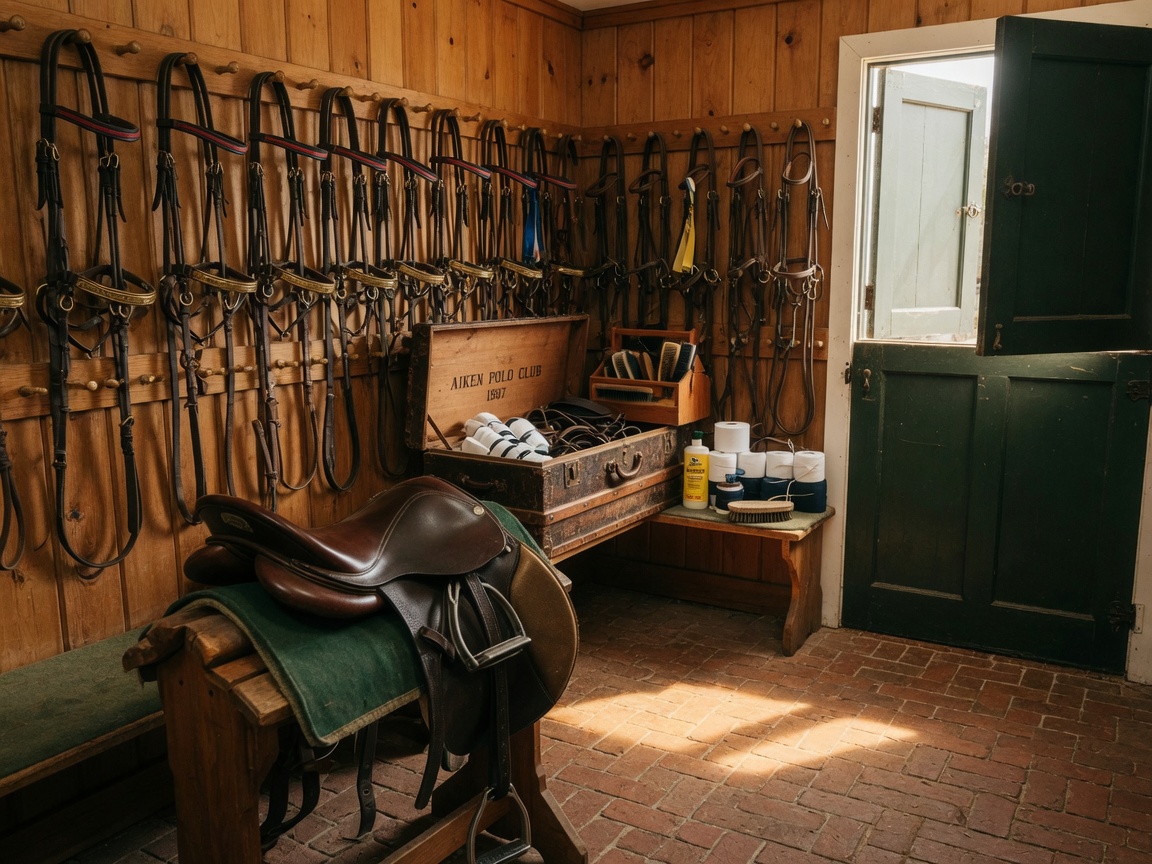
Training and stabling infrastructure. Polo demands large barns with excellent ventilation, multiple feed rooms, tack rooms capable of handling significant equipment inventories, and wash stalls designed for quick turnaround between chukkas. Properties built or modified to support polo programs tend to have above-average barn quality. A well-maintained polo barn signals careful ownership and institutional-grade infrastructure. The barn evaluation standards I apply to any property look even better against a polo-program baseline.
Pasture and turnout. Polo ponies require consistent turnout and well-maintained pastures. Properties that have historically supported polo programs often feature superior fencing, four-board or three-board with hot wire, larger-than-average paddocks, and well-drained footing. These are exactly the features that benefit any horse program, from dressage to trail riding.
Location premiums. Properties within riding distance of Whitney Field or within the boundaries of New Bridge carry measurable location premiums. For Whitney Field, this means the Historic Horse District and adjacent neighborhoods along the sandhill corridor. For New Bridge, it means the community's home sites and immediately surrounding acreage. These premiums reflect genuine scarcity; there is only so much land adjacent to these venues, and demand for it is consistent.
The modern polo player and property demand
Polo in Aiken has experienced a meaningful revival over the past decade. The New Bridge Polo & Country Club has invested heavily in field maintenance and programming, attracting professional players, amateur competitors, and international teams. The Aiken Polo Club's public matches at Whitney Field continue to draw large crowds each spring. And the Aiken International Polo Club hosts high-goal tournaments that bring competitors from across the country and overseas.
This growth drives demand. Active polo players need properties that can accommodate between eight and twenty horses, depending on their handicap and competitive schedule. They need paddock space for rotation, covered storage for equipment trailers and horse vans, and enough barn infrastructure to support grooms and exercise riders working the strings daily. When I work with polo-focused buyers, the search parameters are narrow: large acreage, existing equestrian infrastructure, proximity to a field, and room to expand. These requirements push buyers toward properties in the 20 to 50+ acre range, particularly along the Wagener Road corridor and Three Runs Plantation.
Selling in a polo-influenced market
For sellers, understanding how polo influences Aiken's market can sharpen positioning. If your property has features that appeal to polo players, even if you haven't used it that way, those features should be highlighted: large paddocks with excellent fencing, barns with multiple wash stalls and tack rooms, arena access, and any history of supporting large horse programs. Marketing copy should speak to these specifics. A buyer searching for a polo-ready property in Aiken is reading for details, not vibes.
The timing matters too. Aiken's polo seasons create natural marketing windows. Spring listings, from March through May, align with the peak of match play at Whitney Field and the height of the social season. Prospective buyers visiting for matches are already in the mindset of Aiken's equestrian lifestyle, and a well-presented property during that window has an audience primed to act.
Whether you're chasing the polo lifestyle or simply drawn to Aiken's equestrian heritage, I can help you find the right property.
With more than 20 years of experience in Aiken equestrian real estate, I understand what polo players, horse owners, and lifestyle buyers need from a property. Let's talk about what you're looking for.
The thread that runs through everything
What strikes me after two decades in this market is how thoroughly polo's influence has permeated every corner of Aiken's equestrian identity. It's not just the sport itself; it's the building traditions, the land-use patterns, the social structures, and the property standards that polo introduced and sustained. The tradition of keeping horses at home, in private barns on private acreage, with the infrastructure to support them properly, was established here by polo families in the 1880s and has never faded. Buyers who come to Aiken today, whether they ride polo or not, benefit from the world those families built.
The next time you drive past Whitney Field on a Sunday afternoon and see the white rail fencing, the spectators gathered under the oaks, and the ponies warming up for the first chukka, remember that what you're watching is the living continuation of a tradition that shaped every horse property you've driven past on the way there. Aiken's polo heritage isn't a footnote in the town's story. It's the story.