
Barn Dogs and Farm Cats of Aiken Horse Country: The Four-Legged Team Behind Every Horse Property
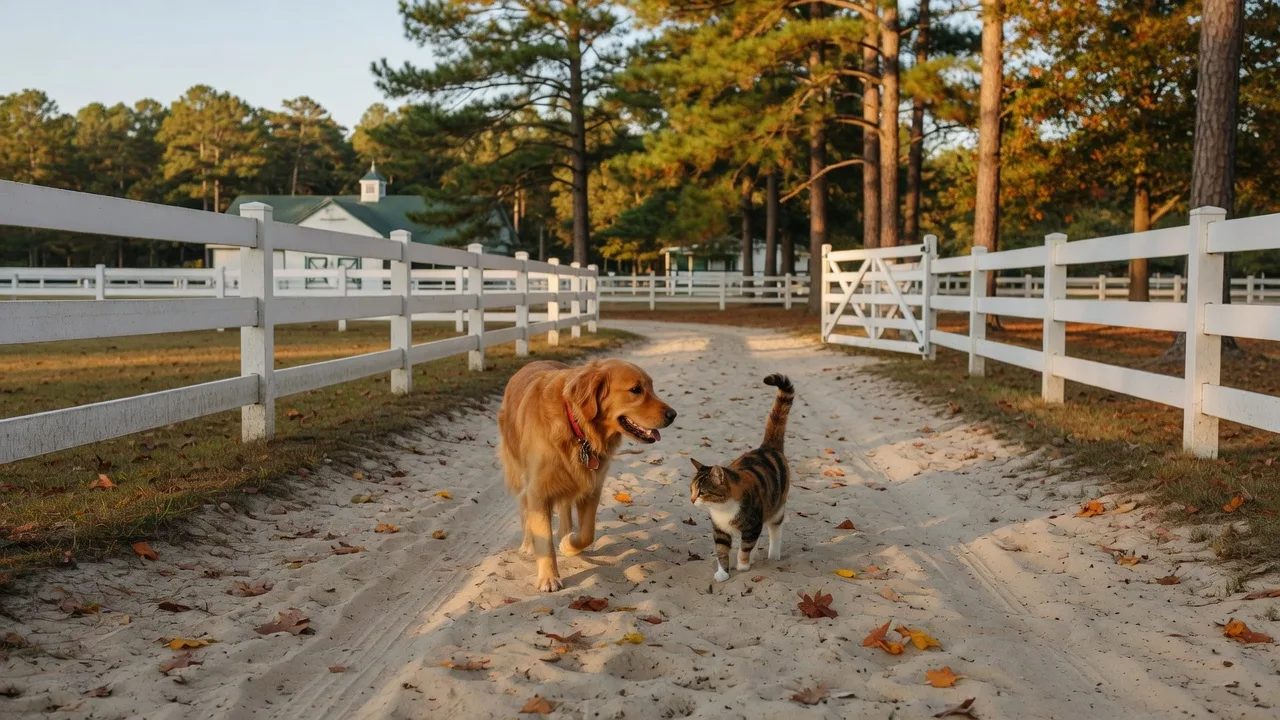
Every well-run horse farm in Aiken has a support team that never makes the marketing brochure: a barn dog waiting at the gate, a pair of working cats on watch in the feed room, and a colony of strong opinions about who deserves the good hay. These animals are not decoration. They keep feed rooms rodent-free, greet buyers at the end of the driveway, and give a property its personality, and their presence is one of the surest signs of a farm that is genuinely cared for. Here is a warm look at the four-legged team behind Aiken horse country, the foxhound tradition that helped build it, and what all of it means when you are touring horse properties with a dog of your own in mind.
Why the animals matter as much as the acreage
When I show horse properties, buyers almost always ask about the barn first, then the paddocks, then the fencing. But ask a longtime Aiken farm owner what makes their place feel like home and the answer usually starts with the animals that are not for sale: the dog that walks the fence line at feeding time, the cat that has claimed the top of the hay pile. They are the heart of the operation, and they work for their keep.
Barn cats are working cats first. A good mouser protects stored grain and hay from rodents, which protects your feed budget and your horses' health, since mice and rats can spread disease and gnaw at tails and manes in winter. Their presence alone deters new pests from moving in. Barn dogs are all-around farm staff: they guard the place, keep an eye on the property at night, raise the alarm when something is off with a horse, and many were bred for exactly that kind of work. Together they are a self-appointed security team that never asks for a day off, only a warm corner and a steady hand.
Aiken's working-dog heritage runs deep
The place animals hold on Aiken farms is not a modern invention. When the Winter Colony families arrived around the turn of the twentieth century, they built their estates around horses, and many included proper kennels on the grounds. Rose Hill, the Phelps family estate on Whiskey Road, had a full support campus of greenhouses, a garage, and kennels alongside its stables, a reminder that a working estate was never just about the horse barn. The sporting culture those families brought, foxhunting, polo, steeplechase, and racing, put dogs and horses side by side from the start. If you want the full picture of how that culture took shape, my guide to the Winter Colony season and my piece on what makes Aiken a horse town walk through the history.
The hounds that put Aiken on the map
No conversation about dogs and Aiken horse country is complete without the Aiken Hounds. The hunt was established in 1914 and recognized by the Masters of Foxhounds Association two years later, which makes it the oldest drag hunt in the country. Through the fall and winter, the hounds, horses, and riders work the roughly 2,200 acres of Hitchcock Woods together, hunting from mid-October through mid-March. We are right at the opening of that season now, which is one reason the woods feel so alive this time of year.
The tradition is woven into the town calendar in the most charming way: the Thanksgiving morning Blessing of the Hounds at the Memorial Gate in Hitchcock Woods opens the season each year and draws a crowd that spans every generation. It is the same ceremony that has anchored the hunting calendar for over a century, and it is a beautiful introduction to how much this community values its working dogs. For anyone new to Aiken, an autumn or winter visit timed to the hounds is one of the most memorable ways to understand the place.
What a working barn cat needs on a horse property
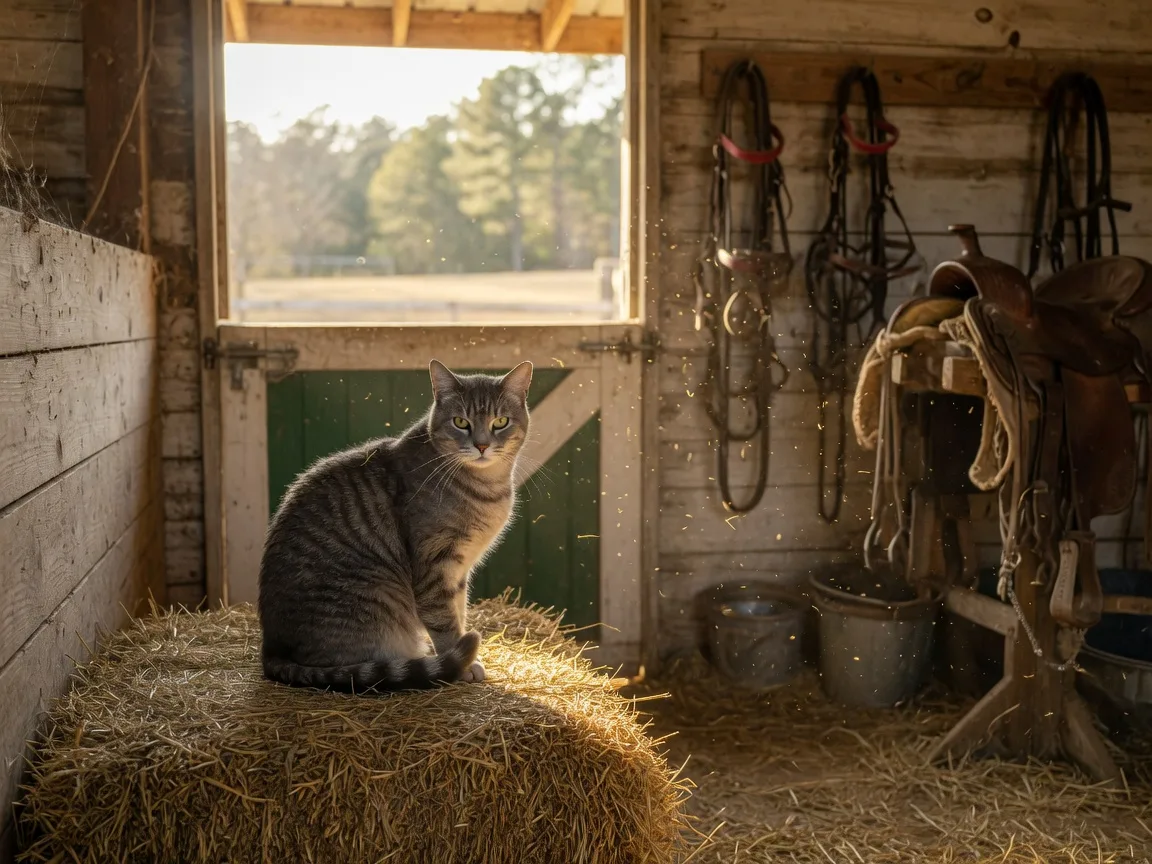
If you are buying a farm and plan to bring or adopt barn cats, the property should make their job easy. Look for a feed room that can be secured from horses but left accessible to a cat, high shelves or a hay loft where a cat can nap out of harm's way, and water sources that stay filled in summer and ice-free in winter. A heated corner in a tack room or a stall aisle is a luxury many owners gladly provide for a good mouser.
The layout matters more than the size. Cats thrive on the same kind of well-organized property that makes a farm run smoothly: covered storage, clean aisles, and a barn that is tight enough to keep out weather and varmints alike. When you tour, notice whether the barn offers those protected corners and perches. It is a small detail that says a lot about how thoughtfully the whole farm is maintained. My barn safety guide covers the broader list of what a well-kept barn should have in place.
Barn dogs and the property that suits them
The barn dog question is a property question too. A dog that is part of daily farm life needs secure, horse-safe fencing, enough shade and water along the paddock line, and a yard or a run where it can patrol without roaming onto the road. Aiken is full of farms where the family dog moves between house and barn all day, and the best of them are set up so the dog is never in the way of horses and never at risk from them.
When you tour a property with a dog in mind, the fencing is the first thing to study. Four-board fencing, vinyl plank, and properly set woven wire are all horse-safe options, but a small dog can slip through or under gaps that a horse never notices. Check the gates, the corners, and the road frontage. My complete horse fencing guide lays out the options and the maintenance each one demands, and it is worth reading before you set out on tours.
Think too about how the barn relates to the house. A property where the barn is a short, safe walk or drive from the back door is a joy for a dog owner, because the dog can be part of both halves of farm life. That connection between house and barn, more than any single amenity, is what makes a horse property feel like a home for the whole family, four-legged members included.
What should buyers look for on a tour?
Here is the honest version of what I tell buyers who plan to bring dogs to an Aiken farm. The presence of happy barn animals on a listed property is a green flag: it usually means the current owner runs a working, well-tended place. But your own animals need specifics. Ask about road frontage and traffic, because it determines whether a dog can roam safely. Look at fencing from a dog's height, not just a horse's. Check that water sources are accessible year-round, and confirm the barn offers a secure spot for a cat to shelter in winter weather.
If you are moving from out of state, this is also a great topic to raise with your agent early, because it shapes which Aiken neighborhoods and communities make sense for you. The same neighborhoods that are ideal for horses, with quiet lanes and generous lots, are usually the ones that suit a dog and a cat best. And if you want to feel the community before you commit, an autumn visit is perfect timing: the hounds are running, the woods are cool, and the farm lanes are golden. My weekend itinerary for a first trip is built exactly for that kind of visit.
The four-legged checklist for touring an Aiken horse property
- Check every fence line from a dog's height, including gates, corners, and gaps along the road frontage.
- Confirm the barn has a secure, weather-tight spot a cat can use for shelter and a feed room that keeps out rodents.
- Verify water is accessible year-round for both horses and barn animals, with ice-free options in winter.
- Note how the barn relates to the house, and whether a dog can move safely between the two.
- Ask about road traffic and neighboring farms, since both shape how freely a dog can patrol.
- Treat happy resident barn animals as a green flag, but still verify the property details yourself.
- Time a visit to the hound season, mid-October through mid-March, to see Aiken's working-dog culture firsthand.
A farm is a household, not just a holding
The very best Aiken horse properties are not measured only in acreage and barn square footage. They are measured in the rhythm of daily life: horses at the gate at feeding time, the dog making its rounds, the cat reappearing from the hay loft at dusk. That rhythm is what buyers are really shopping for, and it is why I always encourage people to think about the whole household when they tour. The right farm makes room for everyone in the family, including the ones who answer to a name instead of a deed.
If you are beginning a search, the practical guides on this site will help you compare what matters: the property features that matter most, the communities where buyers look first, and the trails and riding areas that make this town special. When you are ready to tour in person, I would love to show you around.
Let me help you find a farm for your whole family.
I can line up tours of horse properties across Aiken, from the Horse District to the southside farms, and pair each one with the fencing, barn layout, and neighborhood that suit your horses and your four-legged team. As the First AI-Certified Realtor in the region with more than 20 years of experience in Aiken horse country, I know which properties make the best homes for the whole household, and I will help you find yours.
Start Your Search