Aiken's Equestrian Communities: Where Should You Look?
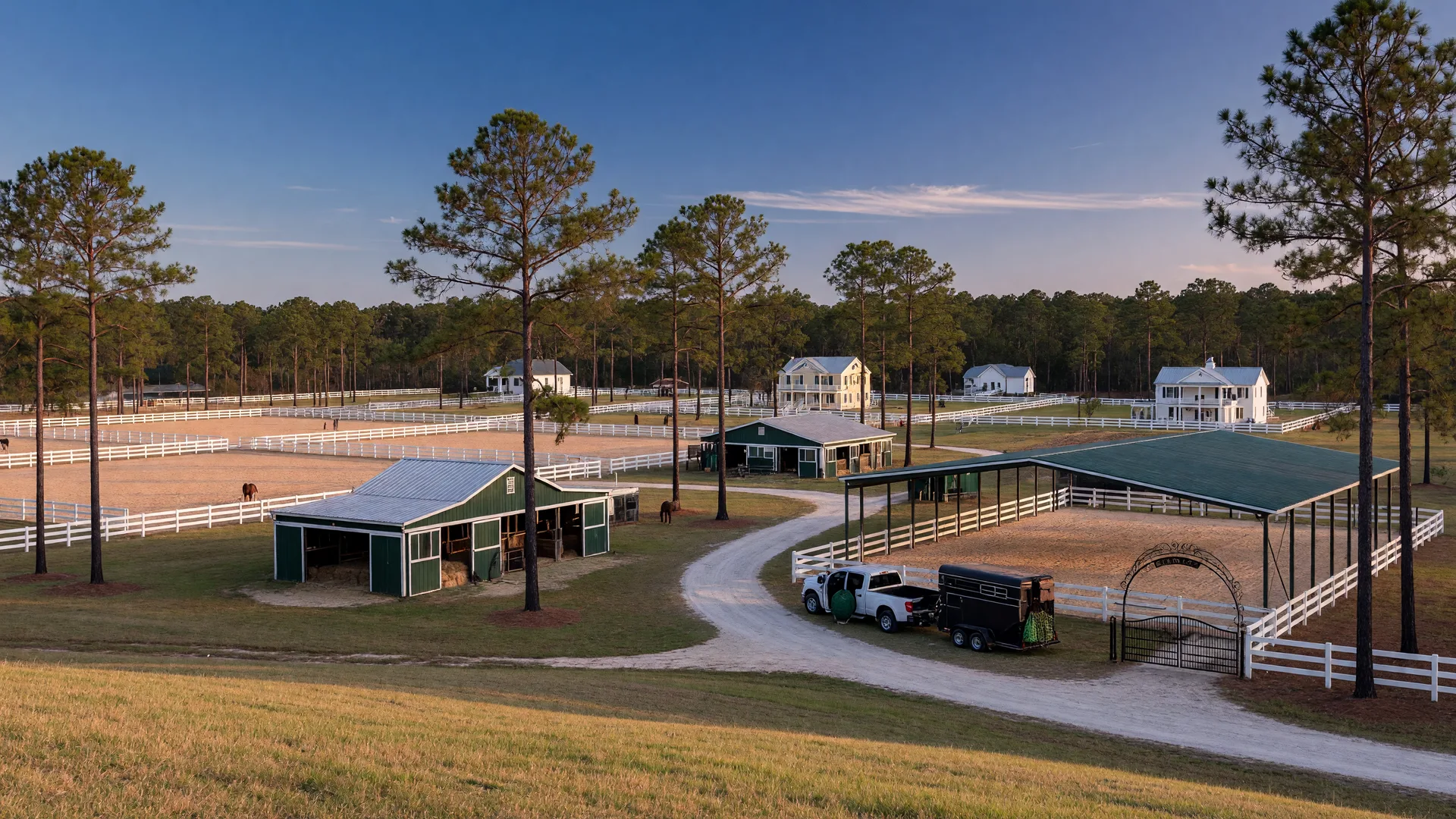
The first question most Aiken horse property buyers ask me is not about barns or acreage. It is about place: where should we look? Aiken's horse country is not one neighborhood; it is a constellation of them, and which one fits you depends on how you ride, how much land you want, how much chore work you enjoy, and whether you want your horse life inside a community or behind your own gate. This guide walks through the main parts of Aiken's equestrian landscape, what changes when you buy in a planned community versus on a private farm, and the questions to ask yourself before you start touring.
How is Aiken's horse property landscape laid out?
Aiken's equestrian areas cluster into four general patterns, and nearly every property on the market belongs to one of them. In town, the historic Horse District holds the Winter Colony character that made Aiken famous. Around it, gated equestrian communities such as Three Runs Plantation, New Bridge Polo, and Cedar Creek offer managed horse life with shared trails and amenities. Southside communities such as Bridle Creek and Anderson Farms give the same idea a more understated scale. And the rural corridors and county horse districts further from town hold the private farms, with the acreage, barns, and paddocks fully on your own land. My neighborhoods guide profiles each of these areas in detail, and it is the best starting point for a first-time buyer.
What is it like to live in the Horse District?
The in-town Horse District is where Aiken's equestrian heritage is most visible: cottages and estates on unpaved lanes, backyard barns behind white fences, and horses moving through the streets on the way to the woods. The defining feature is access. From many Horse District properties you can ride out your own gate and be on the Hitchcock Woods trail network in minutes, with no trailering involved. The tradeoff is scale: lots are smaller, barns more compact, and space for a big arena or a herd of horses is limited. For the rider who wants the richest possible horse culture within walking distance of the saddle, it is unmatched.
What draws buyers to the gated equestrian communities?
The gated communities answer the question of who maintains the horse infrastructure. Three Runs Plantation spans roughly 2,400 acres with miles of private riding trails and competition complexes maintained for residents, so you can keep horses, ride every day in company, and never shoulder the upkeep of a farm on your own. New Bridge Polo builds its horse life around polo with championship fields and riding trails, while Cedar Creek pairs custom homes and golf with proximity to equestrian amenities. The common thread is shared investment: you trade some privacy and some control for trails, rings, and barns that the community keeps in shape.
These communities are documented in depth on their own pages, including the Three Runs, New Bridge, and Cedar Creek guides, so you can compare their character before visiting.
Private farm or planned community: what actually changes?
The honest comparison comes down to control versus convenience. A private farm gives you freedom: you decide turnout, fencing, barn design, and who comes and goes, and there is no board or committee setting rules across the fence line. The cost is that you are the maintenance department, and a horse property always needs work, from fence lines to waterers to footing. A planned community removes most of that burden, but it brings covenants, approvals, and shared rules that shape what you can do with your own land.
Both can be excellent homes for horses, and many buyers move from one to the other as their lives change. My comparison of established farms versus raw land covers the property-level tradeoffs, while the guide to right-sizing your acreage helps you decide how much land is actually useful for the horses you keep.
What riding access and amenities should you verify?
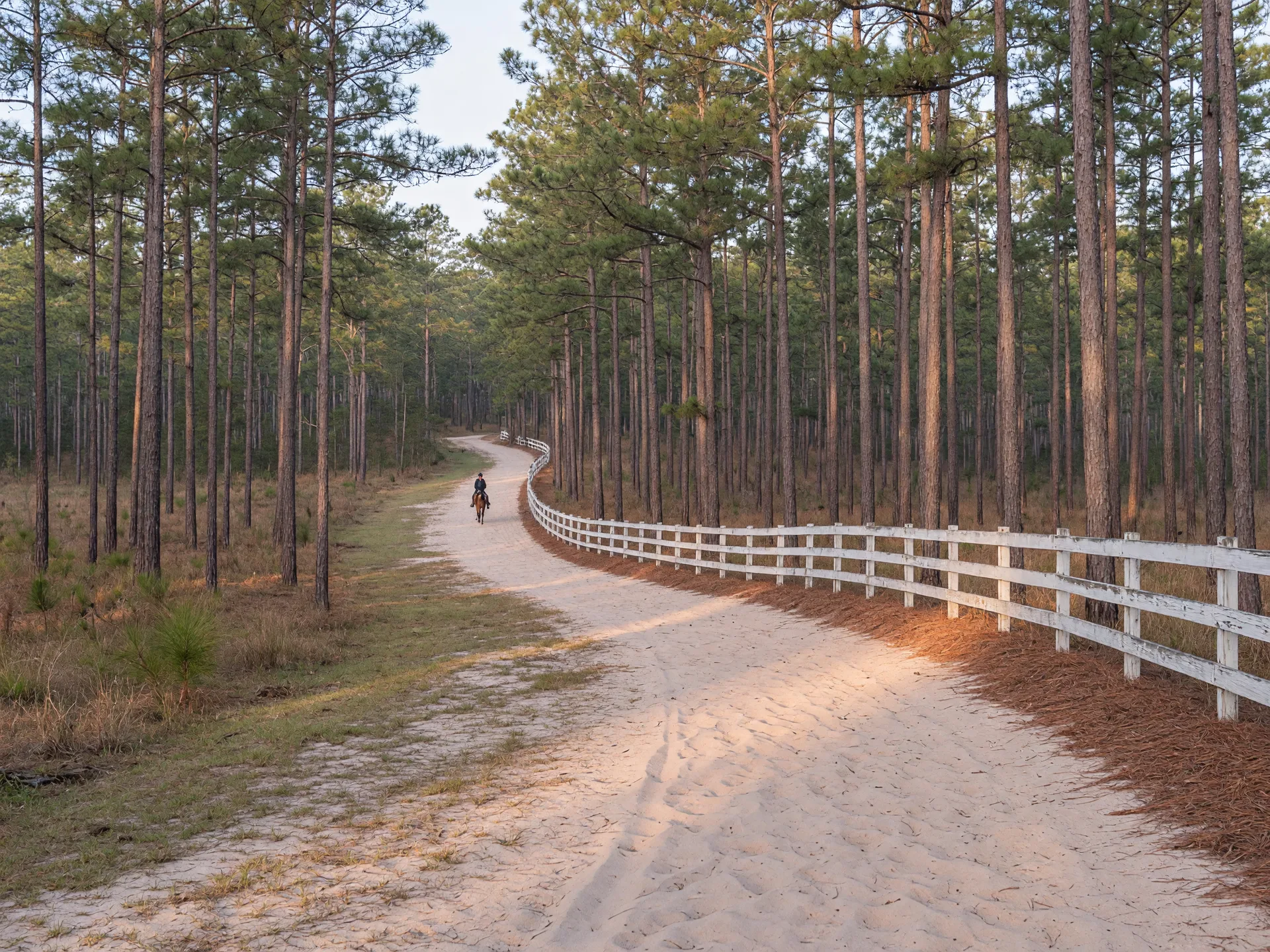
Trail access is the feature that quietly decides where horse people land, and it deserves verification, not assumption. Ask whether a property's trails are deeded with the land, maintained by a community, or available through an easement, and put the answer in writing. Clarify whether you can ride to the woods, a ring, or a venue from your own gate, or whether trailering is part of the routine. Aiken's trail network extends well beyond Hitchcock Woods itself, from the expanding trail system to Langley Pond and the Gopher Tortoise Preserve, and the venues guide maps the arenas and show grounds you might trailer to on a normal weekend.
Amenities are the second question. Does the community maintain a ring, a footing, a cross-country course, or a trail network, and are residents charged separately for them? Is there a place to wash, tie, and load horses near your own lot? For competition riders, proximity to Aiken's venues can be worth more than the barn itself, and the eventing facilities guide and venues guide are the best references for understanding that geography.
What do HOA rules and restrictions really cover?
Covenants and homeowners association rules are the fine print of equestrian community life, and they vary widely from one community to the next. The areas they commonly govern include the number of horses allowed per lot, the approval process for building or modifying a barn, fencing materials, heights, and setbacks, the placement and construction of arenas and paddocks, the storage of trailers and equipment where they can be seen, and noise or activity restrictions that can affect a boarding or training operation. Some communities are horse-friendly by design, with covenants written to protect riders, while others tightened their rules over time, so the written restrictions matter more than the neighbor's opinion.
The practical rule is simple: read the covenants before you fall in love with a property, and ask your agent to review them with you line by line. If you plan to board other horses, run a lesson program, or build a barn in a particular spot, confirm each of those uses in writing before you make an offer. My guide to zoning for horse properties in Aiken explains how public zoning rules interact with private covenants, which is the full picture every community buyer needs.
How do you match a community to your riding and your plans?
The best way to choose is to start from your discipline and your future, not from the pretty pictures. A trail rider who wants to leave the barn on horseback will weigh road-free access to the woods differently than an eventer who needs weekend proximity to cross-country venues. A breeder with a growing string needs turnout capacity that a compact community lot cannot provide. A seasonal owner may prefer a full-service community that keeps the horses and the property well when they are away. The guide to matching a horse property to your riding discipline walks through this logic in detail.
It is equally worth deciding how much horse community you actually want. Some buyers move here for the riding and want quiet privacy beyond the fence line; others want company on every trail ride and a full barn dinner calendar. Both are available in Aiken, but they are not available in the same place, so be honest with yourself about which one you are before you shop. My guide to building your equestrian community describes what the social side looks like once you arrive.
What should you ask before you visit or buy?
Keep a short list of questions with you on every tour, because the answers sort communities faster than almost anything else. How many horses does the property or community allow, and what documentation do they expect? Where does the trail access actually begin, and is it deeded, community-maintained, or an easement? What is the barn approval process, and what are the setbacks and fencing standards? Is horse boarding or training permitted, and are there noise or activity limits? What does the association maintain, and what is the owner's responsibility? And not least, what do current residents say about the horse life here, because the riders already living in a community are the best reference you will find. My horse property checklist folds these questions into a whole-property evaluation you can use on every visit.
Aiken's equestrian communities each have a character, and part of the fun is finding the one that matches yours. Visit on a riding day, stop residents on the trail, and compare the written rules against the life you actually want. The right community will feel like it was waiting for you, and in a town built for horses for more than a century, it probably was.
Let me match your riding, your plans, and your budget to the right part of Aiken horse country.
From Horse District cottages to gated communities with private trails, I know the character, the covenants, and the ride-out access of every equestrian area in Aiken. As the First AI-Certified Realtor in the CSRA, I bring more than 20 years of local experience to helping you choose well.
Schedule a Consultation