
Summer Horse Care in Aiken: A Complete Guide for Keeping Horses Healthy in the Carolina Heat
Aiken's summers arrive fast and hit hard. By late June, daytime highs regularly reach the upper 80s and low 90s, with overnight lows that barely dip below 70. Combined with the Carolina humidity — which averages 70 to 77 percent through July and August — the heat index can climb well past 100°F on the worst days. For horse owners on the Sandhills' sandy soils, summer isn't just uncomfortable. It's a management challenge that tests your barn infrastructure, your pasture health, and your daily routine. After more than 20 years of helping horse owners navigate life in Aiken, I've learned that the owners who handle summer well are the ones who prepare for it — not react to it.
Understanding heat stress in humid climates
Horses cool themselves primarily through sweating. As sweat evaporates off their skin, it carries heat away from the body. But that system depends on one critical factor: the air has to be dry enough to absorb the moisture. In Aiken's summer humidity, the air is often already saturated with moisture, which means sweat drips off a horse without actually cooling it. A horse can be drenched in sweat and still be overheating internally. This is what makes Southern summers more dangerous than dry Western heat — it's not just the temperature, it's the humidity.
Recognizing heat stress early is essential. Early signs include excessive sweating, rapid or labored breathing, elevated heart rate, and unusual lethargy. A horse that normally greets you at the fence may be standing with its head low, unwilling to move. In severe cases, horses can develop muscle tremors, stagger, or collapse. Heat stroke is a veterinary emergency that can cause organ damage and death if not treated immediately. The best treatment is prevention.
Hydration: the most important summer habit
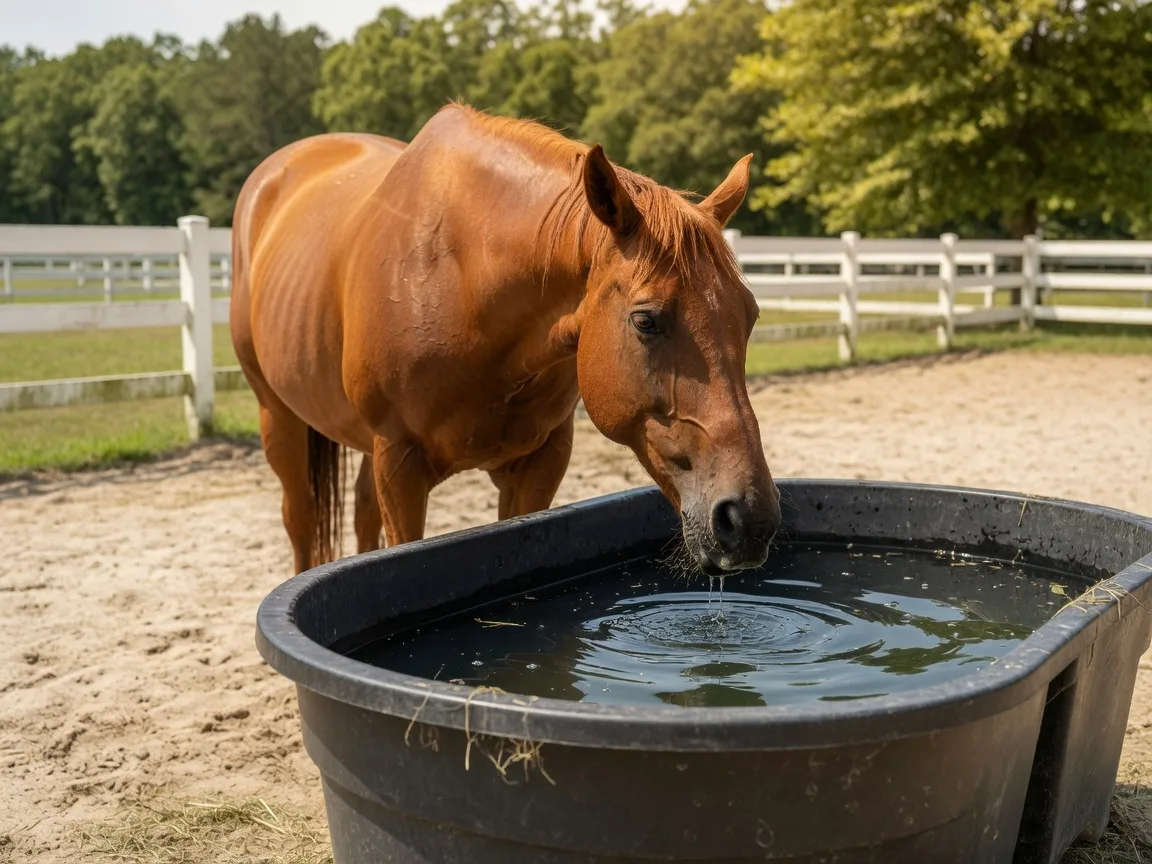
A horse at maintenance in Aiken's summer heat should drink between 10 and 15 gallons of water per day. Horses in active work or exposed to extreme heat may drink significantly more. Dehydration is the root cause of many summer health issues, from colic to impaction to heat exhaustion. The challenge isn't just providing water — it's making sure your horses actually drink enough of it.
Water should be available at all times, in every turnout area, refreshed at least twice daily. Tanks and troughs in full sun can heat to uncomfortable temperatures by mid-afternoon, which discourages horses from drinking. Place water sources in shaded areas or use insulated tank covers to keep the temperature down. Some owners run water lines to shaded locations specifically for this reason, and it's one of the best infrastructure investments you can make on a horse property in Aiken.
Electrolytes: replacing what sweat takes away
When horses sweat heavily, they lose more than just water. Electrolytes — sodium, potassium, chloride, and magnesium — are stripped from the body through perspiration, and a diet of pasture and hay alone does not always replace what's lost. Sodium is the most commonly deficient electrolyte in the equine diet, and it's also the mineral most directly linked to encouraging horses to drink.
A plain salt block in the stall or run-in shed provides baseline sodium. For horses in moderate to heavy work, a commercially formulated electrolyte supplement — offered either in feed, mixed into water, or as an oral paste — helps maintain proper hydration and prevents the muscle cramps and lethargy that come with electrolyte imbalance. Always ensure horses have access to plain water alongside electrolyte supplementation; some horses will drink less if the water tastes salty.
Exercise and turnout timing
In Aiken, the safest times for exercise are early morning — before 8 a.m. — and late evening, after 6 p.m. During the peak heat hours between 10 a.m. and 4 p.m., horses should be in shaded stalls, run-in sheds, or pastures with substantial tree cover. This doesn't mean horses need to stand in a barn all day; it means their exposure to direct sun and high temperatures needs to be managed around the worst hours.
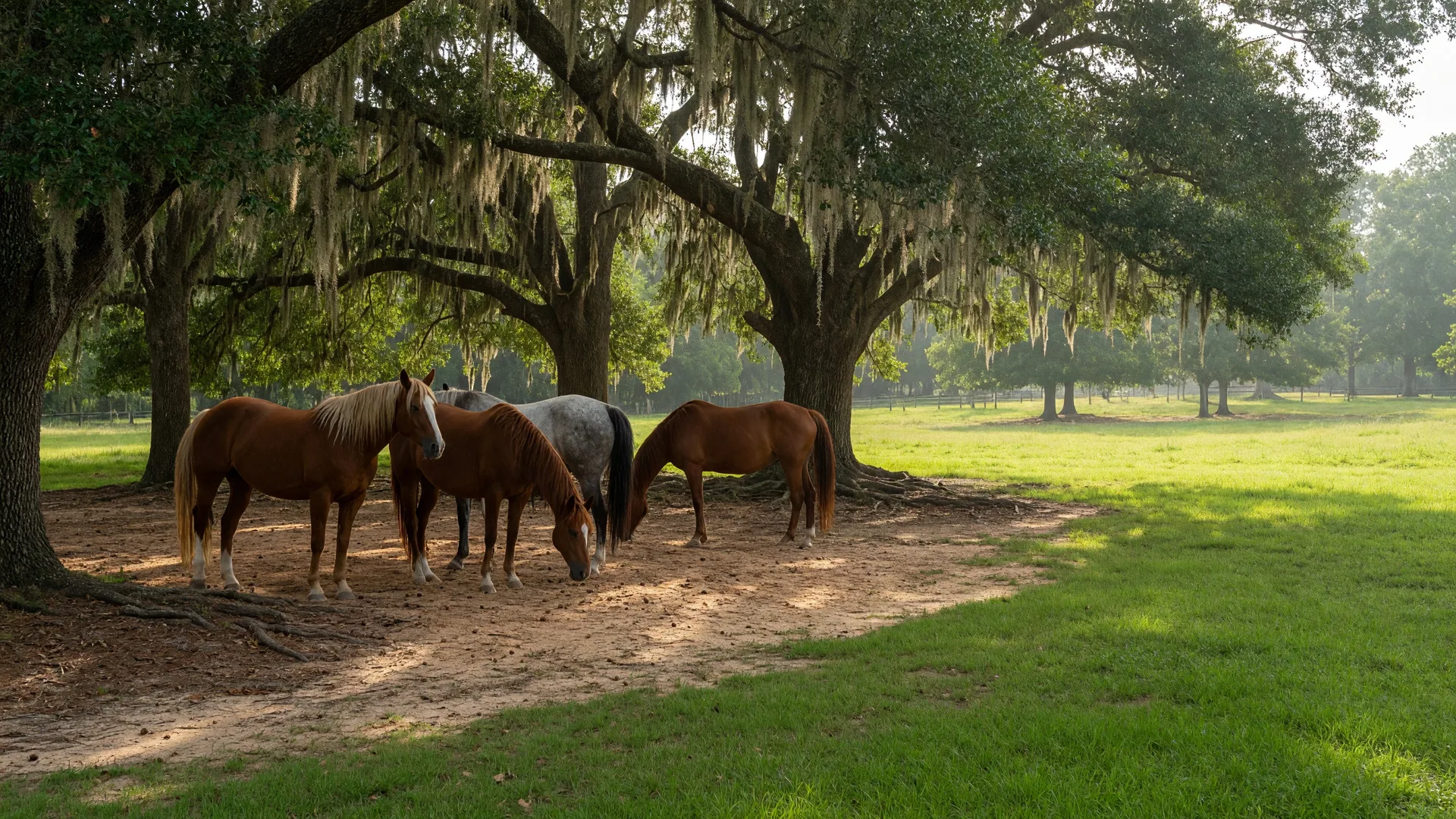
Horses on tree-lined properties with mature oaks and natural shade have a significant advantage during summer. This is one of those subtle features that matters more than most buyers realize when they're shopping for horse property in Aiken. A property with open, exposed pastures and no tree cover requires more infrastructure — shade structures, run-in sheds, and careful scheduling — to keep horses comfortable.
Morning rides are a lifestyle, not just a workaround.
One of the quiet luxuries of living in Aiken is that riding at dawn — when the Sandhills air is cool and the trails are empty — becomes a daily habit rather than a sacrifice. The summer heat pushes everyone's schedule earlier, and most horse owners here have adjusted by making morning rides the norm from June through September.
Fly and insect management
Humid summers in the Southeast produce brutal fly pressure. Stable flies, horse flies, and the tiny biting midges that cause sweet itch (insect bite hypersensitivity) are all at peak levels from June through September. Flies do more than annoy horses — they transmit disease, cause weight loss through stress, and create eye and skin infections. Effective fly management is a multi-layered effort.
Fly sheets and masks: Lightweight mesh fly sheets have become remarkably good at providing full-body protection without adding heat. They allow airflow while blocking UV light and keeping insects off the skin. Fly masks protect the eyes and ears, which are particularly vulnerable to irritation. Look for sheets with UV protection rated at 70 percent or higher.
Barn and run-in management: Fans are one of the most effective fly deterrents in enclosed spaces. A strong fan at the stall entrance creates airflow that most flies cannot navigate, and the breeze also helps cool horses during the day. In run-in sheds, positioning fans to create cross-ventilation makes a measurable difference.
Manure management: Flies breed in manure, and a single pile of fresh manure can produce thousands of flies within a week. Removing manure from paddocks and stall areas every one to two days is the single most impactful environmental control. Composting manure at a distance from the barn — at least 200 feet — breaks the breeding cycle while creating a useful soil amendment for pasture improvement.
Feed-through fly control: Products like FlyGone or Frontline-equivalent supplements are mixed into feed and work by interrupting the fly life cycle in manure. They're not a standalone solution but are effective as part of an integrated approach.
Hoof care in sandy soil and summer humidity
The Carolina Sandhills' signature soil is both a blessing and a challenge for hoof health. Sand actively wicks moisture from hooves, causing brittle walls that chip, crack, and crumble during dry spells. Then, when summer rainstorms hit, those same hooves absorb moisture rapidly and expand. This cycle of swelling and shrinking breaks down hoof integrity over the course of a single season.
At the same time, the humidity promotes thrush — a bacterial and fungal infection of the frog that thrives in moist, dirty conditions. Thrush produces a black, foul-smelling discharge and, if left untreated, can progress to the point where the horse becomes lame. Daily hoof picking, regular cleaning of stalls and run-in areas, and keeping frogs trimmed are essential. Your farrier can apply topical treatments and adjust trimming to help manage thrush, but environmental control — keeping standing water and wet manure away from where horses stand — is the primary defense.
Topical hoof conditioners and sealants help attract and retain moisture in the hoof wall during dry periods, preventing the worst of the cracking. Work with your farrier to establish a summer hoof care routine that accounts for Aiken's unique soil and climate conditions. The gravel or crushed stone footing in high-traffic areas around barns and water troughs helps keep hooves cleaner and drier.
Pasture management through heat and drought
Aiken's sandy soils drain fast, which means pastures here dry out quicker than clay-based pastures in other parts of the state. Summer drought stress is a real concern, particularly in years with below-average rainfall. Overgrazed pastures are the most vulnerable — once grass is grazed below three inches, the root system weakens and recovery becomes much harder.
Stocking density matters. One adult horse per two acres is the widely accepted minimum for sustainable pasture management in the Sandhills, and many properties need more acreage per horse during dry summers. Rotating pastures — moving horses between paddocks to allow grass to rest and regrow — extends the grazing season and prevents the bare, compacted ground that leads to mud problems when rain does come.
During extended dry periods, supplementing with hay is both necessary and economical. Many Aiken hay producers sell direct from the farm, and ordering ahead during spring ensures supply during the summer slump. Some property owners plant warm-season annuals like teff grass as emergency summer forage — it establishes quickly and provides grazing during the months when Bermuda and native grasses go dormant.
After rain events, applying nitrogen fertilizer to pastures helps speed recovery. This is worth discussing with your local equine services providers — several Aiken-area agricultural suppliers can help with soil testing and fertility programs tailored to horse pastures.
Shade infrastructure: natural and built
Every turnout area must have shade. Aiken properties range from heavily wooded lots with mature oaks and pines to open, cleared pastures with minimal natural cover. If your property has large trees, the shade they provide is the most effective and cheapest cooling system available. A single large oak can shade an area of 2,000 square feet or more during peak afternoon sun.
For properties without sufficient tree cover, purpose-built shade structures — ranging from simple three-sided run-in sheds to engineered shade canopies — are essential investments. A well-designed run-in shed should be oriented with the open side facing away from prevailing afternoon sun (typically facing north or east in Aiken), be large enough for multiple horses to stand without crowding, and have a roof that extends far enough to cast shade across the full footprint during the hottest hours.
Summer parasites and disease prevention
Mosquito season peaks in the same months as the heat, and the diseases they carry — Eastern Equine Encephalitis (EEE), West Nile Virus, and others — are serious and potentially fatal. Aiken's warm, wet climate creates ideal mosquito breeding conditions around standing water, ponds, and drainage ditches. Keeping your horses on a current vaccination schedule is non-negotiable. Your equine veterinarian can advise on the specific vaccination protocol recommended for the Aiken area, which typically includes EEE, WEE, West Nile, tetanus, and rabies as core vaccines.
Ticks are also at peak activity during summer, particularly in wooded areas and tall grass. Regular tick checks after trail rides through Hitchcock Woods or other riding areas are important. Consult your veterinarian about tick prevention products and schedule for the season.
One condition specific to the Southeast that horse owners should be aware of is Summer Pasture-Associated Obstructive Pulmonary Disease (SPAOPD), the regional equivalent of heaves. This allergic airway condition is triggered by inhaling fungal spores and grass pollens that are abundant in warm, humid climates. Horses with SPAOPD develop coughing, nasal discharge, and labored breathing that worsens when they're on pasture during summer months. If your horse shows these symptoms, your vet can diagnose the condition and recommend management strategies — which sometimes include bringing the horse in during the worst pollen hours.
How property design supports summer horse care
The difference between a horse property that handles summer well and one that doesn't often comes down to design decisions made before the first heat wave hits. A barn with proper ventilation — ridge vents, open eaves, and stall doors that allow cross-breeze — keeps horses cooler than a sealed structure. A property with mature trees, shaded water troughs, and manure management infrastructure reduces the daily workload of summer care. Multiple pastures with separate grazing areas allow rotational management that keeps pastures productive even in drought.
When I work with buyers looking at horse properties in Aiken, summer readiness is one of the things we evaluate. It's not the most exciting part of a property tour, but it's the factor that determines whether July and August feel manageable or overwhelming. A well-designed horse property doesn't fight the Aiken summer — it works with it. And that makes all the difference for both you and your horses.
Let me help you find the right horse property for every season.
From barn ventilation to shade trees to pasture layout, I evaluate every property for how it performs through Aiken's full climate cycle. Contact me to start your search.
Schedule a Consultation