
How to Stage and Market an Equestrian Property in Aiken, SC: A Seller's Guide to Attracting the Right Buyer
Marketing a horse property is fundamentally different from marketing a standard home. Where a typical residential listing focuses on square footage, kitchen upgrades, and master suites, an equestrian property sale hinges on land, infrastructure, and the promise of a specific lifestyle. The buyers who look at horse properties in Aiken are not casual shoppers. They are serious horse people who know what they want in a barn, an arena, a paddock, and a pasture. They are evaluating your property against a mental checklist honed by years of experience.
I have helped sellers across Aiken, North Augusta, and the CSRA prepare their equestrian properties for market. What I have learned is that the sellers who invest time in proper staging and targeted marketing consistently attract more showings, better offers, and smoother transactions. This guide covers the essential steps for presenting your horse property to the buyers who matter most.
- Equestrian property staging should highlight land and infrastructure first, with the house as a secondary consideration.
- Professional photography, drone aerials, and detailed facility descriptions are essential for attracting qualified buyers.
- Buyers evaluate barn condition, arena footing, pasture quality, fencing, water systems, and trail access above all else.
- Targeted marketing through equestrian-specific channels reaches the serious buyers who understand the value of a well-maintained horse property.
- A seller who prepares early and stages strategically can reduce time on market and attract offers closer to asking price.
- Why marketing a horse property is different
- Staging the barn and equestrian facilities
- Pasture, fencing, and grounds presentation
- Arena and riding ring preparation
- Photography and marketing materials
- Writing a listing that speaks to horse people
- Targeted marketing channels for equestrian properties
- Disclosures, inspections, and documentation
- Timing your sale for the seasonal market
- Linda's final advice for sellers
Why marketing a horse property is different
When I list a standard home in Aiken, the audience is broad: families, professionals, retirees, investors. When I list a horse property, the audience narrows dramatically to a specific demographic of horse owners who have very particular requirements. These buyers are not impressed by granite countertops or hardwood floors if the barn has poor ventilation or the pasture is overtaken by weeds. They are evaluating the property on criteria that most residential agents do not know how to assess.
Every equestrian property listing should be built around three questions that serious buyers are asking themselves:
- Can I keep my horses safely and comfortably on this property? This is the primary concern. The barn, fencing, pastures, and water systems must meet the buyer's standards for safety and functionality.
- Can I ride here? Access to arenas, trails, and riding spaces directly affects the property's utility. A property with direct Hitchcock Woods trail access commands a premium because it saves the buyer from trailering to ride.
- What does the daily routine look like? Smart buyers visualize themselves on the property at 6 AM on a Tuesday. They want to know how far the walk is from the house to the barn, whether they can see the pastures from the kitchen window, and how much maintenance the grounds require.
Every staging decision and every marketing message should answer one of these three questions. If a feature does not speak to horse ownership, it belongs in a secondary position in the listing.
Staging the barn and equestrian facilities
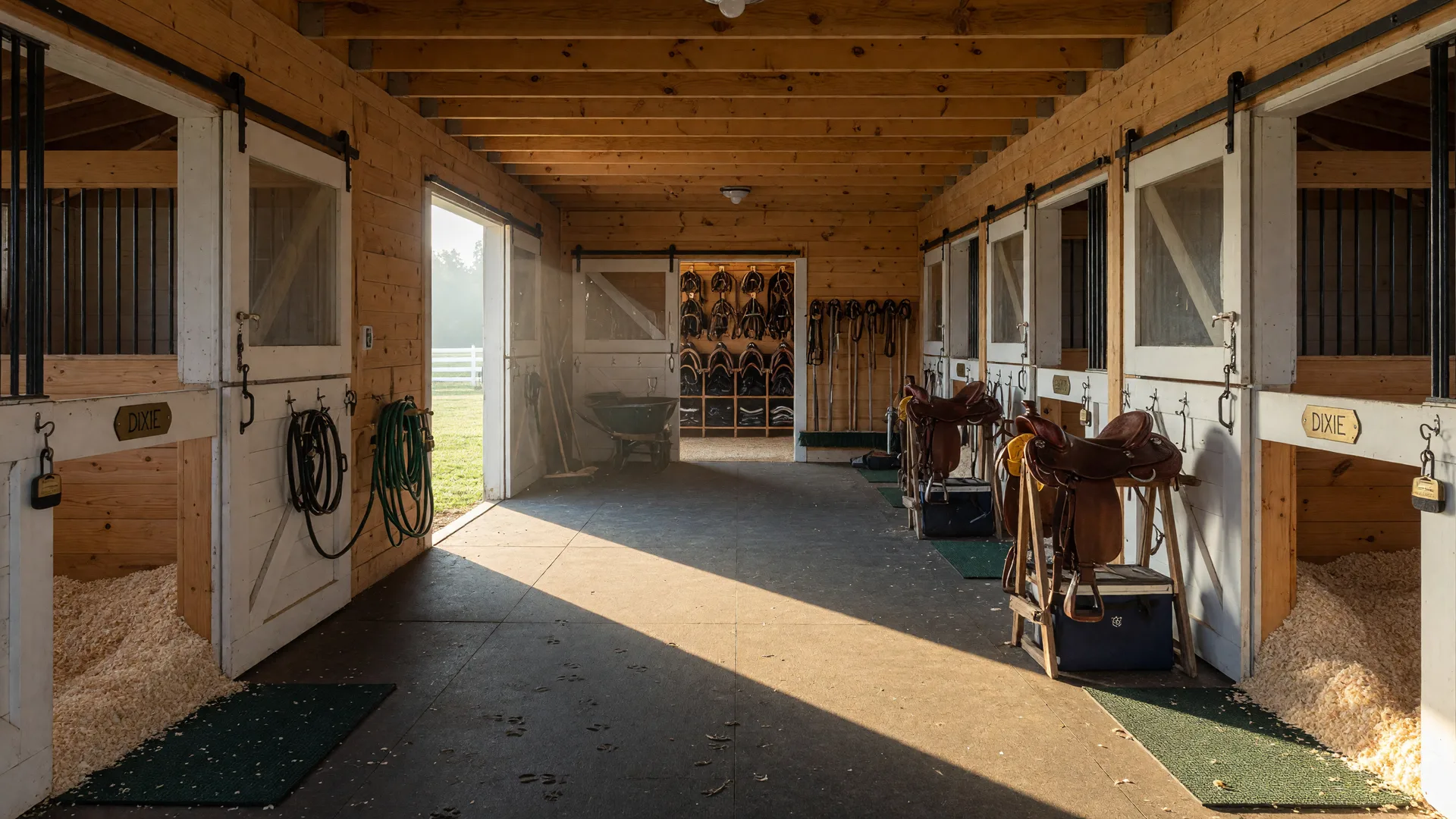
For an equestrian buyer, the barn is the most important structure on the property. It is where they will spend time every single day, often more time than in the main house. The barn needs to look clean, safe, and well-maintained. Here is how to prepare it for showings.
Deep clean everything
A barn that smells clean makes an immediate positive impression. Strip all stalls down to the mats, sweep the aisles, pressure-wash the walls and walkways, and replace cobwebs in corners and rafters. Clean all windows to let in natural light. Tack rooms should be organized with bridles and saddles on racks, blankets folded, and supplies sorted. Feed rooms should show neatly stacked bags, sealed bins, and no signs of rodents or pests.
Wash stall and cross-tie areas should also be clean and free of scum buildup. Attention to detail in the barn communicates that the property has been well cared for, which directly addresses buyers' concerns about deferred maintenance.
Fresh bedding and shavings
There is nothing that sells a barn faster than the sight and smell of fresh pine shavings. Budget for a fresh delivery of shavings in every stall before your first showing and keep them topped up through the marketing period. Empty, sweep, and re-bed any stalls that are not in active use. An empty stall with fresh shavings looks inviting. An empty stall with a dirty mat and cobwebs looks neglected.
Repair and paint
Walk through the barn and take note of every broken latch, damaged board, loose wire, and sticking door. These small items become negotiating points in a buyer's mind. Replace broken stall door latches, repair or replace damaged boards, fix any electrical issues, and repaint scuffed or faded walls, trim, and stall fronts. A fresh coat of paint in a neutral color transforms the look of an older barn more than any other single improvement.
Check the roof for leaks and repair any stained areas on the ceiling. A water stain in a barn aisle signals roof problems to an experienced buyer, even if the repair was completed years ago. If you have patched a leak, paint over the stain to remove the visual cue.
Hay and manure management
Hay storage should be neat and organized. Stack hay off the ground on pallets and keep it dry. Remove any old, moldy, or spoiled hay that might suggest poor management. Manure piles should be located away from the barn and house, ideally on a concrete pad or contained area, and should be fresh and manageable in size. An overflowing manure pile or unsightly composting area will turn off even the most determined buyer.
Pasture, fencing, and grounds presentation
The land and its infrastructure are what buyers are ultimately purchasing. A horse property without adequate pasture and safe fencing is a horse property that needs significant capital investment before a single horse can set hoof on it. Here is what to address.
Fencing inspection and repair
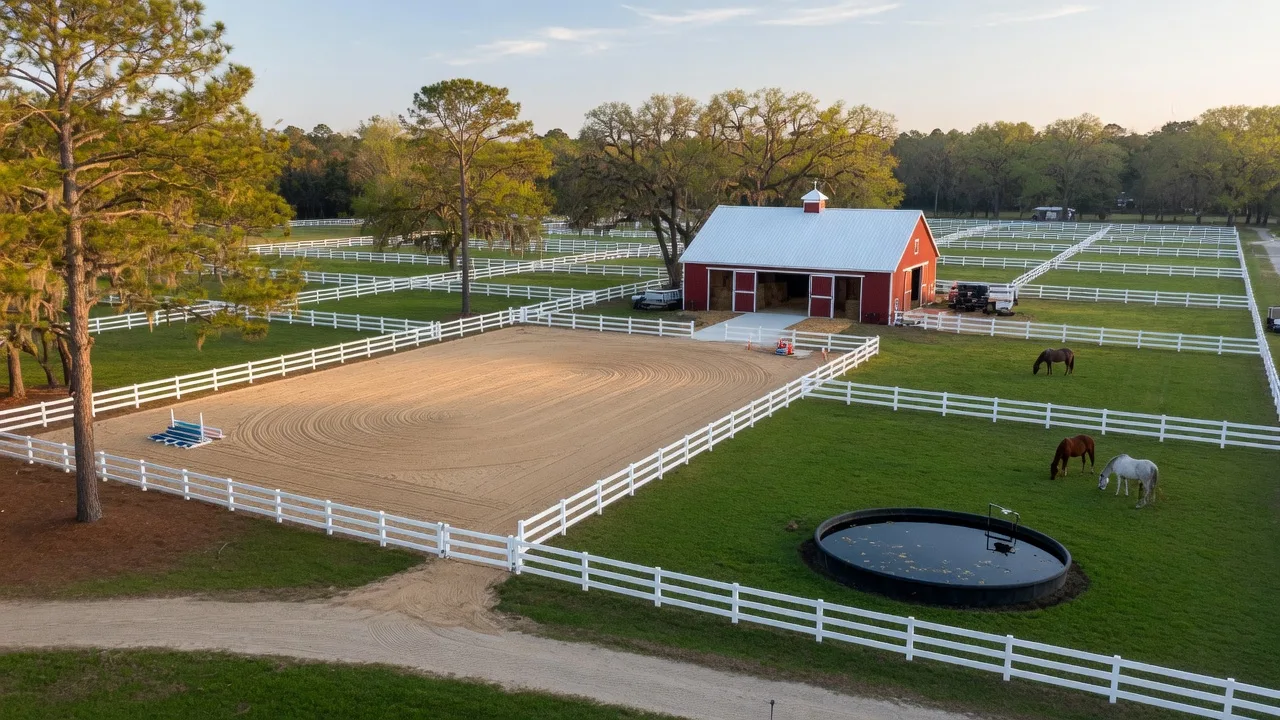
Fencing is the single most visible indicator of how well an equestrian property has been maintained. Walk every inch of fencing on the property. Tighten loose boards, replace broken rails, repair or replace sagging gates, and make sure all latches function properly. Remove any barbed wire or dangerous fencing materials. If any section of fence is past its useful life, consider replacing it entirely. New board fencing is expensive, but it is also one of the most powerful visual signals a property can send to prospective buyers.
Cross-fencing matters as much as perimeter fencing. Buyers who rotate their horses between pastures need functional cross-fencing with safe, reliable gates. Show them that your property is set up for rotational grazing.
Pasture health
Green, healthy pastures communicate good land management. If your pastures need attention, now is the time. Mow weeds, overseed thin areas in the appropriate season, and address any soil compaction or drainage issues. In Aiken's sandhills soil, maintaining pasture grass during dry periods requires careful management. If you have irrigation on pastures, make sure the system is operational and visible.
Remove any toxic plants from pastures and paddocks. In South Carolina, this includes plants like red maple, cherry trees, and certain ornamental shrubs. A buyer who knows their pasture management will notice, and a buyer who does not notice may still end up with a problem.
Run-in sheds and water sources
Every pasture and paddock should have a clean, functional water source. Automatic waterers should be checked for leaks and cleaned. Open troughs should be scrubbed and filled with fresh water before every showing. Run-in sheds should be clean and structurally sound, with no sagging roofs or exposed nails.
Arena and riding ring preparation
An arena separates a hobby farm from a serious equestrian property. Buyers who compete or train will evaluate your arena based on size, footing quality, drainage, and maintenance. Here is how to present it well.
Footing
The footing should be harrowed and dragged before every showing. Remove standing water or address drainage issues. A consistent, well-maintained footing surface signals that the arena is ready for immediate use. If the footing is thin or dusty, consider top-dressing with fresh sand or a footing additive. Aiken's native sand is excellent arena material, but it does compact and degrade over time. Freshening it up before listing is a worthwhile investment.
Fencing and accessories
Arena fencing should be safe and in good repair. Repair any loose boards or rails. Arena mirrors, jumps, dressage letters, and other accessories should be clean and neatly arranged. You want buyers to be able to picture themselves schooling in the space, not planning repairs.
Covered arenas and indoor spaces
If your property has a covered or indoor arena, highlight it. A covered arena is a major selling point in Aiken, where summer thunderstorms and winter cold snaps can interrupt riding schedules. Make sure the structure is clean, well-lit, and free of cobwebs and debris.
Photography and marketing materials
For a standard home, good photos are important. For an equestrian property, professional photography is non-negotiable. The buyers you want to attract are often out of state, evaluating properties online before deciding which ones to visit in person. If your listing photos do not convey the quality of your barn, arena, and land, those buyers will click past your property without a second thought.
Aerial drone photography
Aerial photography is especially valuable for horse properties. A drone shot that shows the entire property layout including the barn, all paddocks, the arena, the house, and any trail connections gives a buyer an instant understanding of how the property is organized. Drone photography also captures the context of the property within the broader landscape, showing proximity to woods, trails, and neighboring horse farms. This is one area where investing in professional marketing pays for itself in the quality of leads generated.
Video and virtual tours
A walkthrough video that takes the viewer from the barn through the arena, past the pastures, and into the house is extremely effective for out-of-state buyers. Consider a video that narrates the daily routine on the property: feeding in the morning, turning out horses, riding in the arena, and enjoying the evening from the back porch. This type of content speaks directly to the lifestyle question that every buyer is asking.
Timing and lighting
Photography should be scheduled for the time of day when the property looks its best. For most Aiken properties, early morning or late afternoon provides the warm golden-hour light that makes fencing, barns, and pastures look their best. Overcast days can work well too, as they provide even lighting without harsh shadows. Avoid midday photography in summer when the sun is directly overhead and the light is flat and harsh.
Writing a listing that speaks to horse people
The listing description for an equestrian property must cover the features that matter most to horse owners, in the language that horse people use. Generic real estate descriptions will not attract the right buyers. Here is what to include.
Barn specifications
List stall count and dimensions, whether stalls are matted, the type of stall fronts (wood, metal, grille), ventilation system, wash stall availability, tack room dimensions, feed room capacity, hay storage capacity, electric and water access in the barn, and any climate control features. Buyers need this detail to determine whether the barn suits their needs.
Arena details
Specify arena dimensions, footing type and depth, whether the arena is covered or uncovered, lighting, drainage, and nearby trailer parking. Be specific: "80 x 200 outdoor arena with sand footing, harrowed and maintained, LED lighting for evening riding" is far more effective than "arena on property."
Land and acreage
Specify total acreage, the number of acres in pasture versus woods, whether the property is cross-fenced, the number of paddocks, the water source for pastures, and any conservation easements. If the property has direct trail access to Hitchcock Woods, the equestrian venues, or the city's bridle path network, that should appear prominently in the first paragraph.
Zoning and restrictions
Mention the Horse District zoning status if applicable. Buyers from outside Aiken may not know about the Horse District regulations, and confirming that the property allows horses is a critical piece of information for any prospective buyer. If there are HOA covenants or deed restrictions that affect horse keeping, disclose that upfront. Surprising a buyer with restrictions after they have fallen in love with the property is one of the fastest ways to kill a deal.
Equestrian community context
Help out-of-town buyers understand what makes the location special. Mention proximity to equestrian venues, training facilities, veterinary services, tack shops, and feed stores. Buyers relocating from outside South Carolina are making a leap of faith, and knowing that they will be surrounded by a thriving horse community reduces the perceived risk of the move.
Targeted marketing channels for equestrian properties
A standard MLS listing and an email blast to agents will not reach the right buyers for a horse property. Effective equestrian property marketing requires reaching horse owners specifically through channels they use. Here is what works in the Aiken market.
Equestrian-focused real estate platforms
In addition to the standard MLS syndication, equestrian properties should be listed on platforms that cater specifically to horse property buyers. These include EquestrianLiving.com, HorseProperty.com, and other farm-and-ranch-focused sites. These platforms reach buyers who are actively searching for horse properties, not casually browsing Zillow.
Social media targeting
Social media advertising for horse properties should target equestrian interest groups, disciplines, and communities. Facebook groups for Aiken horse owners, eventing enthusiasts, dressage riders, and hunter/jumper competitors can be effective channels for reaching serious buyers. Instagram and Pinterest are visual platforms well suited to showcasing equestrian properties with stunning photography. Paid social campaigns can be targeted by geographic region, targeting buyers in Florida, the Northeast, and California where Aiken is a common relocation destination.
Horse publications and newsletters
Consider advertising in equestrian-focused publications and newsletters that serve the Aiken area and the broader Southeast. The Aiken Horse and local horse community newsletters reach an audience that is already engaged in Aiken's equestrian scene. Regional equestrian magazines and websites also accept advertising for horse properties.
Agent network and equestrian specialists
A well-connected equestrian property specialist has a network of agents across the country who know when their clients are looking to relocate to Aiken. I maintain relationships with equestrian property specialists in Florida, California, and the Northeast because that is where many of Aiken's incoming buyers come from. A referral from a trusted agent in another market carries weight and can bring a pre-qualified buyer directly to your property.
Disclosures, inspections, and documentation
Equestrian properties come with additional disclosure requirements and inspection considerations. Being prepared with documentation signals to buyers that you have managed the property responsibly.
Well and septic records
If your property has a well and septic system, have the well water tested and provide recent flow rate and water quality reports. Septic systems on horse properties may be subject to higher usage than standard residential systems, so having a recent inspection report is valuable. If your well serves the barn as well as the house, document the capacity and any treatment systems.
Barn and arena construction records
If you have permits, engineering reports, or contractor documentation for the barn, arena, or other structures, organize them for prospective buyers. Knowing the age of the barn, the depth of arena footing, and the specifications of fencing materials helps buyers assess the property's condition without guesswork.
Soil and pasture records
If you have had soil testing done on your pastures, share the results with interested buyers. This demonstrates proactive land management. Buyers who are serious about pasture management will appreciate knowing the soil pH, nutrient levels, and any amendments you have applied.
Trail access documentation
If the property has documented trail access rights, easements, or direct connections to public trails, have that documentation ready. Trail access that is not clearly documented in the property records can become a point of contention during due diligence. Buyers will want to verify that the access they are being promised actually exists.
Timing your sale for the seasonal market
Aiken's equestrian real estate market follows a seasonal rhythm. Understanding this rhythm can help you time your listing for maximum exposure.
The Winter Colony season (October through April)
During the Winter Colony season, Aiken's equestrian community is at its most active. Seasonal residents are in town, shows are running, and the social calendar is full. This is an excellent time to list a horse property because the largest concentration of potential buyers is physically present in Aiken. They can drive by, attend open houses, and tour the property without scheduling a separate trip.
The spring market (March through May)
Spring is the busiest season for Aiken real estate across all property types. The weather is ideal, the Steeplechase draws visitors from across the region, and the Aiken Horse Show brings equestrian buyers to town. Properties listed in late winter to capture the spring market typically see the highest levels of buyer activity.
The fall market (September through November)
A secondary peak occurs in the fall as the weather cools and the Winter Colony season begins. Buyers who missed the spring market or need more time to prepare for a move often look in the fall. The fall equestrian season in Aiken is rich with events that draw equestrian buyers to the area.
The summer market (June through August)
Summer is slower for horse property sales in Aiken. The heat reduces showing activity, many seasonal residents have returned north, and the equestrian calendar is quieter. That said, serious buyers who are looking in the summer are often highly motivated, and properties that show well in Aiken's summer weather are clearly well-maintained.
Linda's final advice for sellers
Over my years working with horse property sellers in Aiken, I have seen the difference that preparation and strategy make. Properties that are staged with the equestrian buyer in mind, marketed through the right channels, and priced with a clear understanding of the horse property market tend to sell faster and closer to asking price than those that are treated as standard residential listings.
The key is to think like a buyer. If you were looking for a horse property in Aiken, what would you want to see? What questions would you ask? What would reassure you that this property is worth the investment? Address those concerns in your staging, your listing, and your conversations with prospective buyers, and you will attract the right offers from the right buyers.
If you are considering selling your horse property in Aiken, I would welcome the opportunity to discuss a tailored marketing strategy. Every property is different, and the right approach depends on your specific barn, land, and location. For a deeper look at how pricing works for horse properties, read our guide to Pricing an Equestrian Property in Aiken.
Let me help you present your equestrian property to the right buyers.
With more than 20 years of experience in the CSRA and a specialty in equestrian and luxury properties, I know how to market horse properties effectively. Contact me for a confidential consultation about selling your Aiken horse property.
Schedule a Consultation