
Preparing Your Horse Property for Fall Show Season in Aiken: Barn Prep, Arena Care, and Property Readiness Tips
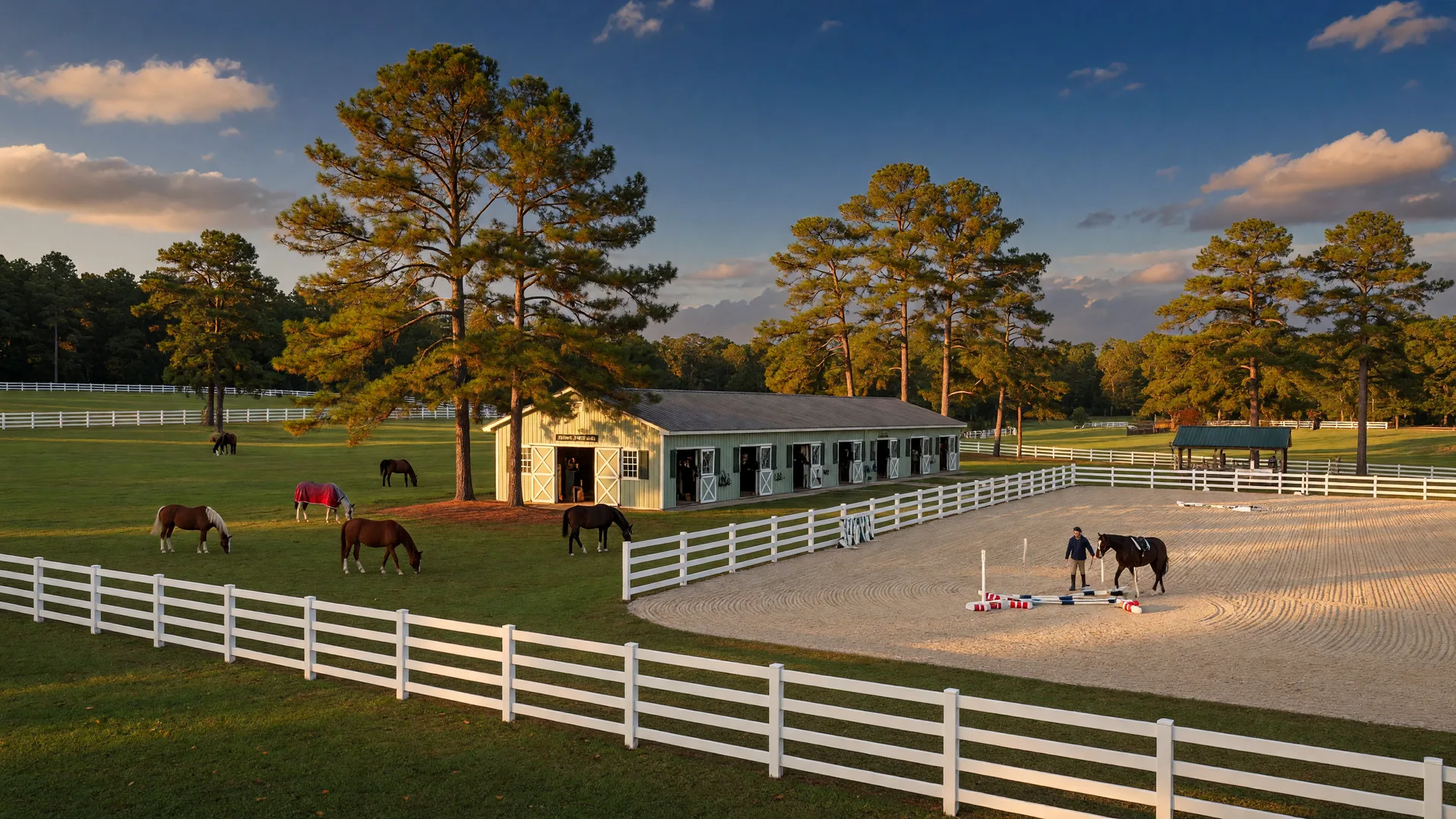
Late August in Aiken brings a shift that every horse property owner feels. The humidity drops a notch. The mornings carry a hint of cool. And the calendar fills with horse shows, polo tournaments, hunter paces, and eventing competitions that stretch from September through November. For those of us who keep horses at home, the weeks between mid-August and the first show of the season are the most critical window of the year. This is when you prepare your property for the demands of the fall competition circuit. After more than 20 years of helping horse owners find and maintain properties in Aiken, I have learned that the properties that perform best during show season are the ones whose owners planned ahead. Here is a practical guide to getting your Aiken horse property ready for the fall season.
Arena Footing: The Foundation of Fall Training
Your arena is the most used piece of infrastructure during competition season. If you are schooling for shows at Bruce's Field, Stable View, or Full Gallop Farm, your horse needs consistent, safe footing at home. The Aiken area's sandy soil is a natural advantage, but seasonal transitions still require attention. Late summer thunderstorms and early fall rains can compact the base and create uneven spots that affect your horse's gait and confidence.
Start by deep dragging your arena in both directions to break up any compaction and redistribute the footing material. Check the depth. A good sand arena should have four to six inches of loose footing over a compacted base. If you have lost material to the edges or to dust over the summer, add fresh sand or a sand-and-fiber blend before the first serious schooling session. Most equestrian supply companies in the Aiken area deliver arena sand and can recommend the right mix for your discipline.
Pay attention to drainage. Walk the arena after a rain shower and look for standing water or slow-draining patches. In Aiken's Sandhills, drainage is usually excellent, but heavy summer storms can overwhelm even the best-designed base. If you have persistent wet spots, fall is the right time to address them before the cooler weather sets in and the ground stays damp longer. For a deeper look at arena construction and footing options in the Sandhills, see my guide to arena footing in Aiken.
Barn Deep Clean and Organization
A busy show season means less time for barn maintenance. The weeks before the first fall show are the right time to give your barn a thorough deep clean. Strip all stalls down to the base, remove old bedding, sweep and hose aisles, check and repair stall mats, and evaluate the condition of stall doors, latches, and grills. A clean barn is not just about appearances. It reduces dust, improves air quality, and helps prevent respiratory issues in horses during the heavier training months ahead.
Inspect your barn's electrical system while you are at it. Fall and winter bring shorter days, which means more time using lights in the barn. Check that all fixtures are working, that bulbs are LED (they run cooler and use less energy), and that outlets, extension cords, and timers are in good condition. Motion sensors on aisle lights are a worthwhile upgrade that saves electricity and means you never walk into a dark barn. For a comprehensive approach to barn safety, see my post on barn safety and fire prevention.
Tack rooms also deserve attention. Fall is the time to clean and condition leather, organize bridles and saddles, and restock grooming supplies and first aid kits. If you are competing, you will want your tack organized and ready to pack on short notice. A well-organized tack room saves time and reduces stress on show mornings.
Pre-Show Season Barn Checklist
- Strip and reset all stalls with fresh bedding
- Inspect and repair stall doors, latches, and grills
- Check all lighting fixtures and upgrade to LED if needed
- Test automatic waterers and check for leaks
- Clean and condition all leather tack
- Restock first aid kit and check expiration dates
- Inspect fans and ventilation for the transition months
- Clean feed room and organize grain and supplements
Pasture and Paddock Preparation
Fall riding and training demand that your horses spend time turned out on good pasture. The late-summer window is the time to assess your paddocks and make any needed adjustments before the competition schedule picks up. Check fences for loose rails, broken posts, or gaps. Walk the perimeter of every paddock and repair any damage now, while you have time, rather than discovering it the morning before a show.
Evaluate your pasture quality. If your grass was stressed by the summer heat, consider a late-summer overseeding with a cool-season grass like rye or fescue to provide fall forage. Aiken's Sandhills soil benefits from soil testing every two to three years. If you have not tested recently, fall is a good time to take samples and adjust your fertilization program. Proper pasture health in the fall directly supports your horses' nutrition during the heavier training months.
Cross fencing should also be checked. If you practice rotational grazing, make sure dividing fences are secure and gates operate smoothly. Good rotational grazing during the fall extends your pasture's productivity and reduces your hay bill. For more on managing pastures in the Sandhills, see my guide to pasture management in Aiken.
Hay and Feed Supply
Fall is the season when hay prices rise and availability can tighten, especially if there was a dry summer. The smart move is to stock up before the rush. Know your winter hay needs and order early. A single horse eats roughly three to four tons of hay per year, and the fall and winter months are when you rely on it most. If you have limited storage, at minimum secure enough for the first half of the season.
Hay storage conditions matter. Make sure your hay barn or storage area is dry, well-ventilated, and protected from ground moisture. Hay that sits on damp ground can develop mold, which poses a serious respiratory risk to horses. If you stack hay, leave space between rows for air circulation. A well-organized hay storage system saves money and keeps your horses healthy through the season.
Water Systems and Infrastructure
Late summer is the right time to inspect every water source on your property. Automatic waterers in paddocks and stalls should be checked for leaks, mineral buildup, and proper float valve function. Water troughs need to be scrubbed and disinfected before the cooler weather makes the job less pleasant. If you rely on well water, test the flow rate and have the water tested for quality. A drop in well output during the summer dry months can signal a problem that will worsen in the winter if left unaddressed.
For properties with rainwater collection systems, check the tanks, gutters, and downspouts to make sure they are clear of debris from summer storms. The fall rains are your last chance to fill your tanks before winter, so you want your collection system working at peak efficiency. For a detailed look at water systems on Aiken horse properties, see my guide to water, wells, and septic.
Equipment and Trailer Readiness
Nothing derails a show weekend faster than a trailer that will not start or equipment that breaks on the road. Fall is the time to service your horse trailer: check tires (including the spare), inspect brakes and lights, test the hitch and safety chains, and make sure the floor is sound. Trailer floors, especially in older models, can rot from the bottom up and are not always visible from above. If you have any doubt about your trailer floor's condition, have a professional inspect it before you load horses.
Tractor and utility vehicle maintenance also deserves attention before the busy season. Change the oil, check fluid levels, inspect belts and hoses, and make sure the mower, arena drag, and hay forks are in working order. The last thing you want is to discover a broken hydraulic line on a Saturday morning when you are trying to drag the arena before a schooling session.
Do not overlook the small things: first aid kits for the trailer, a spare halter and lead rope, emergency contact numbers for your equine vet and farrier, and a copy of your horse's Coggins and health papers. A well-stocked trailer with current paperwork saves panic at the show office.
Veterinary and Farrier Coordination
The weeks before show season are the busiest time for equine veterinarians and farriers across Aiken. Schedule your pre-season appointments early. Your horse should have a dental exam and floating if needed, current vaccinations, a Coggins test, and a general wellness check before the competition schedule begins. If your horse has been on summer turnout with less consistent work, a pre-season soundness evaluation can catch issues before they become problems.
Farrier schedules also tighten during show season. Book your farrier appointment at least two to three weeks before your first show so your horse has fresh, balanced shoes with time to adjust before competing. If you are showing regularly, discuss a shoeing schedule that keeps your horse on a consistent cycle throughout the fall. The Aiken area is fortunate to have an excellent network of equine veterinarians and skilled farriers. If you are new to the community, see my guide to equine veterinary services in Aiken and the equestrian services directory for local recommendations.
Setting Up for the Fall Calendar
Aiken's fall competition season is one of the richest in the Southeast. The Aiken Fall Festival hunter/jumper shows at Bruce's Field run through September and October. The Stable View Oktoberfest Horse Trials in October draw event riders from across the country. Sunday polo at Whitney Field and New Bridge runs through early November. And the Aiken Fall Steeplechase in November closes the season with the National Steeplechase Association's final race of the year.
With your property prepared and your horses ready, you can enjoy the season without scrambling. Aiken's equestrian community comes alive in the fall, and the properties that shine brightest are the ones whose owners took the time to prepare in the quiet weeks of late summer.
Let me help you find a horse property built for competition.
Whether you are looking for a property with a show-ready arena, direct trail access to Hitchcock Woods, or proximity to Bruce's Field and the region's competition venues, I can help you find the right fit. Aiken is one of the best places in the country to keep and compete horses, and the right property makes all the difference.
Schedule a Consultation