
Sustainable Horsekeeping in Aiken's Sandhills: Eco-Friendly Features for Your Horse Property
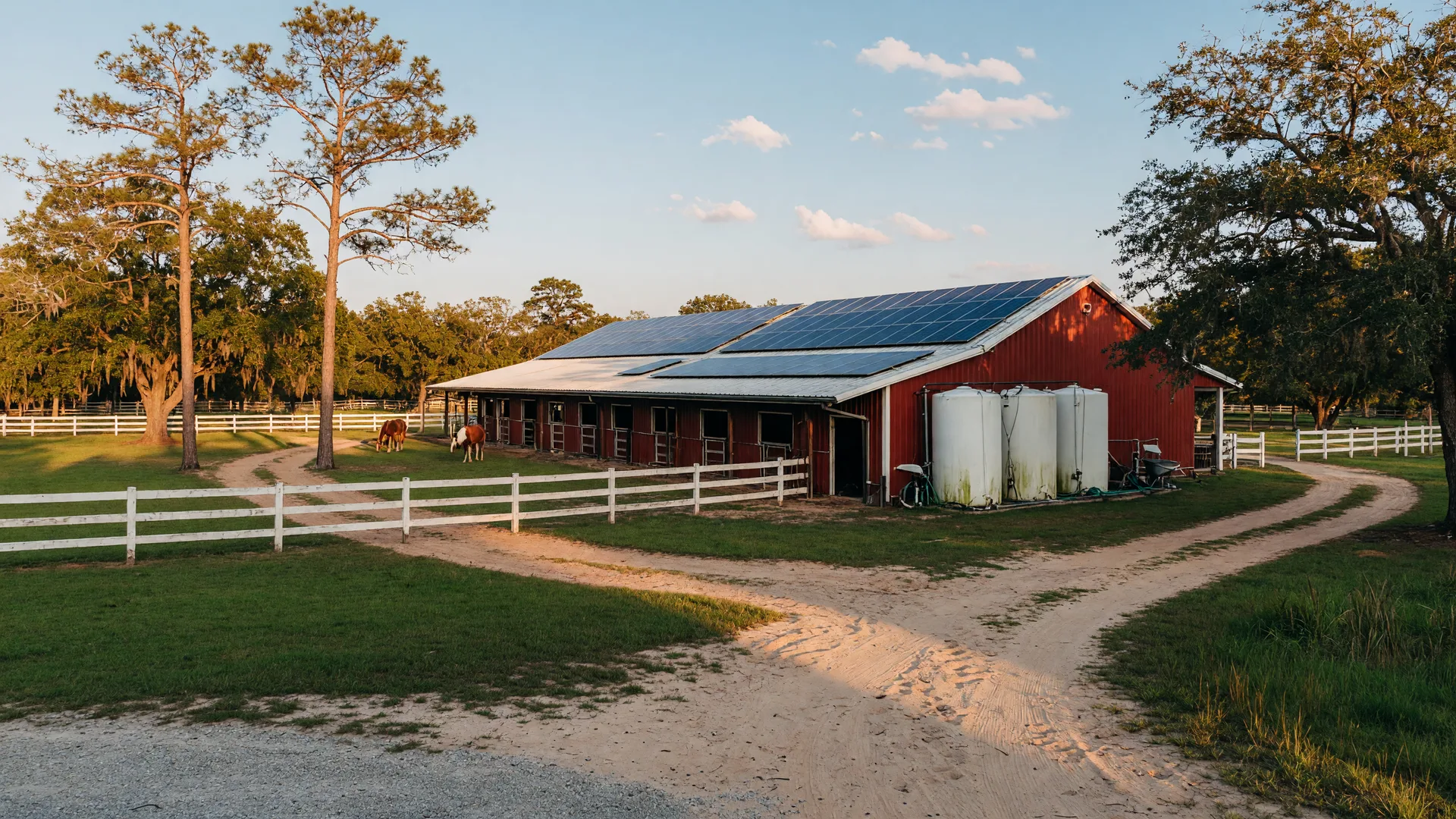
When I first started showing horse properties in Aiken more than 20 years ago, the term "sustainable horsekeeping" was not something you heard very often. Buyers wanted good barns, solid fencing, and enough acreage. Today, that is still true, but increasingly I hear a new set of questions from buyers: Can I put solar on the barn roof? Is the property set up for rainwater collection? How is the manure managed? More and more equestrian buyers are thinking not just about what a property offers today, but about how it will perform over the long term. And in Aiken's unique Sandhills environment, sustainable features are not just an environmental choice. They are a practical one.
Why Sustainable Horsekeeping Matters in the Sandhills
The Carolina Sandhills geology that makes Aiken such a remarkable place for horses also creates specific challenges for property owners. The sandy, fast-draining soil is excellent for footing and pasture drainage, but it also means that nutrients, fertilizers, and manure runoff move through the ground more quickly than they would in heavier clay soils. Water conservation matters because many horse properties rely on private wells. And the hot, humid summers mean that barn energy use for fans, lights, and water pumps adds up quickly.
Sustainable horsekeeping is not about grand gestures. It is about making smart, incremental choices that reduce your property's resource consumption, lower your operating costs, and create a healthier environment for your horses. Many of these features also add long-term value to a property and appeal to the growing number of buyers who prioritize responsible land stewardship.
Solar Power for Barns and Outbuildings
One of the most impactful sustainable upgrades for an Aiken horse property is solar power. The Carolinas receive ample sunlight year-round, and barn roofs in particular make excellent candidates for solar panel installation. They are typically south-facing, unobstructed by trees, and built with the structural capacity to handle the additional load.
A solar-powered barn can run lights, ceiling fans, automatic waterers, electric fencing, and security cameras with little to no grid electricity. In many cases, solar systems can offset the entire electrical load of a barn and even generate credits through net metering programs. For properties that also include a residence, a larger system can cover the whole estate.
When I work with buyers evaluating horse properties, I always note whether the barn roof has good solar exposure and whether the electrical panel has capacity for future solar installation. Even if a property does not have panels today, a well-oriented barn roof with room on the panel makes solar a realistic future upgrade.
Solar in the Carolinas
South Carolina and Georgia both offer net metering policies, and the federal Investment Tax Credit (ITC) currently covers 30% of solar installation costs. Many local installers serve the Aiken-Augusta area. A typical barn solar installation can pay for itself within five to eight years depending on system size and energy usage.
Rainwater Collection and Water Conservation
South Carolina receives an average of nearly 50 inches of rainfall each year. That is a tremendous resource for horse property owners, especially those relying on well water. Rainwater harvesting systems capture runoff from barn and shed roofs and store it in tanks for later use. The water is excellent for irrigation, paddock watering, washing horses and equipment, and dust control on arenas and driveways.
For horse properties with large metal barn roofs, a well-designed rainwater collection system can capture thousands of gallons from a single storm. A typical 2,400-square-foot barn roof can collect roughly 1,500 gallons of water from one inch of rain. Over the course of Aiken's rainy season, that adds up to a meaningful supplement to your well or municipal supply.
Rainwater harvesting is legal and even encouraged in South Carolina. The state has no restrictions on residential or agricultural rainwater collection. I have worked with buyers who specifically sought out properties with existing collection systems, particularly those who keep horses on dry lots and need reliable water for troughs without straining their well.
Composting Systems for Manure Management
One horse produces roughly 50 pounds of manure per day. On a multi-horse property, that adds up fast. Proper manure management is not just about odor and flies. It is about nutrient management, groundwater protection, and making use of a valuable resource.
Composting transforms manure and bedding into a stable, odor-free soil amendment that can be used on pastures, gardens, and landscaping. The key is proper site selection, adequate carbon-to-nitrogen ratio (balanced by adding stall bedding or straw), and regular turning. A well-maintained compost pile reaches internal temperatures high enough to kill weed seeds and parasite eggs, making it safe for use on horse pastures.
When I show properties, I look at where the manure is currently stored and whether the site has good drainage, convenient access for tractor work, and separation from water sources and property lines. A well-designed composting area with a concrete or gravel base, three-sided containment, and a nearby water source is a significant asset. Some Aiken properties now include dedicated compost bays as part of their barn infrastructure.
Rotational Grazing and Pasture Health
Rotational grazing is one of the simplest and most effective sustainable practices for horse properties. The concept is straightforward: divide your pasture into smaller paddocks and rotate horses through them on a schedule, allowing each paddock to rest and regrow between grazing periods. This prevents overgrazing, reduces soil compaction, breaks parasite cycles, and encourages deeper root growth in pasture grasses.
In Aiken's Sandhills, where soil is sandy and organic matter can be low, rotational grazing is especially beneficial. The rest periods allow grass species like coastal Bermuda and bahiagrass to recover before being grazed again. Many of the properties I list in the Horse District and along the Wagener Road corridor already have cross-fencing in place for rotation. If a property does not, it is a relatively straightforward addition that pays dividends in pasture quality.
Energy-Efficient Barn Design and Lighting
Barn lighting may not be the first thing that comes to mind when you think about sustainable horsekeeping, but it makes a real difference. Many older barns in Aiken still use fluorescent or incandescent fixtures that draw significant power and generate heat. Switching to LED fixtures cuts energy use by 75% or more, produces less heat (a meaningful benefit in Aiken's summer months), and provides better, more even light in stalls and aisles.
Motion sensors and timer switches are another simple upgrade. Aisles, tack rooms, and feed rooms are often left lit by accident. Motion-activated lighting ensures that lights are on only when someone is present. In larger facilities, occupancy sensors can save hundreds of dollars per year in electricity costs.
Ceiling fans with energy-efficient DC motors are another worthwhile investment. They improve barn ventilation, reduce heat stress on horses, and discourage flies. When paired with solar power, a barn can run its entire ventilation and lighting system off the grid for much of the year.
Native Landscaping and Buffer Zones
The native plants of the Sandhills are naturally adapted to the region's sandy soil, heat, and periodic drought. Incorporating native grasses, shrubs, and trees into your property's landscaping reduces the need for irrigation, fertilizer, and pesticides. Native species also provide habitat for pollinators and beneficial insects that help control pests naturally.
Vegetated buffer zones along streams, ponds, and property lines serve an important function in sustainable horsekeeping. They filter runoff, stabilize banks, and create a visual and physical separation between paddocks and waterways. In areas with sandy soil like Aiken's, buffers are especially effective at trapping sediment and nutrients before they reach drainage channels.
Longleaf pines, wiregrass, and native warm-season grasses are excellent choices for Aiken horse properties. They require minimal water once established, support local wildlife, and contribute to the distinctive Sandhills landscape that makes this area so special.
Natural Pest Control and Fly Management
Fly management is a perennial concern on horse properties, and sustainable approaches are often more effective in the long run than chemical sprays. Beneficial insects, including parasitic wasps that target fly larvae, can be released regularly throughout the warm months to keep fly populations in check. These tiny wasps are species-specific to nuisance flies and pose no threat to horses, humans, or pets.
Proper manure management, as discussed above, is the foundation of any natural fly control program. When combined with fly predators, strategic use of fly traps, and good barn sanitation practices, many Aiken horse property owners find they can reduce or eliminate the need for chemical fly sprays and insecticides.
What This Means for Aiken Horse Property Buyers
Sustainable features are not just about being environmentally conscious. They are about making a horse property more functional, more cost-effective, and more resilient over time. A well-designed composting system saves you money on fertilizer. Solar panels reduce your monthly electric bill. Rainwater collection gives you a backup water source during dry spells. Rotational grazing keeps your pastures productive year after year.
When I help buyers evaluate horse properties in Aiken, I encourage them to look beyond the obvious features and consider the infrastructure that will support their long-term goals. Does the barn face south for good solar exposure? Is there a good location for a composting area? Is the pasture already cross-fenced for rotation? These details may not be the first thing you notice on a showing, but they make a meaningful difference in your day-to-day experience as a horse property owner.
And for sellers, investing in sustainable infrastructure can set your property apart in a competitive market. Buyers who are serious about horsekeeping recognize the value of a property that is built to last.
Let me help you find a property that fits your values.
Whether you are buying or selling, I can help you evaluate horse properties through the lens of long-term sustainability, functionality, and value. Aiken is a special place, and the right property makes all the difference.
Schedule a Consultation