
Farrier Care on an Aiken Horse Property: Hoof Health, Sandy Soil, and Seasonal Shoeing in the Sandhills
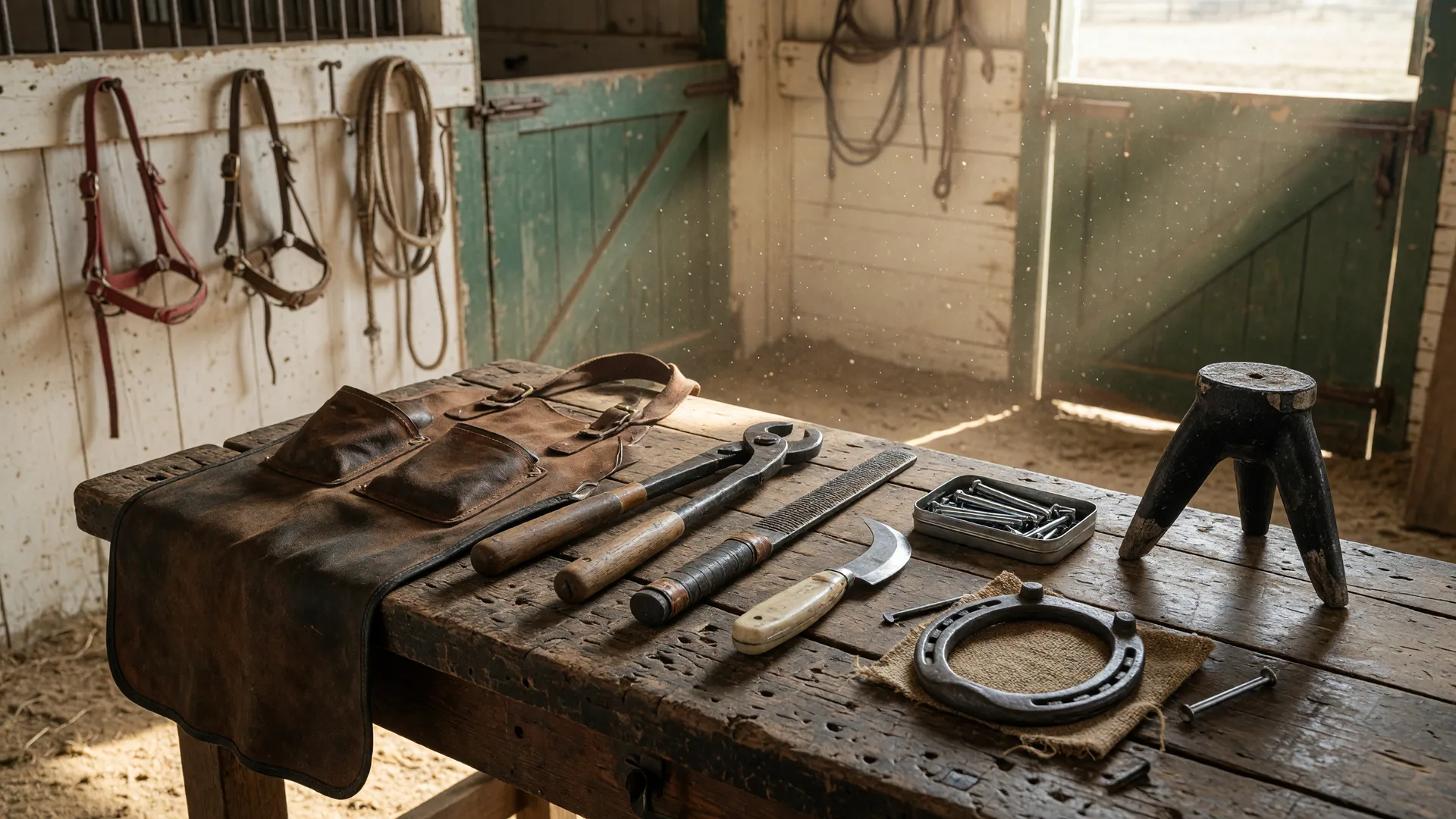
Every serious Aiken horse property runs on a simple rhythm: the farrier comes every six to eight weeks, without fail, and that appointment is as much a part of the farm's calendar as feeding or turnout. The sandy, well-draining soils that make Aiken so easy on horses' legs are precisely what make consistent hoof care non-negotiable, because the same sand that cushions a gallop also wears a hoof, holds moisture against the frog, and hides trouble until a shoe spends the night. This guide covers how the Sandhills treat a hoof, the trim and shoe schedule that keeps horses sound, the seasonal demands of the Aiken show and winter calendar, and the farm features that make the farrier's visit effortless, whether you are a new owner or an out-of-town buyer shopping for the right property.
Why Aiken's Sands Are Both the Best and the Hardest Thing for Hooves
Aiken earned the nickname Horse Capital of the South because its sandy, well-draining loam is one of the best natural footings anywhere. It does not turn to heavy gumbo after rain like the clay country a few counties over, and the drainage keeps paddocks rideable most of the year. That same sand is abrasive. Hooves moving over sandy ground wear faster than hooves on soft clay or grass, especially at the toe and along the sole, and a rock-hard, drought-baked paddock can act like sandpaper against a wall that is already working to grow out.
Then add humidity. Aiken sits in a climate that swings hard between hot, wet spells and dry haul: high summer brings regular afternoon storms, and every heavy rain softens the hoof capsule while muddy gateways soak the sole. The combination of wet turns is the classic recipe for the three problems every horse owner here learns by name: thrush, a bacterial infection of the frog that thrives on the crud trapped in a moist foot; white line disease, an infection that starts at the ground surface of the hoof wall and is far more common in humid, wet environments; and sole bruising, which the abrasive sand makes more likely on hard, packed surfaces. None of these are mysterious or inevitable, but all of them are managed the same way: keep the feet clean and dry, keep the trim schedule honest, and don't let the daily chore slip in the busy months.
The Six-to-Eight-Week Calendar, and Where It Adjusts
The standard farrier interval for a horse in regular work is every six to eight weeks. Horses in regular work and shod on all four will often need a visit at the tighter end, sometimes closer to four or five weeks during peak season, because shoes wear and the foot grows. Horses turned out barefoot with light or no work can stretch to ten or twelve weeks, and many mature pasture horses do fine going into winter on that same relaxed pace, though they still need trims to keep the foot balanced. Here is the Aiken wrinkle: hooves grow fastest in the warm, humid growing months, and that is exactly when the summer calendar fills with the early-morning turnouts and the schedule pushes against the heat.
The bigger adjustment comes with the seasonal rhythm of horse country. Aiken's winter season draws riders, trainers, and horses from the Northeast and the Midwest for months of showing, eventing, and polo, and that is when the farrier books look like a national tour schedule. If you are new here or buying before you move, the advice to start the relationship early applies now: reach out, ask about scheduling, and get on the calendar weeks before you actually need the first visit. The farrier who comes to the farm on a Tuesday knows this property, its paddocks, and its mud corners better than anyone who walks in cold, and that continuity is the single biggest factor in steady, sound feet.
Between Visits: The Daily Checks That Matter in the Sandhills
The farrier gives the foot its balance; the owner gives it its hygiene. On an Aiken property, that means a real pick of the feet at least once a day, more often when the paddocks are mucky. Look for the two things that send calls: a strong, sweet-rotten smell and black crud deep in the clefts of the frog, which is thrush announcing itself; and heat in the wall or a horse that goes suddenly lame in a hoof, which after a wet week usually means an abscess looking for a way out. If a horse is suddenly short on a foot, call your veterinarian first, because you will want both vet and farrier to see it early.
Two more Aiken-specific checks are worth the thirty seconds. First, sole depth under the pads: sandy, packed paddocks can wear a sole thin fast, and if the horse starts landing toe-first or flinching on gravel, the farrier needs to know before the next visit, not at it. Second, watch the cracks in the season: when an unusually dry stretch bakes the ground hard and a horse gallops and slides, hoof wall cracks at the heel and toe are common, and the earlier your farrier fills them, the cheaper the fix is. The horses living barefoot on deep sand often thrive here, but they need the schedule kept honestly; barefoot is not a no-trim strategy, it is a two-pronged management routine.
What a Farrier-Friendly Horse Property Looks Like
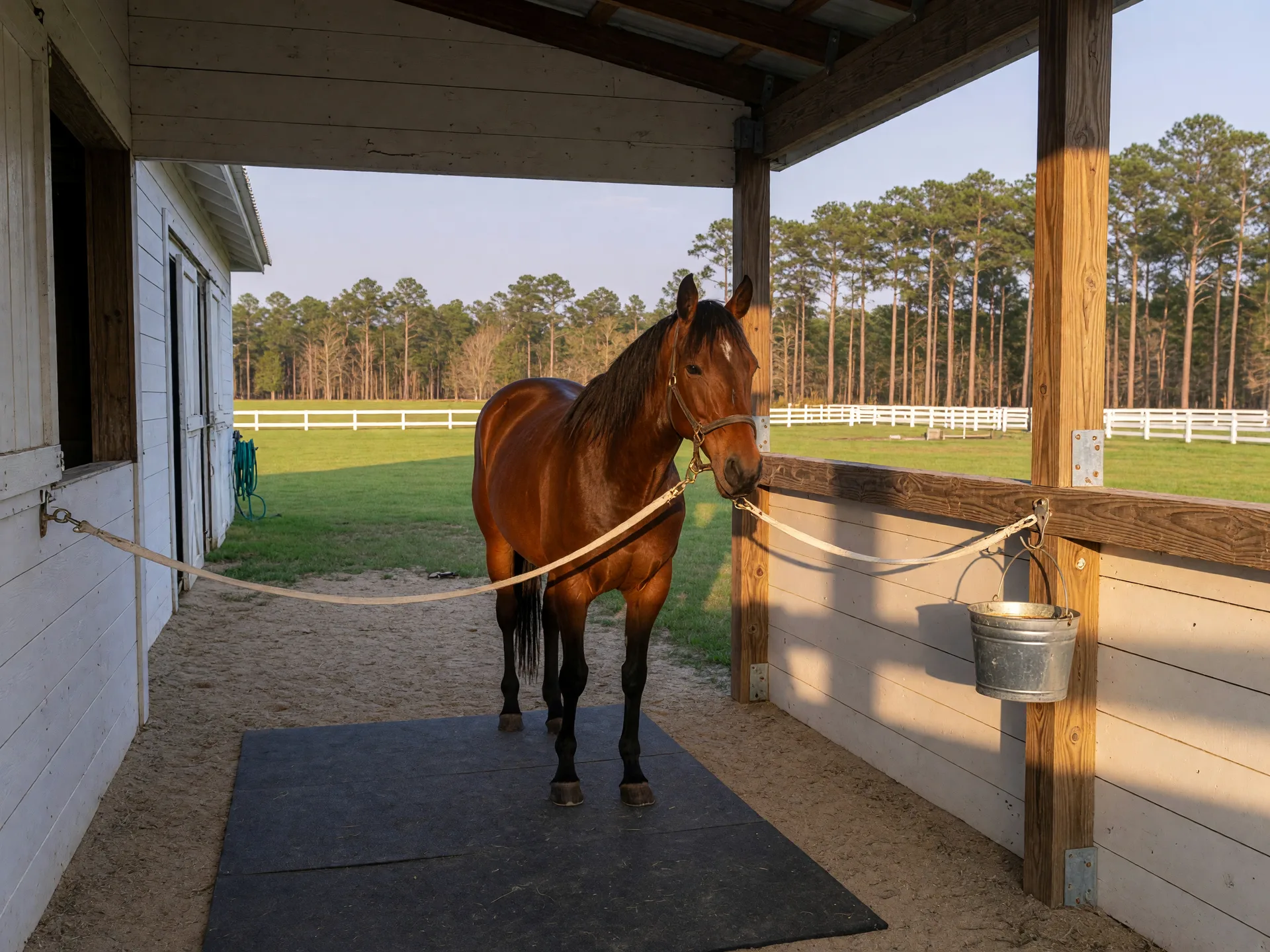
When buyers meet me to look at farms, I quietly run a farrier test on every barn: can a professional (who picks up a hoof hammer that travels hundreds of pounds of tools) get good work done here in safety and comfort? The checklist is short and concrete. A level, dry, covered tying area, ideally with a rubber mat or good packed sand underfoot, means the farrier can focus on the foot instead of worrying that the horse will slip. Decent light over the workstation matters more than anyone expects. An accessible power outlet lets the farrier run a grinder or a light rather than asking the barn to rig an extension cord. And the footing of the path from the trailer to the tying bay should not turn into a mud pit between rains; a French drain along the gate, a little gravel, or a well-drained lane turns a horrible Monday visit into a nothing.
The details matter too. Barns where the stall opens onto a dry pad, where the wash bay drains, and where the paddocks hold their ground through a rainy week, all subtract from the daily wear that shows up in the foot six weeks later. And for buyers, the location of the property relative to the reach of the farrier community matters in a different way: a farm that sits on a farrier's regular route is far easier to schedule than one that asks them to turn half a morning around a single visit. I tell clients to ask, at the first farm visit, which farrier cares for the horses and how long the drive is; the answer tells you as much about the property as the footing does.
The Farrier-Ready Property Checklist
- A level, dry, covered tying bay with rubber mat or cushioned sand under the horse
- Good overhead and task light over the tying station
- A safe power outlet for a grinder or work light, away from water
- Dry, non-slip footing on the path from the farrier's trailer to the barn
- A wash bay that drains, not collects, standing water
- Paddock and gateways that don't turn into wallow in a rain week
- A quiet, reliable place to hold the horse: cross-ties, halter, and a calm aisle
- Trim and shoeing records kept for each horse, shared with the farrier
- A registered and reachable farrier on the property's team, plus a backup
- Proximity to the farrier community, so scheduling stays easy through the busy winter season
Shoeing, Barefoot, and the Aiken Seasons
The Aiken calendar keeps most horses on a shoes-on schedule: the winter season, the spring steeplechase and show circuit, and the long summer of polo and evening rides all ask a lot of a foot. Horses in steady work here are usually shod on all four, with plain or studded shoes depending on the discipline, and the farrier manages heel angle and balance with a clear eye on the ground underfoot. Horses that are mostly pasture or trail-savvy often do beautifully barefoot, with the six-to-twelve-week trim adapted to the foot and the workload. The pattern most owners settle into is simple: show-season shoes on for the high-winter months, shoes off for the summer pasture months, and adjustments at every visit. What matters is the decision, and the calendar, and it is made case by case with the person who knows the horse's foot best.
If you are buying with a performance horse in mind, ask how the property's footing serves the horse's feet at the same time as the rider's back: a well-drained arena of the right mix will be easier on both. The arena construction and footing guide and the horse property features buyer's guide cover what separates a good shop in a field; this guide's own sheet is the daily respect between owner and hoof.
Putting Hoof Health on the Farm's Calendar
Hoof care is water, shelter, and schedule together. The year-round maintenance guide covers the drainage and paddock basics that keep feet drier between visits, the summer care guide tackles sand and warmth, and the Aiken equestrian services guide has the local resources, along with the services directory page.
For buyers, the farrier test belongs right beside the water test and the barn inspection. A property that stands in a dry, covered tying bay with a light on a switched circuit, that drains its gateways, and that has a long-standing relationship with a region's professional, has usually been run by someone who thought ahead, and a farm that runs that way is a farm you can count on through a December and a July. Add it to the buyer's checklist the day you walk a property.
The Bottom Line: The Six-to-Eight-Week Beat
Aiken's sand is the simplest, most beautiful dirt in the East, and it asks exact consistency in return. Keep the farrier on the six-to-eight-week rhythm, keep a dry place for the work, keep the feet picked and the paddocks drained, and the horses will stay steady through any weather, on any shoe. That rhythm, as regular as feeding, is a large part of why the Horse Capital of the South stays exactly that.
Let me help you find an Aiken horse property that is farrier-friendly in every season.
With more than 20 years across the CSRA, I know which barns are set up for the corners, the muddy week spells, and the horses that live here. As the First AI-Certified Realtor in the area, I combine local, sand-and-footing knowledge with practical guidance for buying, selling, and living with horses in Aiken, North Augusta, and Augusta.
Schedule a Consultation