
Trail Riding Safety and Etiquette in Aiken, SC: A Guide to Sharing the Sandhills with Courtesy and Confidence
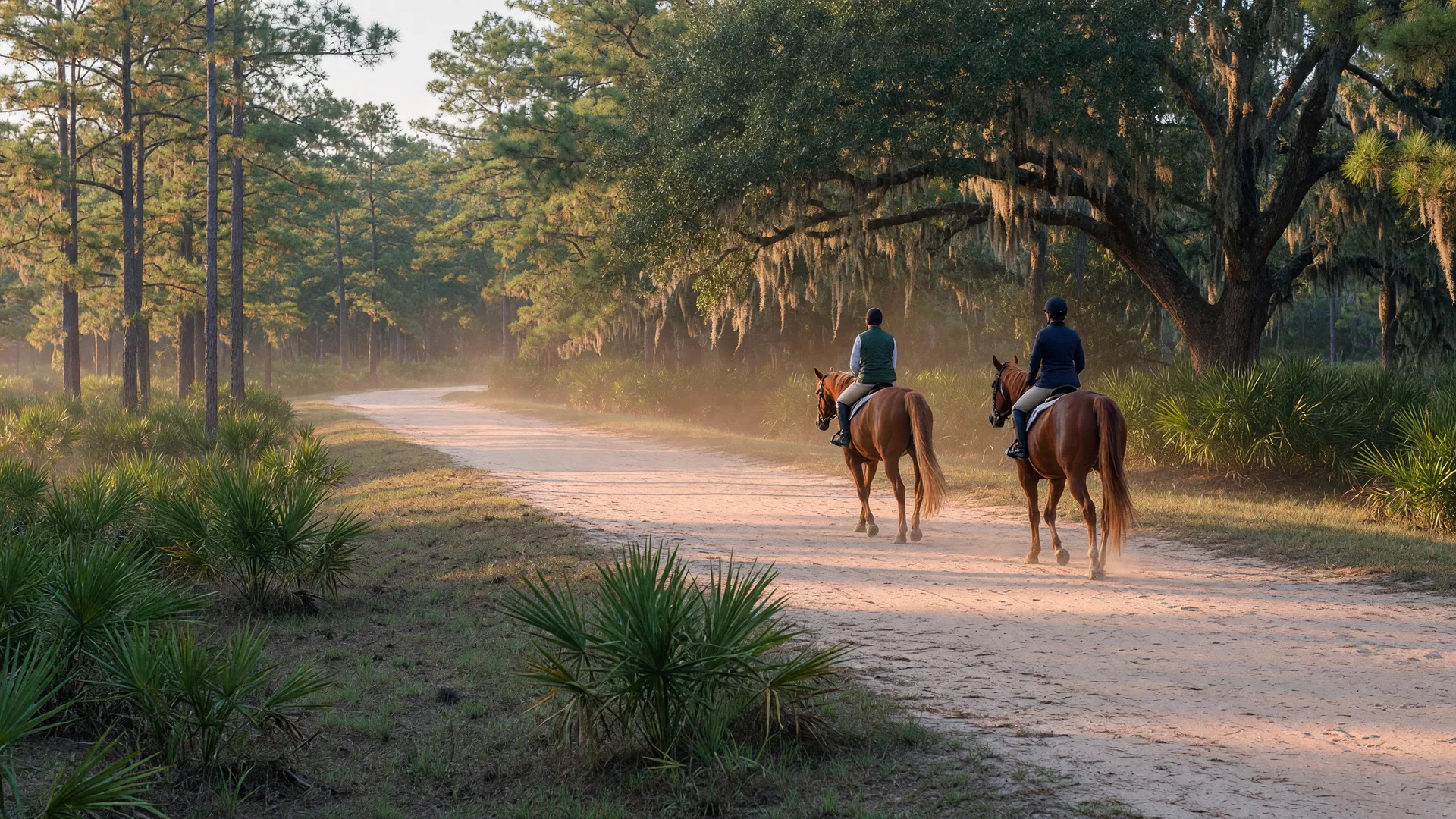
Aiken is famous for its trails, and for good reason. The roughly 70 miles of riding paths through Hitchcock Woods, the sandy carriage roads, and the growing network of trails across the Sandhills give horse people some of the finest trail riding in the Southeast. But great trail country only stays great when everyone who uses it rides with courtesy and safety in mind. This guide walks through the etiquette and safety practices that keep Aiken's trails enjoyable, passable, and welcoming for riders, walkers, runners, and carriage drivers alike. As a Realtor who has spent more than 20 years in Aiken horse country, I have watched how these simple courtesies hold the whole community together.
Why Trail Etiquette Matters in Aiken
Aiken's trails are shared spaces. In a single morning on the Hitchcock Woods trails, you might meet a hunter, a rider training a young horse, a family walking a dog, a carriage driver, and a trail runner. All of them have a right to enjoy the woods, and all of them depend on one another to read the trail and give way sensibly. When everyone follows a few well-understood rules, the trails feel safe and relaxed. When they do not, even a friendly encounter can turn into a spooking horse or an argument nobody wanted.
The guiding principle used across Aiken and by the South Carolina Horse Council is simple: courtesy is the best safety on the trail. Most trail incidents are preventable, and nearly all of them come down to speed, distance, and communication. If you ride the Aiken trails long enough, you will develop an instinct for these things. Here is how to build that instinct faster and avoid the common mistakes.
Horses Have the Right of Way
The single most important rule on Aiken's trails is that horses have the right of way. Runners and pedestrians are expected to slow to a walk, stand in a visible place beside the trail, and wait for a horse and rider, or a carriage, to pass. This is not about precedence; it is about safety. A horse can startle at an object or a person appearing suddenly from a hiding spot, so the safest thing a person on foot can do is make themselves easy to see and let the horse come through calmly.
As a rider, you can help by acknowledging walkers who wait for you. A friendly wave as you pass keeps the experience pleasant and encourages good behavior the next time. If a cyclist or runner approaches at speed, slow your own horse to a walk and, if needed, step calmly to the side of the trail. You cannot control how someone else behaves, but you can control how your horse reacts, and a quiet, steady horse is the best defense on any shared trail.
Stay in Complete Control of Your Horse
The formal guidelines for equestrian use of Hitchcock Woods begin with a simple requirement: riders must be in complete control of their horses at all times. That means riding only a horse you can reliably stop, steer, and steady, on a trail where you know the footing. Trail riding is different from arena work. Wildlife, bicycles, leaf blowers, other horses, and sudden gusts of wind all appear without warning, and you need a horse that can handle surprises without bolting.
If you are riding a young or green horse, or one that is fresh after a few days off, consider doing a short lunge or a few minutes in your arena first to take the edge off. A horse that has already moved a little is far easier to keep settled on the trail. And always ride with a plan for what you will do if your horse does start. Leave your hands soft, sit deep, and practice an emergency stop long before you need it, in a safe, open space.
Respect the Footing and Ride Only on Existing Trails
Aiken's sandy soil drains beautifully, and that is precisely why it has been a horse mecca for more than a century. But sand is also a fragile surface. When enough hooves churn the same stretch of deep sand, or pass over soft footing after rain, it cuts the trail and damages it for everyone. Good trail etiquette means staying on established trails, reading the conditions, and finding an alternate route rather than pushing through a stretch that is too soft or too cut up at that moment.
The sandy trails of the Carolina Sandhills can also shift with the seasons. After a dry spell, the footing can become deep and, at speed, hot on a horse's legs. After a heavy rain, puddles and soft spots appear where dry trails were hard a week earlier. Part of riding Aiken's wider trail network responsibly is knowing when to turn back and ride another day.
When You Meet Another Rider: Slow, Walk, and Pass Politely
Meeting another rider on the trail is the most common encounter you will have, and it is easy to get right. When you see another horse approaching, stop or drop your horse to a walk until the other rider has passed. Give each other plenty of room, and keep your horse facing the traffic rather than letting it spin. A calm pass sets the tone for the rest of the ride and spares both horses from unnecessary excitement.
A few practical details make passing smoother. If you are approaching a horse from behind, always announce yourself from a distance with a friendly hello before you get close, so you do not startle horse or rider. If you are leading a group, keep one horse length between horses, and hold a sensible pace. For large groups, Aiken's guidelines ask that groups of more than ten riders follow the trail organization's group rules, which keeps big group rides safe and keeps the trail clear for others.
Sharing the Trail with Carriage Drivers and Mixed Use
Aiken is one of the few places in the country where carriage driving is a daily part of trail life. Carriages are welcome in the woods, and drivers are expected to stay on the wider main sandy roads where they can pass safely. When you meet a carriage, treat it like any other horse and give it generous room. A wheeled vehicle can maneuver less easily than a single horse, so the burden of giving clear space falls to the rider on horseback whenever possible.
Some riders do not like to pass a carriage closely, and that is a fair instinct. If you are unsure, slow to a walk, wait for the driver to acknowledge you, and then pass on the widest section of trail. Mixed use also means sharing the newer trail sections with mountain bikers and hikers, where the same horses-have-priority principle applies.
Dogs on the Trail: Leash Up and Give Horses Room
Few things spook a horse faster than an unannounced dog darting across its path. In Aiken's woods, dogs must stay leashed and fully under control, and they should be handled with extra caution around horses. If you ride with a dog, keep it close beside you or well behind your horse, never running free ahead where it can collide with an oncoming mount. If you are on foot with a dog and a horse approaches, move to a visible spot beside the trail, keep the dog at your side, and wait for the horse to pass.
The same courtesy extends to giving horses plenty of room when passing on foot. It is easy to forget how large and how fast a moving horse really is. Treat every passing horse like a large animal that can startle, because that is exactly what it is, and both you and the rider will stay safer for it.
Wear Appropriate Gear, Especially Head Protection
Trail riding is relaxed, and it is easy to leave the helmet behind. Aiken's guidelines recommend that all riders wear proper protective headgear whenever they are mounted, and the local horse show tradition famously requires ASTM-approved hard hats. A helmet is one of the least expensive and most important investments you can make, and it protects you precisely on the day you most need it. Carry a phone, tell someone your planned route, and carry water for yourself and a snack for your horse on longer rides.
Check your tack before every ride. A loose cinch or a failing rein is one of the easiest things in the world to miss at the barn and one of the most dangerous to find out about at a trot. A quick pre-ride check of girth, reins, bridle, and hoof boots takes less than a minute and prevents the vast majority of equipment-related trail incidents.
Hunting Country: Ride with Awareness of the Season
The woods around Aiken are active hunting country, and at certain times of the year you may encounter hounds, hunt staff, or a field of mounted riders on a formal meet. This is part of the charm and the heritage of the area, a tradition you can read more about in our guide to fox hunting in Aiken. If you meet the hunt, give the field and the hounds a wide berth, move quietly off to the side, and hold your horse still as they pass. Hounds have the run of the country during a meet, and a considerate rider simply steps aside and enjoys the spectacle.
Because seasons and hunting schedules shift, it always pays to check local notices and ride with your senses open. When you see or hear hounds working, slow down, stay out of their line, and let the staff guide the situation. This is a case where the courtesy of one rider protects an entire group of hounds, horses, and people.
Weather, Footing, and Knowing When to Ride Another Day
The best trail riders in Aiken are also the best judges of conditions. Aiken summers are hot and humid, so early morning is the classic time to ride during the warm months, a rhythm we cover in our guide to riding through the seasons. In the summer, carry water for your horse, watch for signs of heat stress, and shorten the ride when the humidity climbs. During stretches of heavy rain, respect trails that have become too soft and choose firmer footing instead of cutting a fresh path through fragile ground.
There is no shame in turning around. A trail that looked perfect at the start can change after a midday storm, and a ride that ends a little early protects your horse's legs and the surface everyone shares. The people who love the Aiken trails most are the ones who treat them with this kind of long-term care, and the trails repay them with years of dependable riding.
A Quick Trail Etiquette Checklist
- Ride only horses you can stop, steer, and steady in any situation
- Give horses right of way over runners, bikers, and walkers, and acknowledge them as you pass
- Slow to a walk whenever you meet another horse, and give it generous room
- Stay on established trails and find alternate routes when the footing is too soft or too cut up
- Keep dogs leashed and under control, and give horses plenty of space
- Announce yourself from a distance before passing a horse from behind
- Wear a helmet, carry a phone, and tell someone your route and return time
- Step aside quietly for carriages, hounds, and hunt field riders
- Check your tack before every ride, and be ready to turn back when the weather turns
Riding Well Keeps Aiken Horse Country Great
A great trail system is built on great trail manners. Every time a rider slows for a walker, leashes a dog, stays off the soft footing, or acknowledges a carriage driver, they are making the small investment that keeps Aiken's equestrian community strong. It is part of what makes this place the destination horse country it is, and part of why people who move here for the horses so rarely leave.
If you are new to the area or considering buying an Aiken horse property, the trails and the community around them are a big part of the decision. Whether you are looking for a property that backs up to the network around the woods or one close to the event and competition calendar, I know the neighborhoods and the infrastructure that make a great home for you and your horses. Trail access, arena setup, and fencing all factor into which property is right for you, and I am glad to help you weigh them.
Let me help you find a horse property with great trail access.
From properties near the woods and the wider trail network to farms with arenas and pastures of their own, I can help you find the right fit. With more than 20 years in the CSRA, I know the neighborhoods, the equestrian infrastructure, and the services that make Aiken work for horse owners.
Schedule a Consultation