
Winter in Aiken Horse Country: What Runs December Through March
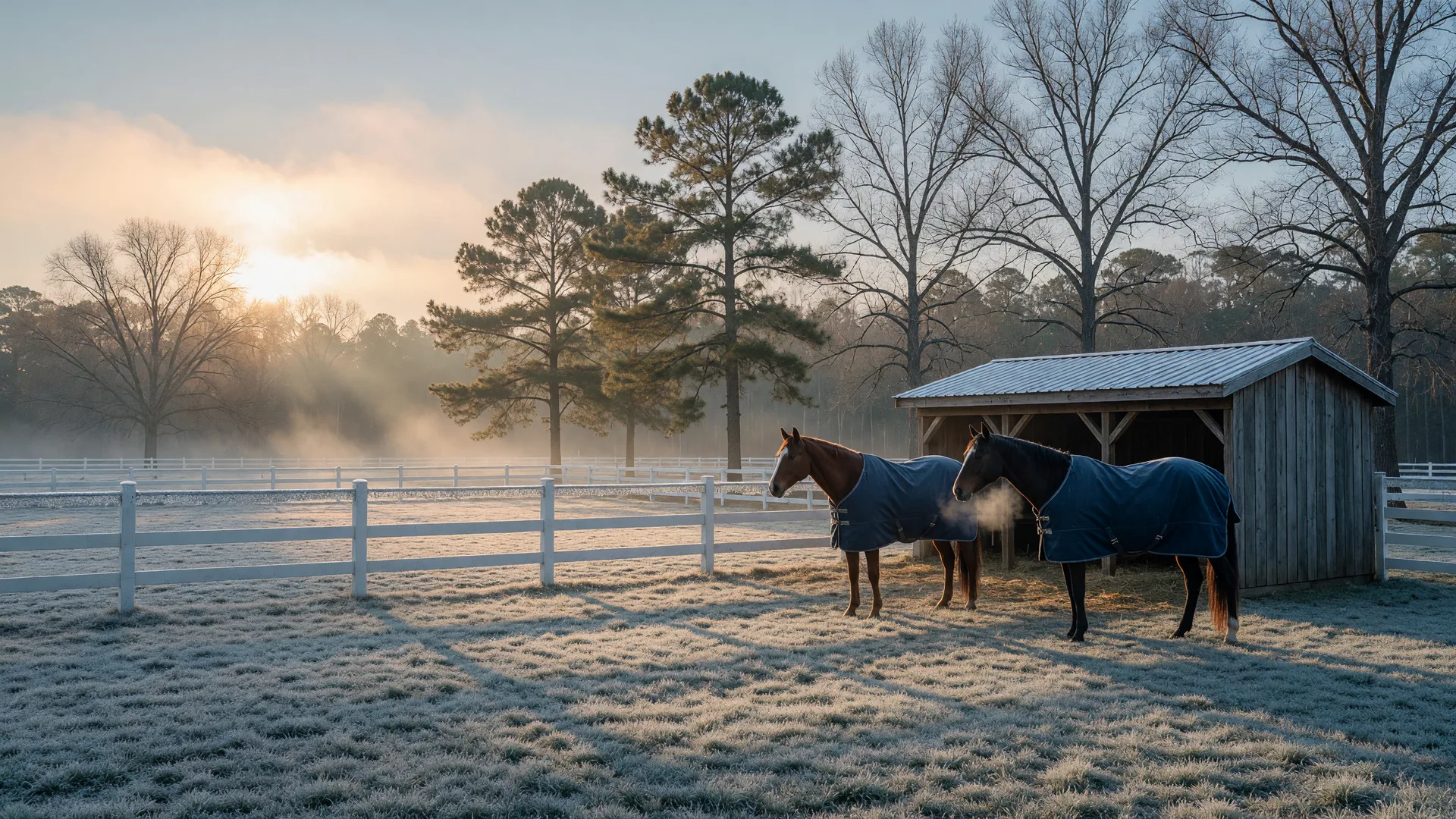
Every fall the horse world turns toward Aiken, and by December the town is fully in season. The Aiken Hounds are hunting Hitchcock Woods, Thoroughbreds are working the Training Track on frosty mornings, and the schooling rings at Stable View and Bruce's Field are busier than at any other time of year. After more than 20 years helping buyers and sellers across Aiken, North Augusta, and the wider CSRA, I can tell you that winter is when this town shows what it is really made of. This guide covers what actually runs from December through March, so you can plan your season, or plan your move, around the weeks horse country comes alive.
Why winter is Aiken's busiest season
The tradition goes back more than a century. Since the 1880s, riders from colder climates have wintered in Aiken for the same reasons they do today: sandy footing that drains overnight, mild weather that keeps horses in work, and a community built around the horse. The Winter Colony season still runs from late fall through spring, and the local equestrian paper, The Aiken Horse, counted more than 70 competitions and clinics for event riders alone between early December and the end of March. That is not a quiet winter. That is a working season.
What makes it possible is the climate. Aiken sits in USDA zone 8b, with an average first frost in early to mid-November and winters that are genuinely mild, so riding, training, and competing continue through the coldest months instead of shutting down. The barns stay open, the rings stay usable, and the community calendar stays full. If you are the kind of horse person who dreads five months of deep freeze, this is the argument for Aiken that no listing photo can make.
The season at a glance
December through March in Aiken means hunt days in Hitchcock Woods twice a week, morning training at the historic Aiken Training Track, schooling and horse shows at Bruce's Field, dressage, combined tests, and clinics at Stable View, and a build toward the Triple Crown in late March. See the full year on the Aiken equestrian events calendar.
The hunt field sets the rhythm of the season
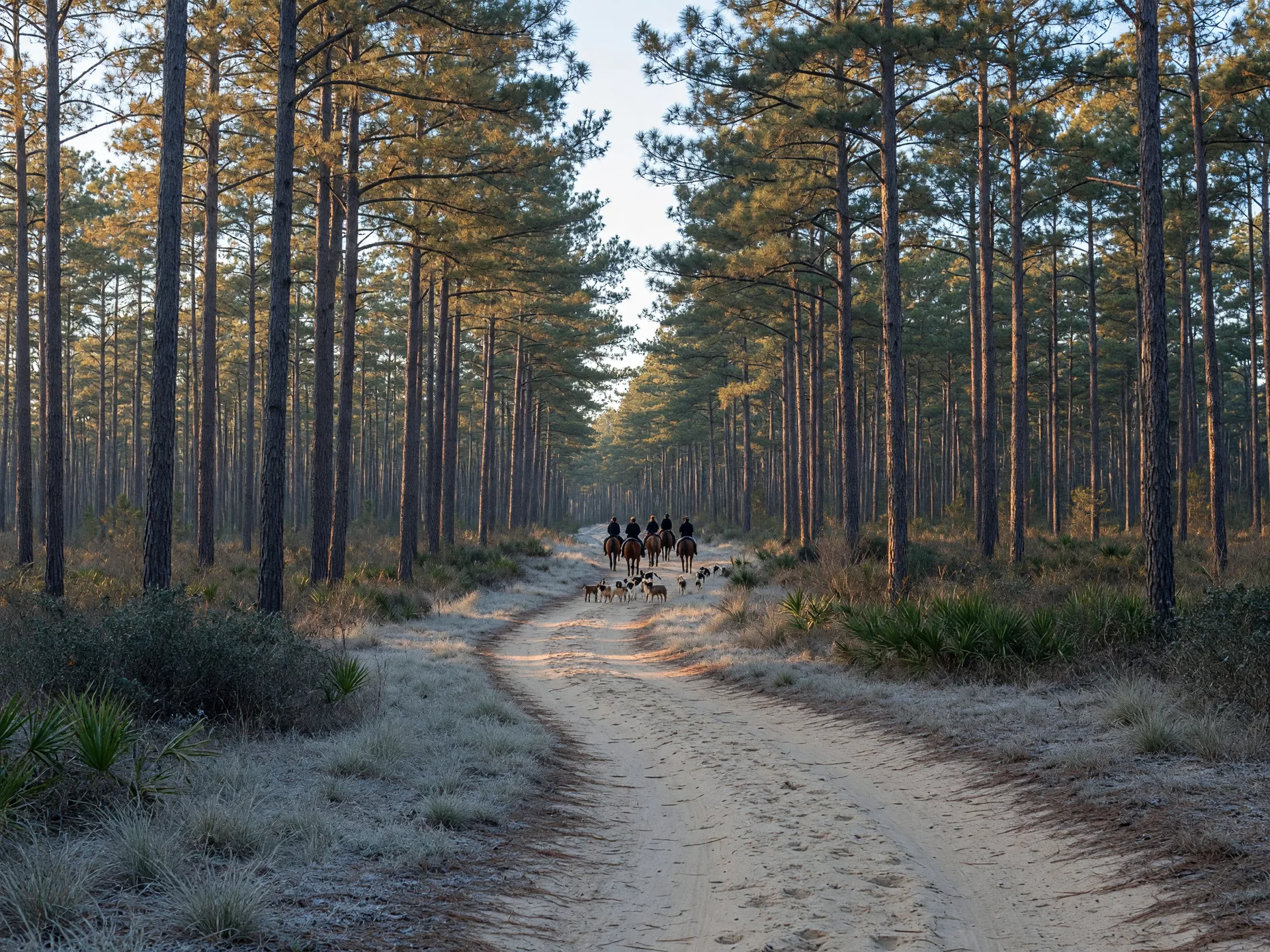
The social and sporting heart of winter in Aiken is the fox hunting season. The Aiken Hounds, a drag hunt founded in 1914, rides from mid-October through mid-March, and winter is its peak. Twice a week, Tuesday afternoons and Saturday mornings, members gather at Memorial Gate at the edge of Hitchcock Woods and follow the hounds through the sandy forest, honoring a tradition that has defined this town for well over a century. The Thanksgiving Blessing of the Hounds at Memorial Gate kicks off the formal season, and visitors who want to join a hunt can reach out through the hunt secretary rather than needing an invitation or a membership to begin.
If you live near the Woods, the hunt calendar shapes your week in a pleasant way: the sound of hounds, the sight of riders in formal attire, and the knowledge that this landscape is being used exactly as it was designed to be. One practical note for property owners: on hunt days, dog walking is restricted in parts of Hitchcock Woods so the pack can work undisturbed, so local riders and walkers plan around the hunt schedule. For anyone considering a horse property near the Woods, that rhythm is part of the appeal. It is also part of what makes trail access so prized.
December: the schooling rings stay warm
While much of the country puts horses up for the holidays, Aiken keeps competing. Bruce's Field, the competition venue managed by the Aiken Horse Park Foundation, hosts the Aiken Holiday Classic and the Aiken December Classics hunter and jumper shows from late November through mid-December, giving local riders a reason to stay fit through the holidays and visitors a reason to haul south. Stable View runs its Winter Wonderland dressage show in early December plus monthly schooling dressage collections, so the dressage community has a steady rhythm of low-pressure competition and coaching feedback all winter long.
These December shows matter more than their size suggests. They are where horses come back into work after the fall season, where young horses get ring time in a familiar setting, and where trainers test their programs before the recognized season picks up. For a buyer, watching a December schooling show is a crash course in the local competition community: who trains here, how the venues run, and how close you could be to all of it.
January: the calendar wakes up
January is when Aiken's winter season turns serious. Mid-month, Stable View hosts the Aiken Opener, a USEA-recognized horse trials, plus its Winter Combined Test, giving eventers their first competition scores of the year on footing that handles winter weather far better than most regions can offer. Bruce's Field begins Tuesdays in the Park, a weekly winter schooling and preparation series that runs from January through March, and the USHJA In & Out hunter and jumper schooling series plus Hunter/Jumper Institute clinics keep the jumper community training with visiting clinicians.
The practical takeaway: if your discipline is eventing, dressage, or hunter and jumper, January in Aiken is not a dead month. It is a working month, often the busiest one your horse has seen since fall. Clinics fill weeks in advance, farriers and vets book out around the competition calendar, and local boarding barns run at capacity. That is worth knowing whether you are shipping in for the season or deciding where to buy.
February: the show circuit opens
February brings the recognized season back to Aiken in full. The Aiken Winter Classic at Bruce's Field opens the Aiken Horse Show Circuit, drawing hunter and jumper competitors from across the Southeast, and the Grand-Prix Eventing Showcase, billed as the highlight of the Aiken winter season, follows in late February. Weather permitting, these are outdoor events on Aiken's famous sandy footing, which is precisely the point: horses can compete in February here in a way they cannot almost anywhere else in the East.
For anyone shopping the equestrian venues of Aiken, February is the moment to see them at their best. The rings are full, the atmosphere is competitive, and you can watch the circuit from the rail, meet trainers, and picture your own horses competing a few miles from your front gate. It is also the time of year when the town's horse economy is most visible, which makes it a useful window into how a local property fits into the wider season.
The Training Track: morning workouts all winter
The Aiken Training Track has trained champions for more than a century, and winter is its season. Thoroughbreds begin arriving in the fall, some shipping in from tracks and farms around the country, and through the winter months the shedrows are busy from first light: trainers, exercise riders, hotwalkers, and grooms doing the same work their predecessors did generations ago. The mild weather and the deep, forgiving surface keep young horses in steady work, which is exactly what a trainer wants between seasons.
The season builds toward the Aiken Trials each March, the first public racing of the year and the opening leg of the Aiken Triple Crown, after which many horses ship out to racetracks around the country. If you are moving horses to Aiken for the season, the arrival routine matters, and I have written a full guide on shipping, health requirements, and settling into horse country that covers the paperwork and the first quiet days in a new barn.
Polo: quieter in the coldest weeks, loud by March
Polo in Aiken follows a slightly different rhythm than the hunt and show season. Public Sunday matches at historic Whitney Field run in the spring and fall, and through the coldest weeks of winter the club stays active with schooling and practice on its Powder House fields while high-goal players from around the world train on the area's many private fields. Then late March brings the season roaring back: Pacers & Polo, the final leg of the Aiken Triple Crown at Whitney Field, followed by the club reopening for practice, and the spring schedule of Sunday matches.
The honest way to think about Aiken's winter polo is that the sport never fully sleeps here. The fields are groomed and playable year-round, the players are in town, and the public calendar simply concentrates its energy in the milder months. For polo families considering Aiken, that means a short, mild off-season rather than a long frozen one.
What the winter calendar means for horse property buyers
Winter is, in my view, the best season to look at horse properties in Aiken, and not only because the schedule is exciting. A property seen in December and January shows its true character: whether the barn stays dry in wind and rain, whether paddocks drain or turn to mud, whether water systems are winterized, whether the trees and footing hold up through frost. The preparation guide I wrote for the Winter Colony season walks through exactly what a well-kept property should look like heading into winter, and the horse property checklist is a useful companion on any winter showing.
Location matters more in season than out of it. Properties near Hitchcock Woods put you minutes from the hunt and the best trail riding in the Southeast. Properties near the Training Track put you in the middle of the morning training scene. Properties near Bruce's Field and Stable View put the competition calendar at your doorstep. And because the season swells the population of horses, riders, farriers, vets, and boarders, the town runs at full strength exactly when you are trying to meet people and build your team. I covered how to make the most of that in my guide to your first year on an Aiken horse property and my look at what the Winter Colony season really is.
If you are selling, winter is not a time to hide either. The most serious buyers arrive with the season, and a barn that shows well in January, with dry aisles, frost-free water, and a tidy pasture, tells them this property was loved year-round. The fundamentals of preparing and marketing an equestrian property in Aiken are in my staging and marketing guide, and they apply in every month of the year.
Aiken's winter is not a pause between seasons. It is the main event, a months-long season of hunting, training, showing, and community that has drawn horse people south for well over a century. Whether you want to be in the middle of it every winter or simply live where the competition calendar never really stops, the first step is knowing what runs when, and the second is finding a property that puts you in the heart of it. That is where I can help, whether you are shipping horses in for the season, buying your first Aiken farm, or selling one in its best light.
Let me help you find the property that puts you in the middle of horse country's best season.
From Horse District cottages to training farms near the track, I know which properties keep you close to the hunt, the shows, and the trails that define Aiken in winter.
Schedule a Consultation