
The Aiken Thoroughbred Racing Hall of Fame and Museum: Preserving the Legacy of Champions
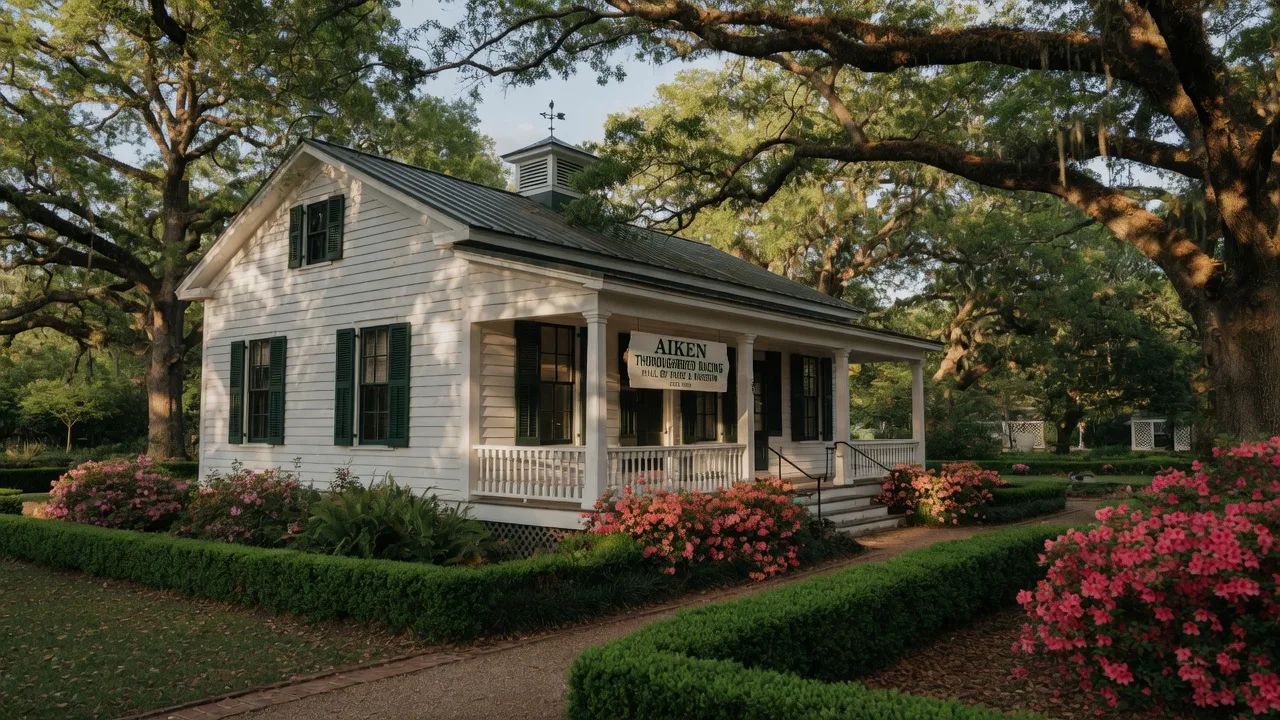
Tucked into the quiet corner of Hopelands Gardens on Dupree Place, a modest white carriage house built in 1902 holds one of the most remarkable collections in American Thoroughbred racing. The Aiken Thoroughbred Racing Hall of Fame and Museum has been preserving the legacy of champions since 1977, and for anyone who loves horses, racing history, or simply understands what makes Aiken an extraordinary equestrian community, this museum is essential.
What the museum holds
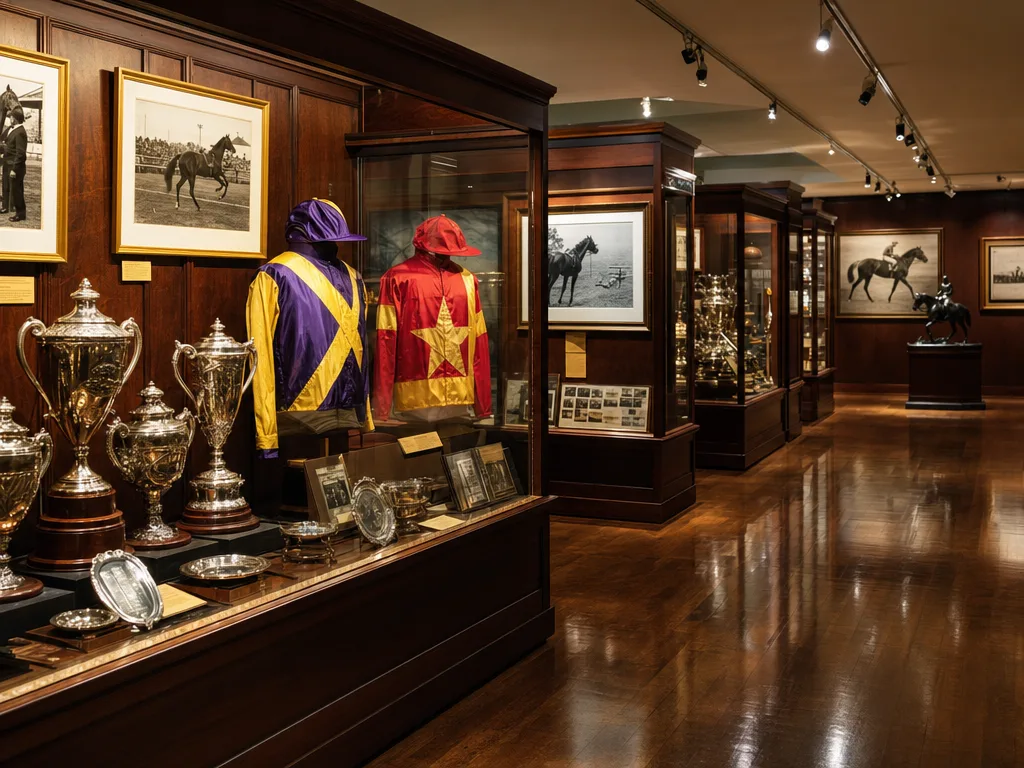
The museum commemorates more than forty Eclipse Award-winning Thoroughbreds that trained in Aiken, along with generations of Hall of Fame horses, trainers, and jockeys who made this small Southern town a winter training destination for the sport's elite. Inside the carefully preserved carriage house, visitors find a curated collection of trophies, photographs, silks, and racing memorabilia that traces the throughline from Aiken's Winter Colony origins to the modern Thoroughbred industry.
The exhibits are organized with the kind of attention to detail that serious racing fans appreciate. Each champion is represented with its own display: racing silks worn in the winner's circle, a photograph capturing the horse at its peak, and a narrative card that explains its connection to Aiken. The collection spans more than a century of racing history, from the early twentieth-century champions who trained on the Aiken Training Track to the modern stars who continue the tradition today.
Why Aiken? The training connection
The question every visitor asks is: why do so many champion Thoroughbreds train in Aiken? The answer is the same reason the Winter Colony settled here in the 1880s. Aiken's mild winter climate, its deep well-drained sandhills soil, and its network of training tracks and trails create an environment where horses can train intensively through the winter months without the punishing cold and frozen ground of the Northeast. For more than a century, Aiken has been the winter home of champions, and the museum tells that story with clarity and pride.
The horses honored here include some of the most famous names in the sport. Kelso, the five-time Horse of the Year who trained at the Aiken Training Track in the 1960s, is represented alongside Swale, the 1984 Kentucky Derby winner who also prepared for his Triple Crown campaign in Aiken. Forego, the three-time Horse of the Year who trained at Brookmeade Stable, has his place in the collection. And the tradition continues: modern champions like The Factor, who prepared for his racing career at Eddie Woods Training Center, are part of the museum's ongoing mission to document Aiken's role in Thoroughbred excellence.
The building itself: a piece of history
The museum's home is as significant as its contents. The carriage house was built in 1902 as part of the Joye Cottage estate, one of the grand Winter Colony properties that defined early twentieth-century Aiken. The building originally housed carriages and horses for the estate before being repurposed as a museum. Its location within Hopelands Gardens places it in one of Aiken's most beautiful public spaces, a 14-acre garden property that was originally the estate of C. Oliver Iselin, a prominent Winter Colony figure and yachtsman who sponsored America's Cup campaigns.
Visitors to the museum can walk through the gardens before or after their visit, following paths that wind through azaleas, camellias, and mature oaks. The museum itself occupies the ground floor of the carriage house, with exhibits arranged in a series of connected rooms that retain the original character of the building. The setting is unhurried and contemplative, exactly right for a museum that asks visitors to slow down and read the stories behind each display.
What to see: highlights of the collection
The museum's collection is compact but deep, organized to reward both casual visitors and dedicated racing historians. The entrance gallery introduces the history of Aiken as a training destination, with photographs of the early Winter Colony estates, the original training tracks, and the trainers who established Aiken's reputation. From there, the exhibits move through the decades.
The Kelso display is one of the most extensive in the museum, fitting for a horse that was Horse of the Year five consecutive seasons. His silks, trophies, and training photographs document a career that made him one of the most beloved Thoroughbreds of the twentieth century. Beside him, the Swale exhibit captures the brief but brilliant career of the 1984 Kentucky Derby and Belmont Stakes winner, who trained at the Aiken Training Track before his Triple Crown campaign.
The Forego collection honors the massive gelding who won Horse of the Year three times in the 1970s while carrying up to 137 pounds in his handicaps. His Aiken connection runs through Brookmeade Stable, where he trained. The museum also features exhibits on John Henry, the millionaire gelding who trained in Aiken, and Go For Wand, the brilliant filly whose career was cut short in the 1990 Breeders' Cup.
Beyond individual horses, the museum documents the trainers and jockeys who shaped Aiken's racing culture. Trainers like John Gaver Sr., Frank Wright, and William C. Freeman are represented with photographs and biographical notes. The museum's collection of racing silks, donated by the stables that trained in Aiken, is itself a visual archive of the sport's history.
Plan Your Visit
- Location: 135 Dupree Place, Aiken, SC 29801 (inside Hopelands Gardens)
- Hours: Tuesday–Friday 2–5 pm, Saturday 10 am–5 pm, Sunday 2–5 pm. Closed Mondays and major holidays.
- Phone: 803-642-7631
- Setting: Housed in a historic 1902 carriage house within Hopelands Gardens, a 14-acre public garden with walking paths, azaleas, and mature shade trees
- Admission: Free. Donations support museum operations and collection preservation.
More than a museum: a research archive
What makes the Aiken Thoroughbred Racing Hall of Fame more than a typical small-town museum is its role as a research archive. The museum maintains records, photographs, and documentation that trace the training history of hundreds of Thoroughbreds who spent winters in Aiken. For serious racing historians, for authors researching a particular horse or stable, and for families tracing the legacy of a horse they once owned, the museum's collection is an invaluable resource.
The staff and volunteers are knowledgeable and generous with their time. They know which horse trained where, which stable occupied which barn, and how the training landscape of Aiken has shifted over the decades. A conversation at the museum can easily lead to a deeper understanding of the sport and Aiken's place in it.
The museum and the horse property market
For buyers considering horse property in Aiken, the museum represents something intangible but real. It is a physical reminder that Aiken's equestrian identity is not a marketing slogan — it is a century-plus tradition of world-class horsemanship that is woven into the town's fabric. When you buy a property in Aiken, you become part of that tradition, and the museum is where you can see it gathered in one place.
The museum also draws visitors throughout the year, including the Winter Colony season when Aiken's equestrian population swells and the cultural calendar is full. Many of these visitors are also potential buyers, touring properties while they are in town for races, polo, or the social season. The museum is one of the places where that connection happens — where the appreciation for racing becomes the spark that leads to a property search.
Aiken's racing future: the museum's continuing mission
The museum is not static. Every year, as new champions emerge from Aiken's training centers, the collection grows. The museum actively seeks additions that document the ongoing relationship between Aiken and the Thoroughbred industry. Recent additions have included exhibits on modern training operations, the role of Aiken in the growth of the sport, and the changing economics of Thoroughbred training.
For longtime residents and newcomers alike, the museum is a connecting thread. It links the Winter Colony estates of the 1880s to the training centers that operate today. It reminds us that Aiken has been producing champion horses for more than a century and that this legacy is not just preserved in glass cases — it is alive in every horse that works the training track on a cool February morning, every rider who follows the bridle paths through the Horse District, and every buyer who chooses to make Aiken the home of their own equestrian dreams.
The Hall of Fame tells the story. Let us help you find the place to live it.
Whether you are looking for a horse property near Hopelands Gardens or acreage in the heart of Aiken's training country, I can help you find the right land and the right home.