
Selling Your Aiken Horse Property With Horses Still in the Barn: Marketing and Showing a Working Farm
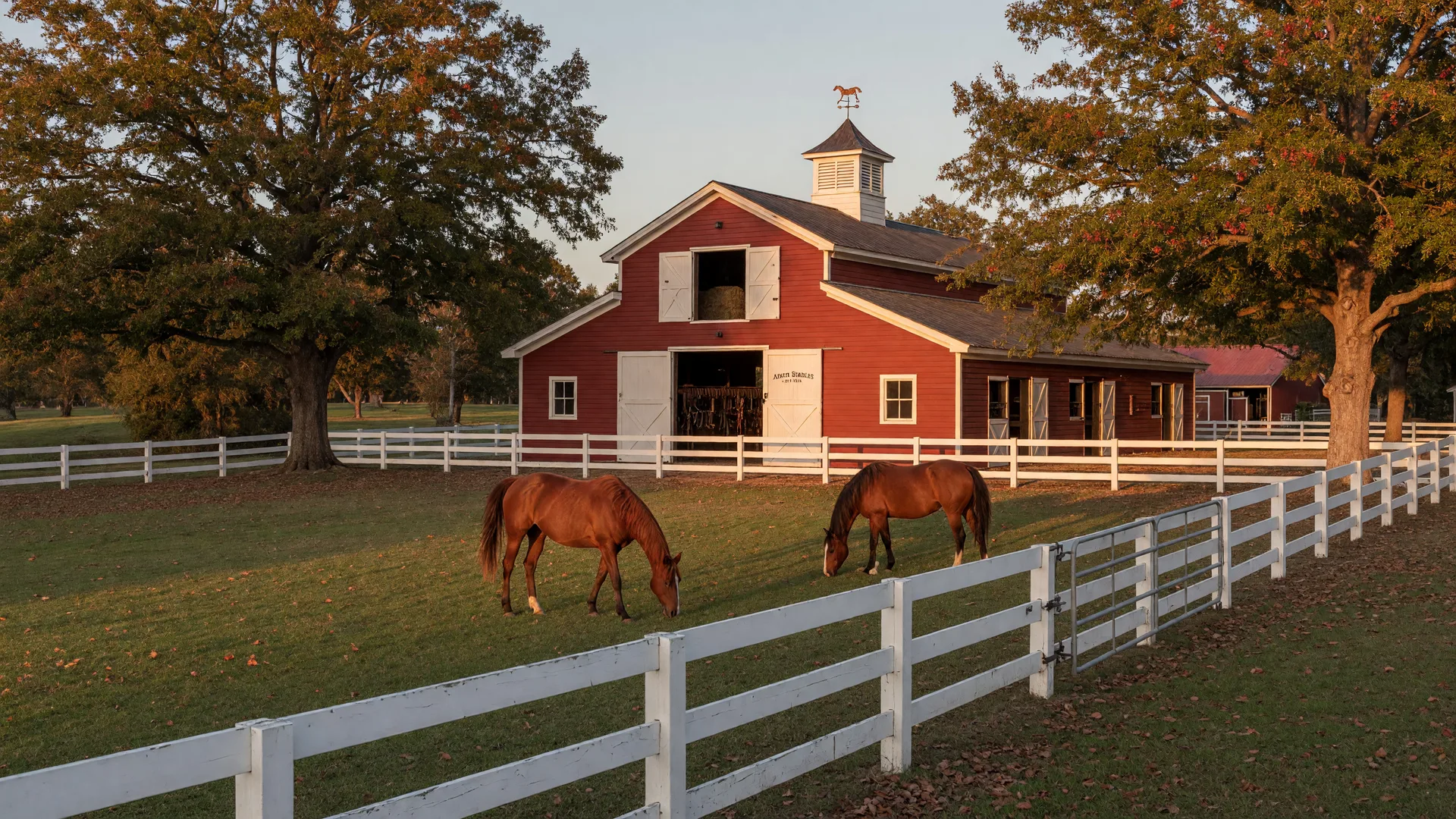
Most Aiken horse property owners sell while their horses are still living on the farm. Moving the herd to boarding before the first showing adds cost, stress, and weeks of disruption, and for many sellers it simply is not practical or desirable. The good news is that a well-kept, active barn usually shows better than an empty one. Buyers who come to Aiken want to see horses in the pastures and hear the rhythm of a real farm, because that is the life they are hoping to buy.
Selling with horses in residence does require a different kind of preparation, though. The barn has to be spotless every single day, showings have to be scheduled around feeding and turnout, and every visitor who walks the property needs to be protected. After more than 20 years helping sellers in Aiken, North Augusta, and the CSRA, I have watched working farms sell beautifully when their owners treated the daily routine as part of the marketing. Here is how to get your horse property ready for sale without moving a single horse.
Why a Live Barn Often Shows Better Than an Empty One
A buyer touring an equestrian property is not just looking at boards, beams, and acreage. They are imagining their own horses in those stalls, their tack in that room, their morning routine in that aisle. An empty barn leaves all of that to the imagination, and empty buildings can read as neglected even when they are not. A barn with content, well-groomed horses in deeply bedded stalls tells a story of care, and that story is exactly what many Aiken buyers are looking for.
The key is balance. A farm with two or three horses and a tidy barn shows beautifully. A property where the stalls are crowded, the pastures are overgrazed, and the aisle is lined with extra equipment reads as overworked, and it can turn off a buyer quickly. If you can keep horse numbers modest, board a few out during the listing, or simply rotate pastures to protect the grass, you give the farm room to breathe while still showing it as the living place it is.
Stage the Barn Like a Working Showcase
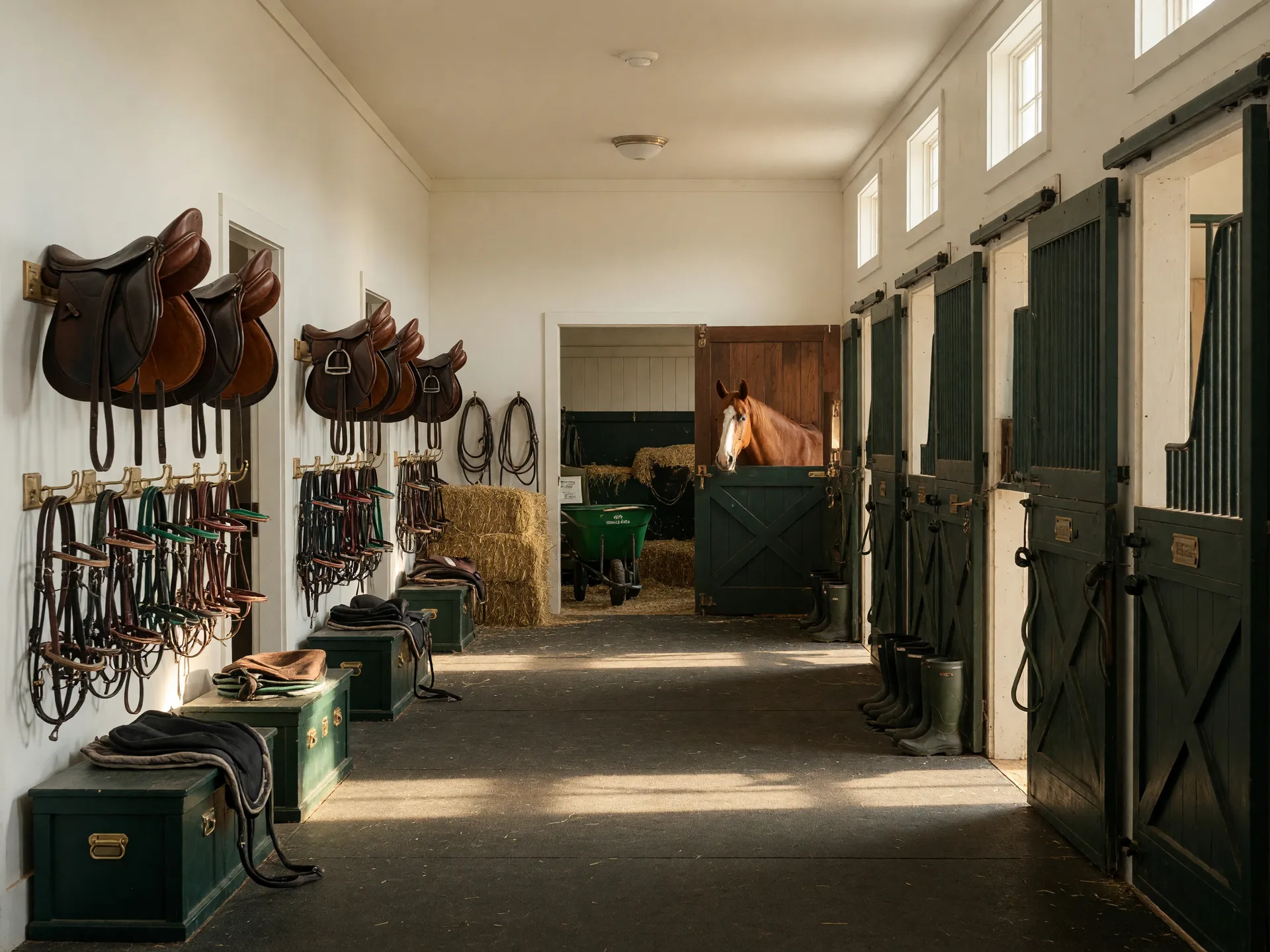
The barn aisle is the heart of any horse property showing. This is where buyers form their first strong impression, and it is the room that most often sells the farm. During the listing period, plan on cleaning stalls at least once or twice a day, bedding them deeply with fresh shavings, and keeping water buckets polished and full. Pressure-wash the stall walls and aisle floor, knock down cobwebs, and sweep the aisle before every single showing, because the first showing may be the only one a given buyer attends.
Decluttering matters just as much in the barn as it does in the house. Buyers want to picture their own saddles on those racks and their own bridles on those hooks, and they cannot do that if the tack room is piled with years of extra equipment. Store excess gear off-site before listing, keep the feed room organized with labeled bins, and clean out the hay storage so the structure itself can be seen. Turn every light on and make sure every bulb works. A bright aisle with matted stalls, a clean wash rack, a working hitching post, and accessible water hydrants are the details that horse people notice and remember.
Present the Grounds and Facilities for the Camera
The pasture, arena, and fencelines are photographed before most buyers ever set foot on the property, so the farm needs to be camera-ready from the first drone pass to the last. Drag the arena a few days before each showing and set it up for its discipline, whether that means jumps, dressage letters, or a clean, rolled footing. Mow the fields in the days before an open house, weed-eat the fencelines so the fence boards show cleanly, and keep the pasture closest to the house the neatest of all.
Walk the property from the buyer's point of view. Clear the access paths so a truck and trailer can enter smoothly, open the main gate wide, and make sure the route from the drive to the barn to the arena is obvious and inviting. In Aiken, where the sandy footing and the look of the land are part of the appeal, a farm that shows its pasture, its trees, and its fences at their best will always photograph better and sell faster.
Schedule Showings Around the Farm's Daily Rhythm
A working farm has a daily rhythm, and the best showings work with it instead of against it. Schedule tours after the morning feed and stall cleaning, when the barn is picked up and the horses are settled in turnout or calm in their stalls. Avoid the windows when horses are being moved through the aisle, turned in or out, or fed, because that is when the barn is busiest and when things can feel chaotic to a visitor.
One of the most important pieces of advice I give every seller is to step away during the showing. Buyers want to explore the property at their own pace and talk openly with their agent, and a seller who follows them around or hovers in the aisle makes everyone uncomfortable. Let your listing agent run the tour. If a buyer has questions about the farm's history, the horses, or the daily routine, those conversations are best handled later, on your terms, rather than mid-showing.
Keep Horses Safe, Comfortable, and Seen
Visitors who do not live around horses may not know how quickly a horse can react, and even experienced buyers can startle a horse by accident. Keep every horse safely stabled during showings, with stall doors fully secured, and give the horses a calm, quiet corner of the barn or a distant paddock while strangers are on the property. A well-groomed horse standing quietly in its stall is a selling point. A horse pacing or pinned in a corner is not, and a frightened animal is a safety risk for everyone involved.
If a buyer asks to see a particular horse move, let a professional handle it and set the terms in advance. Some sellers prepare a simple one-page farm sheet with each horse's name, breeding, and temperament, which adds a personal touch that buyers remember. Just keep the emphasis on the property itself, and let the horses be the warm background that makes the farm feel like home rather than the centerpiece that distracts from the tour.
Liability, Waivers, and the Paperwork Buyers Will Ask For
Treating every showing like a visit to any equine premises is the safest approach. Have every visitor sign a properly drafted liability waiver before they walk the property, including the barn, where the risk of a kick or a startling moment is highest. South Carolina is among the roughly 46 states with equine liability statutes that offer some protection to owners and facilities, but those statutes vary widely and a signed waiver does not prevent a claim from being filed. Have a local equine attorney or your insurance agent review the waiver, and make sure your liability coverage actually includes showings, open houses, and visitors. Updating your policy before the first tour is far cheaper than discovering the gap after an incident.
You will also want the documentation that every serious horse property buyer asks for eventually: a current survey, zoning and permit records, tax records, utility bills, and any equestrian paperwork such as soil analysis, pasture management records, or boarding agreements. Having these organized and ready from day one signals that the farm has been run professionally, and it shortens the due diligence period considerably. It also removes a common point of friction later in the transaction.
Aiken's Seasonal Market Works in Your Favor
Aiken's busiest equestrian season runs from late fall through the Winter Colony months, when serious buyers from across the country come to ride, train, and look at property. Listing a well-presented working farm now puts it in front of the highest concentration of qualified buyers of the year, and a farm that shows itself as a living, thriving place stands out even more during the season's peak.
The Photographs That Sell a Working Farm
Great photography is the difference between a listing buyers scroll past and a listing buyers call about. Schedule your photo shoot for golden hour, when the light makes the paddocks and the barn look their warmest, and time it for a moment when the horses are groomed and grazing contentedly. Include a mix of wide shots of the farm from the fence line, detail shots of the stalls, tack room, and wash rack, and a few shots with the horses in frame, because Aiken buyers love seeing animals in their element.
A drone shot of the property from above shows the layout, the pasture rotation, and the distance between the house and the barn in a way no ground photo can. If the farm has direct access to Hitchcock Woods or sits on a quiet stretch of the Wagener Road corridor, make sure that story is told in the photos and in the listing description, because for many buyers that access is the entire point.
The Emotional Side of Selling a Farm You Love
No part of this process is more important to acknowledge than the emotional one. A horse property is not a house you happen to live in. It is the place where you raised foals, trained in the morning light, and watched your horses graze at sunset. Selling it with the horses still in the barn means living in a home that is also, suddenly, a product, and that can feel strange and a little sad.
That is exactly why having an agent who understands horse country matters. I have walked this path with countless Aiken families, and I know that the goal is not just a sale but a good one: a buyer who will love the farm the way you did, who will keep the pastures healthy and the barn doors open. When the right buyer walks in and lights up at the sight of your barn aisle, it feels less like losing a home and more like passing it on to the next steward of Aiken horse country.
Let me help you present your farm at its best, horses and all.
With more than 20 years of experience in Aiken horse country, I know how to market a working farm, time your showings around the season, and find the buyer who will love the property the way you do. Schedule a consultation and we will build a plan for your listing.
Schedule a Consultation