
Preserving Aiken's Horse Country: Conservation, Land Trusts, and the Future of Equestrian Properties
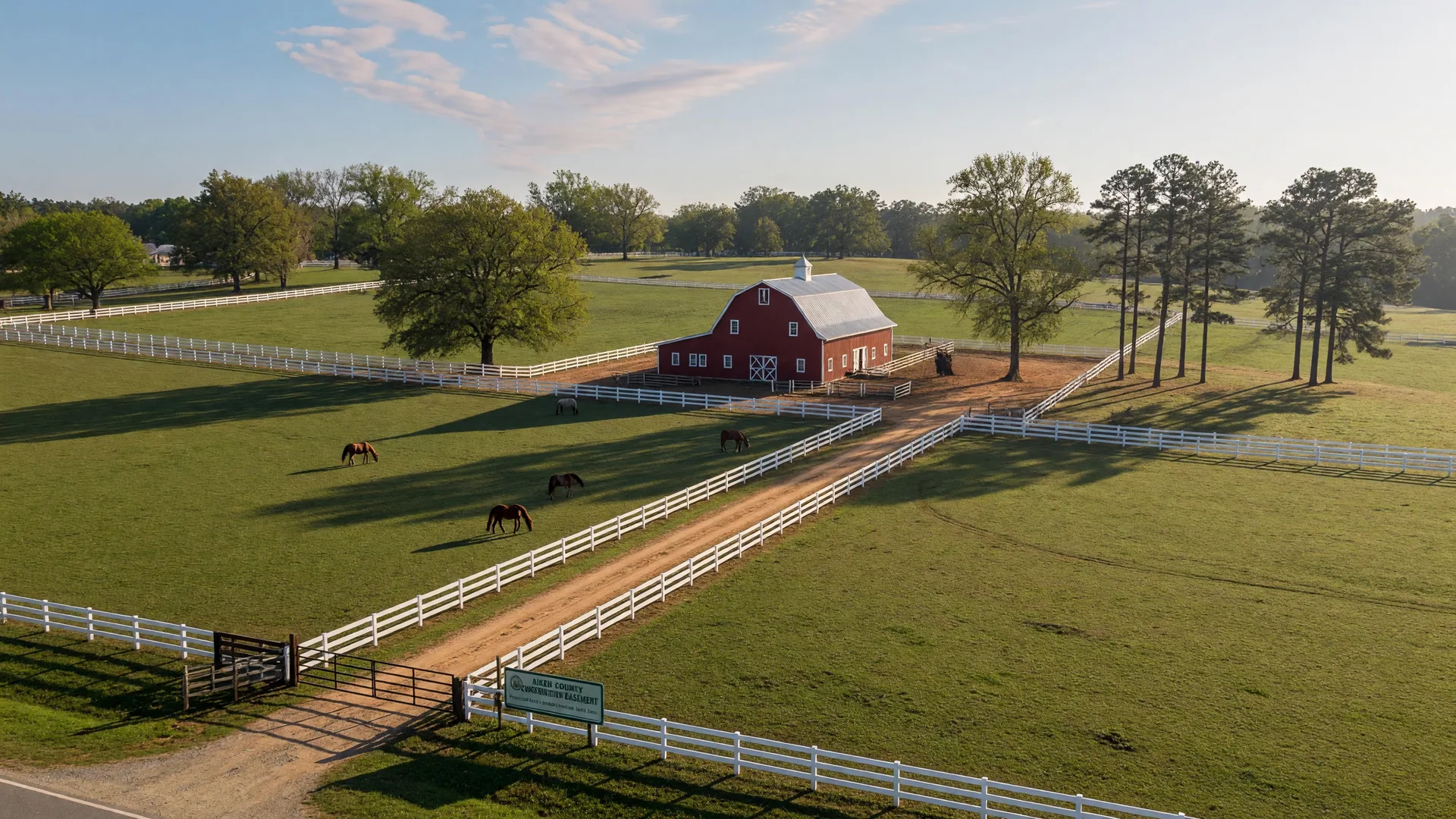
Aiken's horse country is not a coincidence of geography. It is a deliberate creation, built over 130 years by families, communities, and conservation-minded landowners who understood that the sandy soil, pine forests, and open pastures that make Aiken an equestrian paradise are fragile assets. Without active protection, those assets can be lost to subdivision, strip development, and the slow erosion of the rural character that draws horse people here from across the country.
The question every horse property buyer should ask is not just "What can I afford?" but "Will this still be horse country in twenty years?" The answer lies in understanding how Aiken protects its equestrian heritage through zoning, conservation easements, and the work of organizations like the Aiken Land Conservancy. Here is what every property buyer and seller should know.
The Horse District Zoning: A Model for Equestrian Communities
Aiken's approach to protecting horse country starts with zoning. The City of Aiken's RSH (Residential Single-Family/Horse) District is a zoning classification specifically designed to accommodate horses and stables on residential lots of at least one acre. It prohibits incompatible land uses while allowing the equestrian activities that define the community. At the county level, the RH5 (Residential-Horse 5) District requires minimum five-acre lots and restricts multifamily, industrial, and most commercial developments.
These zoning districts are not abstract planning documents. They are the legal framework that prevents a horse property on a sandy road from being surrounded by townhouses or a strip mall. When you buy a property in the Horse District or in an RH5 zone, you are buying into a neighborhood whose character is protected by law. That protection directly affects resale value: properties in zoned horse districts consistently command a premium over similar properties outside protected areas.
But zoning alone is not enough. Zoning can change. Comprehensive plans can be amended. Rezonings can be requested. The most permanent form of protection comes from conservation easements, which run with the land in perpetuity.
The Aiken Land Conservancy: Protecting Nearly 3,200 Acres
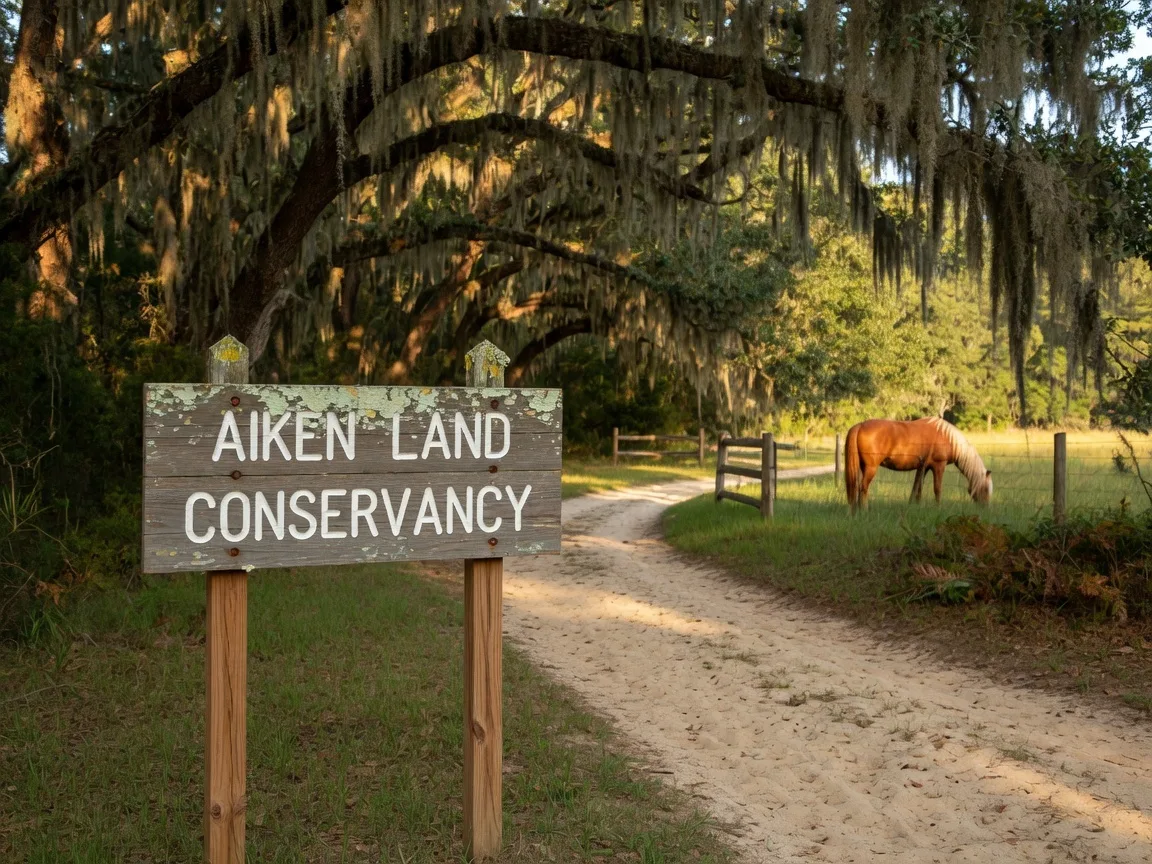
The Aiken Land Conservancy (ALC) is the primary organization working to preserve open space, natural areas, and equestrian properties in the Aiken region. Founded over thirty years ago, ALC is a nationally accredited nonprofit that has protected nearly 3,200 acres of culturally significant and ecologically valuable land. Much of that land is in the heart of Aiken's horse country.
The conservancy's work focuses on two critical corridors: the Historic Horse District and the Route 302 equestrian corridor. These are the areas where Aiken's equestrian identity is most concentrated, and where development pressure is most intense. By working with landowners to place conservation easements on their properties, ALC ensures that the land remains undeveloped, or developed only in ways consistent with the equestrian character of the area.
Notable Conservation Success Stories
Several landmark conservation easements in Aiken's horse country illustrate what is possible when landowners and conservancies work together.
New Haven Farm is a 267-acre working equestrian farm on Route 302, placed under conservation easement in 2018. The property includes training facilities, paddocks, and pastureland that remain in active equestrian use while being permanently protected from subdivision. The easement ensures that this stretch of the Route 302 corridor will remain rural, even as development advances from the edges of Aiken.
Alibi Farm is protected by two adjacent conservation easements, creating a contiguous block of protected land that supports both equestrian use and wildlife habitat. Properties along Fox Pond Road have also been protected by ALC, adding to a growing network of conserved lands that preserve the rural character of Aiken's horse country.
Toad Hall, a 3.48-acre property in Aiken's historic horse district, was protected by easement in 2015. Even smaller parcels can be meaningful when they are located in the right place. A conservation easement on a small lot in the Horse District prevents infill development that would alter the character of the neighborhood, protecting the sandy roads and open views that define the area.
How Conservation Easements Work for Horse Property Owners
A conservation easement is a voluntary legal agreement between a landowner and a land trust that permanently restricts the use of the land to protect its conservation values. For horse property owners, this means the land can continue to be used for equestrian purposes — riding, training, boarding, hay production — but cannot be subdivided into small lots or developed beyond the terms of the easement.
The benefits for landowners include:
Income tax benefits
Donating a conservation easement can qualify as a charitable deduction, reducing federal income tax liability for the donor.
Estate tax reduction
By removing development value from the property, an easement can significantly reduce estate tax liability, making it easier to pass the farm to the next generation.
Permanent protection
The easement runs with the land forever, ensuring that future owners cannot subdivide or develop the property in ways that undermine its equestrian character.
Legacy and stewardship
For many horse property owners, the motivation is not financial. It is the knowledge that their land will remain open, rural, and usable for horses for generations to come.
The Route 302 Corridor: A Critical Battleground
Route 302, the road that runs from Aiken toward the Savannah River, is one of the most important equestrian corridors in the region. It is lined with working horse farms, training facilities, and large rural properties that form the backbone of Aiken's equestrian economy. It is also under significant development pressure as the Augusta and Aiken metropolitan areas grow.
The Aiken Land Conservancy has prioritized the Route 302 corridor for conservation, working with large landowners to place easements on properties that might otherwise be subdivided. The 267-acre New Haven Farm easement is a cornerstone of this effort, but it is just one piece of a larger puzzle. Protecting the Route 302 corridor requires sustained effort, community support, and willing landowners who share a vision of Aiken's future as a horse community.
For buyers considering a horse property along Route 302 or nearby, the conservation status of neighboring properties is a critical factor. A property surrounded by conserved land is likely to retain its rural character and equestrian value far longer than one surrounded by developable parcels. Linda can help you research the conservation status of properties and identify areas where protection is strongest.
What This Means for Property Buyers and Sellers
Conservation is not just an environmental issue. It is a real estate issue. For buyers, the presence of conservation easements, protected corridors, and horse-friendly zoning directly affects the long-term value and desirability of a property. A horse farm in a protected area is likely to hold its value better than one in an unprotected area, because the character of the neighborhood is locked in.
For sellers, a conservation easement can be a selling point. Buyers who are serious about horses understand the value of permanent protection. A property with a conservation easement signals that the land will remain usable for horses, that the views will not be replaced by rooftops, and that the investment is backed by legal protection.
When I work with buyers who are relocating to Aiken from out of state, I always ask about their long-term plans. Do they intend to stay for five years, or are they building a legacy property they hope to pass down? The answer shapes the neighborhoods I show them. For buyers who want to invest in a property that will remain horse country for decades, I focus on the Horse District, the Route 302 corridor, and areas where conservation easements are already in place.
How to research conservation status
Before making an offer on a horse property in Aiken, ask your agent to research:
- Whether the property is in an RSH or RH5 zoning district
- Whether any conservation easements exist on the property or adjacent parcels
- Whether the property is in the Historic Horse District overlay
- The development status of neighboring properties
- Any pending zoning changes or comprehensive plan amendments affecting the area
The Future of Aiken's Horse Country
Aiken is growing. The Augusta metropolitan area is expanding, and the city's proximity to the Savannah River, Fort Gordon, and the CSRA economy makes it an attractive destination for new residents. That growth brings opportunity, but it also brings pressure on the very things that make Aiken special: the open spaces, the sandy trails, the quiet rural roads, and the horse properties that define the region.
The question is not whether Aiken will grow. It will. The question is whether the growth will be managed in a way that preserves the equestrian character that has made Aiken a destination for horse people for over a century. The answer depends on conservation, zoning, and the choices that landowners and community leaders make today.
For buyers, sellers, and anyone who cares about Aiken's horse country, the message is simple: the time to pay attention to conservation is now. The properties that are protected today will be the ones that define Aiken's equestrian identity for the next generation.
Let me help you find a protected horse property.
I know the Horse District, the Route 302 corridor, and every conservation easement in between. Whether you are buying your first horse farm or selling a legacy property, I can help you navigate the market with confidence.
Schedule a Consultation